ScienceDaily – Nanotechnology - Latest News and Information

Researchers at ETH Zurich have engineered a single‑atom indium catalyst anchored on hafnium oxide that dramatically lowers the energy required to convert carbon dioxide and hydrogen into methanol. The design maximizes metal utilization by making each indium atom an independent active site, a departure from conventional nanoparticle catalysts. The catalyst remains stable under industrial temperatures up to 300 °C and pressures of 50 bar, enabling practical deployment. Additionally, the isolated‑atom architecture provides clearer insight into reaction mechanisms, reducing reliance on trial‑and‑error development.

MIT researchers have built a terahertz microscope that compresses long‑wavelength radiation into a sub‑micron spot, overcoming the diffraction limit. Using spintronic emitters and a Bragg mirror, they imaged quantum‑scale vibrations of superconducting electrons in the high‑temperature cuprate BSCCO. The observation...

Researchers at UC Santa Barbara have discovered a new quantum state that emerges when magnetic and bond frustration coexist in a triangular‑lattice antiferromagnet. The interleaved frustration creates a quantum‑disordered ground state capable of long‑range spin entanglement. By applying strain or...

Researchers at Helmholtz‑Zentrum Dresden‑Rossendorf introduced a reproducible theoretical framework for designing polyheptazine imide photocatalysts. Using many‑body perturbation theory, they modeled the effect of 53 different metal ions on charge separation and visible‑light absorption. Experimental synthesis of eight ion‑doped materials confirmed...

Cambridge chemists have unveiled a light‑driven “anti‑Friedel‑Crafts” reaction that forms carbon‑carbon bonds using only LED illumination at ambient temperature. The metal‑free method allows precise, late‑stage modifications of complex drug molecules, cutting months of multistep synthesis. Tested on a broad set...

Researchers at Hiroshima University and Mitsubishi Materials have demonstrated a laser‑based additive manufacturing process that can 3D‑print tungsten‑carbide‑cobalt (WC‑Co) cemented carbide with industrial‑grade hardness above 1400 HV. By using hot‑wire laser irradiation, the method softens rather than fully melts the material,...

Scientists at EPFL have coated silicon‑nitride nanopores with lipid bilayers, creating a hydration‑lubricated channel that dramatically reduces ion friction. The lipid‑coated membrane, arranged in a hexagonal array of 1,000 pores, achieved a power density of about 15 W m⁻²—2 to 3 times...
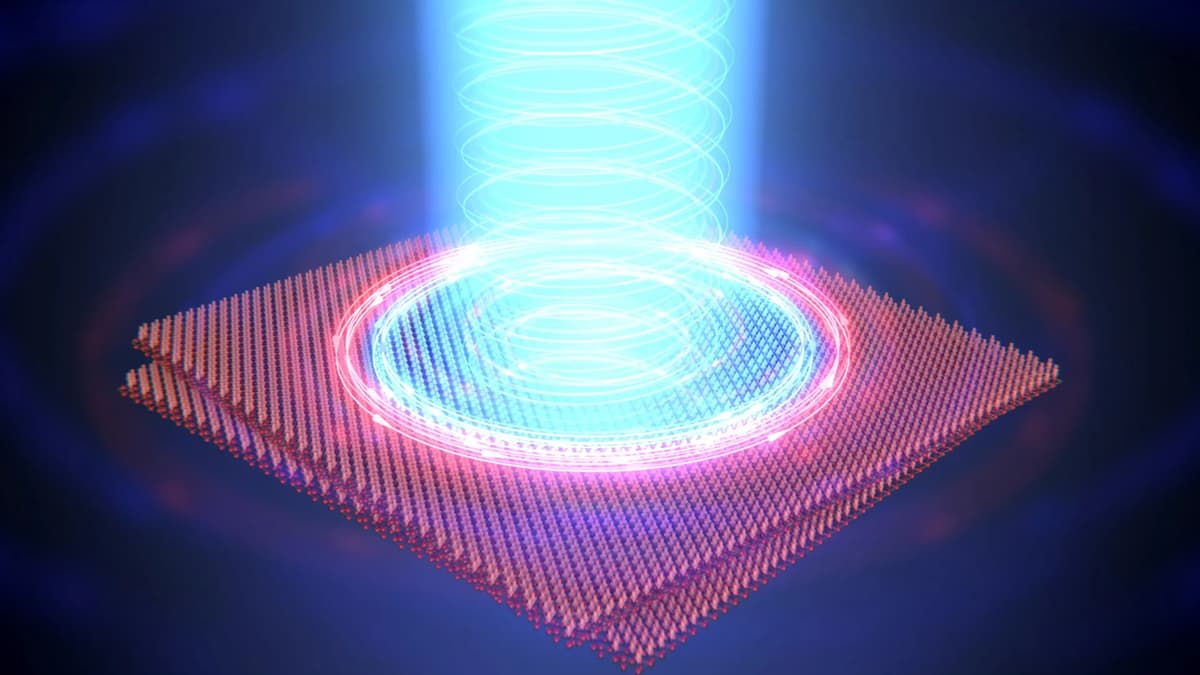
Researchers at the University of Basel and ETH Zurich used a focused laser pulse to reverse the polarity of a specialized ferromagnet made from twisted bilayer molybdenum ditelluride, achieving the switch without any temperature rise. The experiment, published in Nature,...

Researchers reported that a slight twist between atom‑thin antiferromagnetic layers generates giant Néel‑type skyrmions spanning hundreds of nanometers. The skyrmion size peaks around a 1.1° twist and vanishes above ~2°, contrary to the linear growth of the moiré wavelength. Simulations...

Scientists at NYU have demonstrated a reversible, light‑driven method to direct the self‑assembly of colloidal particles into crystals. By adding photoacid molecules that become acidic under illumination, they can modulate particle charge and trigger either aggregation or dispersion on demand....

Scientists at Flinders University have created a thin, flexible film from calcium caseinate – the main protein in milk – blended with modified starch, bentonite nanoclay, glycerol and polyvinyl alcohol. Laboratory tests show the material breaks down completely in ordinary...
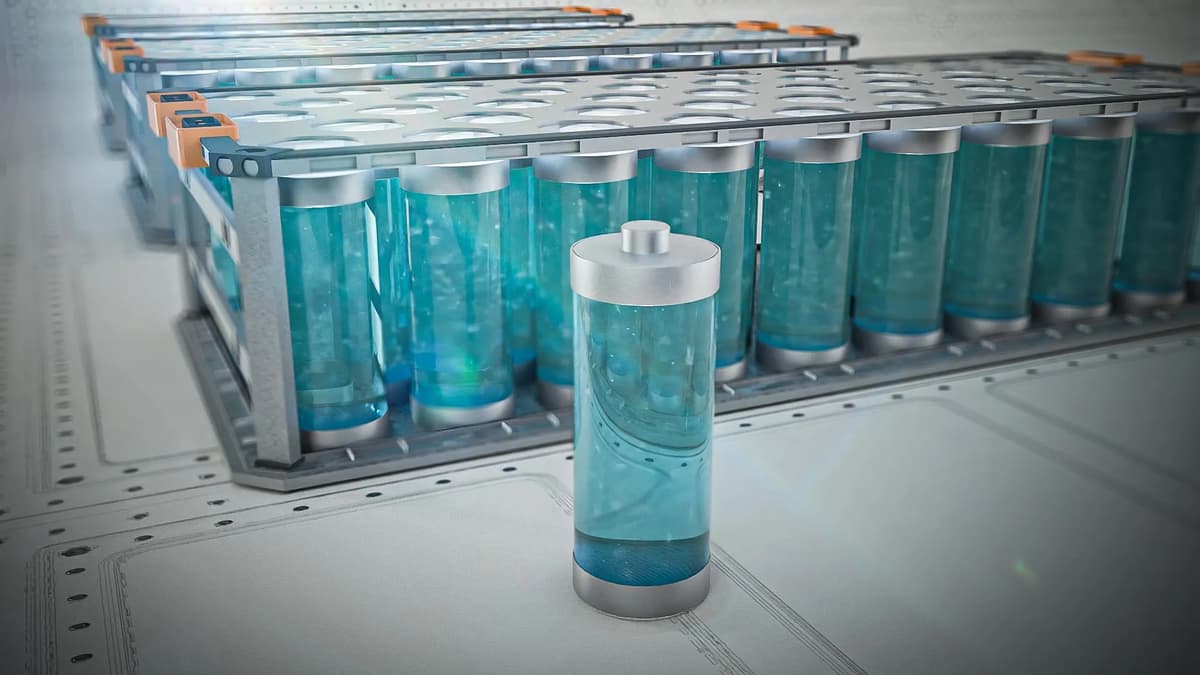
University of Surrey researchers discovered that retaining water in sodium vanadium oxide dramatically boosts sodium‑ion battery performance. The hydrated nanostructured sodium vanadate (NVOH) stores nearly twice the energy of conventional cathodes, charges faster, and remains stable for over 400 cycles....

Researchers at BESSY II have experimentally confirmed that phosphorus atom chains on a silver substrate exhibit genuine one‑dimensional electronic behavior. Using cryogenic STM and angle‑resolved photoelectron spectroscopy, the team isolated the electronic signatures of chains oriented in three 120‑degree directions, revealing...

University of Warwick researchers have introduced a simple, predictive method to calculate the motion of irregularly shaped nanoparticles in air, reviving a century‑old Cunningham correction factor. The new framework replaces spherical assumptions with a shape‑agnostic correction tensor, eliminating the need...

Researchers have identified a specific arginine‑tyrosine interaction that acts as a molecular “sticker” during spider silk formation, explaining how the fiber achieves its legendary strength and elasticity. Using AlphaFold3 modeling, molecular dynamics and NMR spectroscopy, the team showed these interactions...


