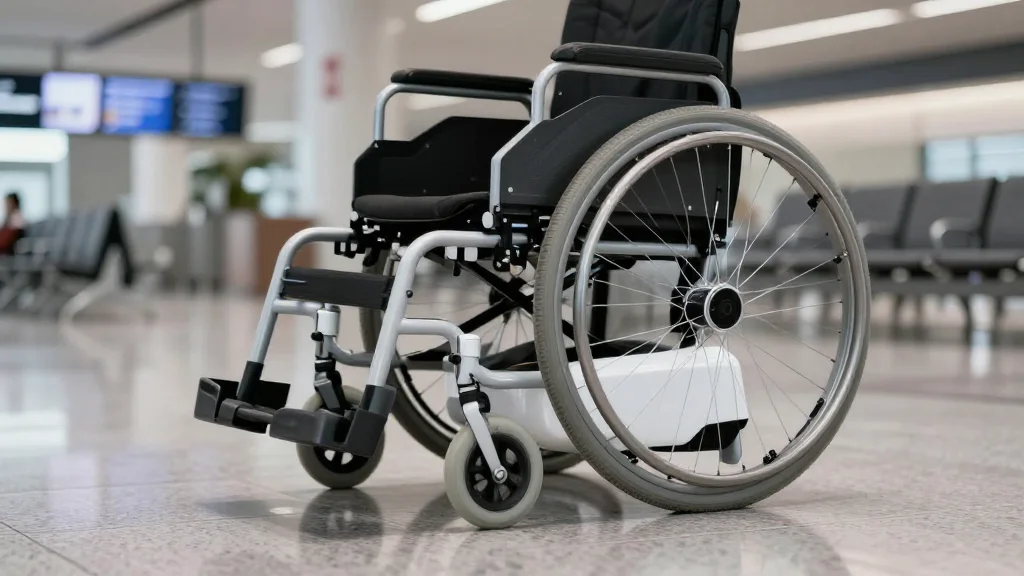
Autonomous Wheelchairs Land at DTW’s Evans Terminal
Why It Matters
The initiative reduces reliance on manual wheelchair staff, cuts transit times and showcases DTW’s commitment to inclusive, technology‑driven passenger experiences, setting a benchmark for smart‑airport accessibility.
Key Takeaways
- •DTW pilots AI‑driven wheelchairs in Evans Terminal
- •Blueberry Technology provides obstacle detection and geo‑fencing
- •Program funded partly by Michigan Economic Development Corporation grant
- •Travelers can choose autonomous or traditional wheelchair service
- •Similar autonomous rollout already completed at McNamara Terminal
Pulse Analysis
Airports worldwide are turning to robotics to streamline passenger flow and improve accessibility, and Detroit Metropolitan Wayne County Airport (DTW) is joining that wave with a pilot of autonomous wheelchairs in its Warren Cleage Evans Terminal. The initiative, a joint effort between the Wayne County Airport Authority and mobility‑tech firm Unifi, aims to assist travelers who face long walks or limited mobility. By integrating self‑driving personal mobility vehicles into the terminal’s operations, DTW hopes to reduce reliance on manual wheelchair staff, shorten transit times, and set a new standard for inclusive travel experiences.
At the heart of the service is Blueberry Technology, which equips each wheelchair with AI‑driven navigation, pre‑loaded airport maps, and real‑time obstacle detection. The vehicles can autonomously steer to gates, restrooms or concessions while pausing for pedestrians or unexpected objects, and a manual override lets users take direct control if desired. Geo‑fencing ensures the units stay within authorized zones, and remote monitoring allows the airport to push software updates that refine routing efficiency. These safety layers aim to build passenger confidence in driverless mobility inside crowded terminal environments.
The program’s funding comes partially from a grant by the Michigan Economic Development Corporation’s Office of Future Mobility and Electrification, reflecting state‑level support for innovative transport solutions. By offering a technology‑forward alternative to traditional wheelchair assistance, DTW can lower labor costs, gather data on passenger movement, and potentially monetize the service through premium options. Moreover, the rollout builds on a previous pilot at the Edward H. McNamara Terminal, signaling a broader strategy to embed autonomous mobility across the airport’s infrastructure and position Detroit as a leader in accessible, smart‑airport initiatives.
Autonomous wheelchairs land at DTW’s Evans Terminal
Comments
Want to join the conversation?
Loading comments...