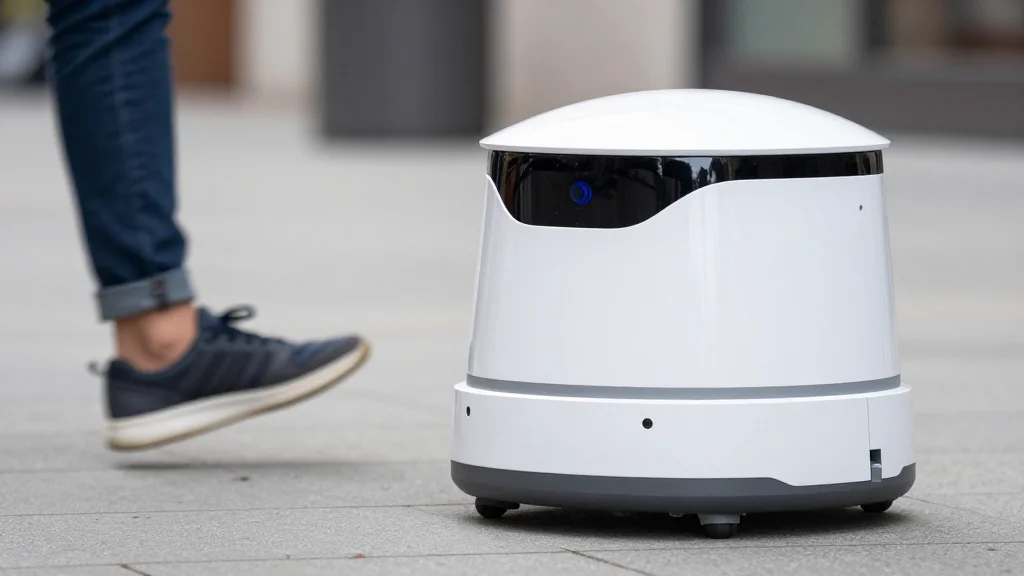
Philadelphia Residents Clash with Uber Eats Autonomous Delivery Robots After Launch

Why It Matters
The Philadelphia protests illustrate a pivotal moment for urban robotics, where public acceptance can become a make‑or‑break factor for autonomous delivery services. As companies aim to reduce labor costs and meet rising demand for contact‑less delivery, they must also address safety concerns and the social contract of shared sidewalks. The outcome could shape municipal policies nationwide, influencing how quickly and under what conditions autonomous robots become a routine part of city life. Furthermore, the incidents expose a gap between technological capability and societal readiness. While the robots can navigate complex environments and secure cargo, they lack the nuanced social awareness that human couriers possess. Understanding and mitigating this gap will be essential for scaling autonomous delivery without triggering backlash that could stall investment and innovation in the sector.
Key Takeaways
- •Uber Eats launched Avride autonomous delivery robots in Philadelphia on March 10, 2026.
- •Robots were kicked multiple times; one incident caused a robot to topple onto its wheels.
- •Avride says the vandalism is an expected phase and will not alter expansion plans.
- •Temple University researcher Lindsay Ouellette links pedestrian frustration to robot presence.
- •Local restaurateur Jeff Newman sees the robots as a solution to driver shortages.
Pulse Analysis
Philadelphia’s early encounter with sidewalk robots serves as a microcosm of the broader tension between automation and public space. Companies like Uber Eats are betting on autonomous delivery to cut costs and meet consumer demand for rapid, contact‑free service. Yet the physical act of kicking a robot reveals a visceral resistance that technology alone cannot smooth over. Historically, new transportation modes—bicycles, scooters, ride‑hailing—have faced similar pushback before gaining acceptance through regulation, infrastructure adaptation, and cultural shift.
In this case, the friction is amplified by the robots’ low speed and shared sidewalk usage, directly competing with pedestrians for limited space. The incidents suggest that future deployments will need to incorporate not just technical safeguards but also proactive community engagement. Cities may impose stricter permitting processes, require real‑time monitoring, or mandate design changes that make robots less intrusive. For Uber Eats, the cost of such adjustments could erode the projected savings from labor reduction, forcing a recalibration of the business model.
Looking ahead, the Philadelphia episode could catalyze a two‑track evolution: on one hand, firms may double down on remote monitoring and AI‑driven deterrence to protect assets; on the other, municipalities might draft clearer sidewalk ordinances that delineate where and how robots can operate. The balance struck will likely dictate the speed at which autonomous delivery scales across the United States, making the outcome of this local dispute a bellwether for the industry’s next phase.
Philadelphia Residents Clash with Uber Eats Autonomous Delivery Robots After Launch
Comments
Want to join the conversation?
Loading comments...