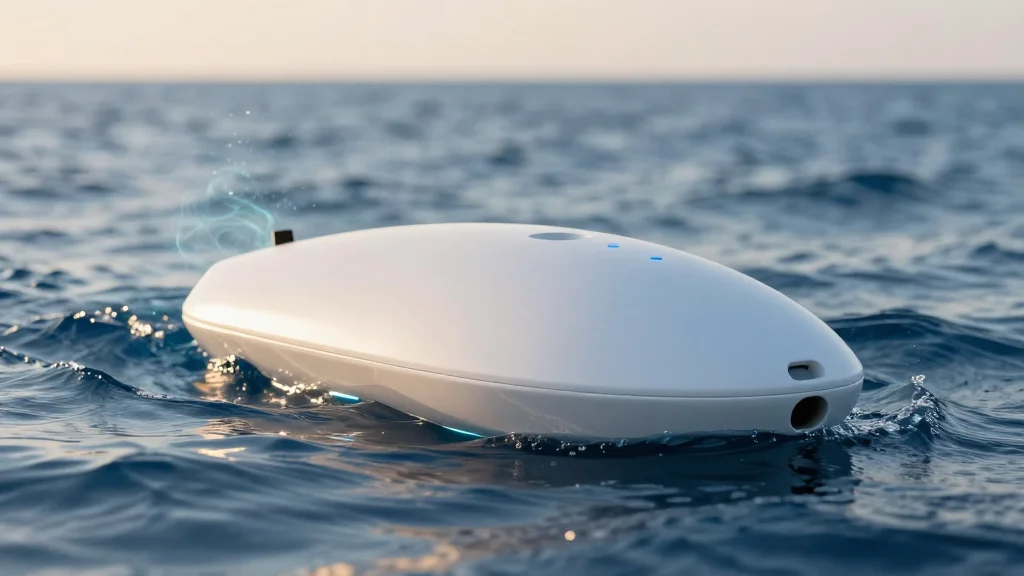
Robotic Floats Uncover Hidden Nitrogen Chemistry in Pacific OMZs

Why It Matters
Understanding nitrogen dynamics in low‑oxygen ocean zones is pivotal for climate forecasting because nitrogen availability directly influences phytoplankton growth, which drives carbon uptake from the atmosphere. The robotic float data overturns the prevailing view of OMZs as chemically inert, suggesting that microbial processes may accelerate nitrogen loss and alter carbon sequestration pathways. For policymakers and climate modelers, these insights could refine predictions of future greenhouse‑gas concentrations and inform mitigation strategies. Beyond science, the success of the BCG‑Argo floats demonstrates the scalability of autonomous marine robotics for large‑scale environmental monitoring. As governments and private investors seek cost‑effective ways to track ocean health, the proven ability of these tiny platforms to deliver high‑resolution, multi‑year chemical datasets positions them as a cornerstone technology for the next decade of ocean stewardship.
Key Takeaways
- •BCG‑Argo floats have collected a three‑year, high‑resolution dataset from the North Pacific OMZs.
- •The data revealed dynamic nitrogen cycling, contradicting earlier assumptions of chemical stagnation.
- •Floats dive to 6,600 feet and surface every ~10 days, transmitting hundreds of thousands of measurements.
- •Findings published in *Communications Earth & Environment* could reshape climate‑model nitrogen parameters.
- •Future plans include expanding the float network to other OMZs and integrating AI‑driven anomaly detection.
Pulse Analysis
The BCG‑Argo breakthrough underscores a broader shift in marine science: autonomous robotics are moving from niche research tools to essential components of global monitoring infrastructure. Historically, ocean chemistry relied on expensive, time‑limited ship expeditions that could only sample a fraction of the vast water column. The ability of a fleet of sub‑2‑meter floats to continuously profile remote, low‑oxygen zones democratizes data collection, lowering costs while increasing spatial and temporal coverage.
From a market perspective, the success story is likely to attract venture capital and government funding toward next‑generation oceanic robots. Companies developing deeper‑diving gliders, bio‑inspired propulsion systems, and onboard AI analytics will find a ready customer base in research institutions and environmental agencies eager to fill data gaps highlighted by the new nitrogen findings. Moreover, the data’s relevance to climate policy creates a compelling narrative for public‑private partnerships, as accurate nitrogen fluxes become a prerequisite for meeting international emissions targets.
Looking ahead, the integration of machine‑learning models with float sensor streams could enable real‑time alerts for anomalous chemical events, such as sudden nitrite spikes that may precede harmful algal blooms. Such capabilities would not only advance scientific understanding but also provide actionable intelligence for fisheries, coastal managers, and disaster response teams. In short, the robotic float discovery is a proof‑of‑concept that autonomous ocean sensors can deliver transformative insights, setting the stage for a new era of data‑rich, robot‑enabled marine stewardship.
Robotic Floats Uncover Hidden Nitrogen Chemistry in Pacific OMZs
Comments
Want to join the conversation?
Loading comments...