
Early Summer Predictive Wildfire Outlooks: Significant Wildfire Potential Remains, But What Does It Look Like Compared To Last Year?
Key Takeaways
- •Predictive Services released updated spring‑summer wildfire risk maps.
- •March hotter, drier than average across western US.
- •Drought indices indicate expanding dryness, raising early fire ignition risk.
- •Current outlook exceeds last year’s early‑season fire activity levels.
- •Agencies urged to prep resources for early summer blaze surge.
Summary
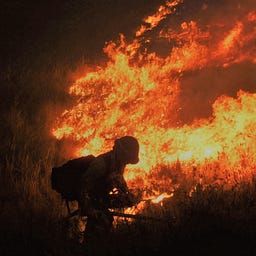
Predictive Services unveiled new spring‑summer wildfire potential maps, highlighting that significant fire risk persists into early summer. March has already recorded above‑average temperatures and below‑average precipitation across the western United States, intensifying drought conditions. The outlook suggests an early‑season fire season that could outpace last year’s activity, potentially serving as a precursor to a larger summer blaze. Stakeholders are being warned to brace for heightened ignition chances as the dry spell continues.
Pulse Analysis
The latest predictive wildfire outlooks, produced by Predictive Services, combine satellite‑derived vegetation moisture data with real‑time climate models to forecast fire danger through spring and early summer. By integrating temperature anomalies, precipitation deficits, and historic fire behavior, the maps reveal a pronounced risk corridor stretching from the Pacific Northwest to the Southwest. This analytical approach reflects a broader shift toward data‑driven fire management, enabling authorities to pinpoint hotspots before ignition occurs.
Compared with the 2025 fire season, the 2026 early‑summer risk profile is markedly higher. Last year’s March‑April period saw modest fire activity, largely confined to isolated incidents. This year, however, the combination of a persistent ridge of high pressure and accelerated snowpack melt has driven soil moisture to record lows, expanding the fuel ladder for ignition. Fire agencies are therefore revising crew deployments, pre‑positioning equipment, and coordinating with state forestry departments to mitigate what could become a more extensive blaze season.
The implications extend beyond emergency responders. Utility companies face heightened scrutiny over vegetation management near power lines, while insurers reassess premium structures for properties in high‑risk zones. Policymakers are also weighing the need for increased funding for community resilience programs and forest restoration projects. As climate trends continue to amplify drought cycles, the early‑season outlook serves as a bellwether for broader economic and environmental impacts, underscoring the urgency of proactive mitigation strategies.


Comments
Want to join the conversation?