Alpine Glacier Holds History Dating Back to the Romans. And It’s Melting—Fast.
Why It Matters
The findings fill a critical gap in knowledge of early anthropogenic atmospheric impacts, improving climate model accuracy. Ongoing melt risks permanent loss of this unique historical baseline.
Key Takeaways
- •Ice core spans Roman era to 17th century
- •Levoglucosan peak indicates medieval wildfires
- •Arsenic spikes link to historic mining activities
- •Glacier lost 4.5 m ice since 2019
- •30% Alpine glaciers may vanish by 2030
Pulse Analysis
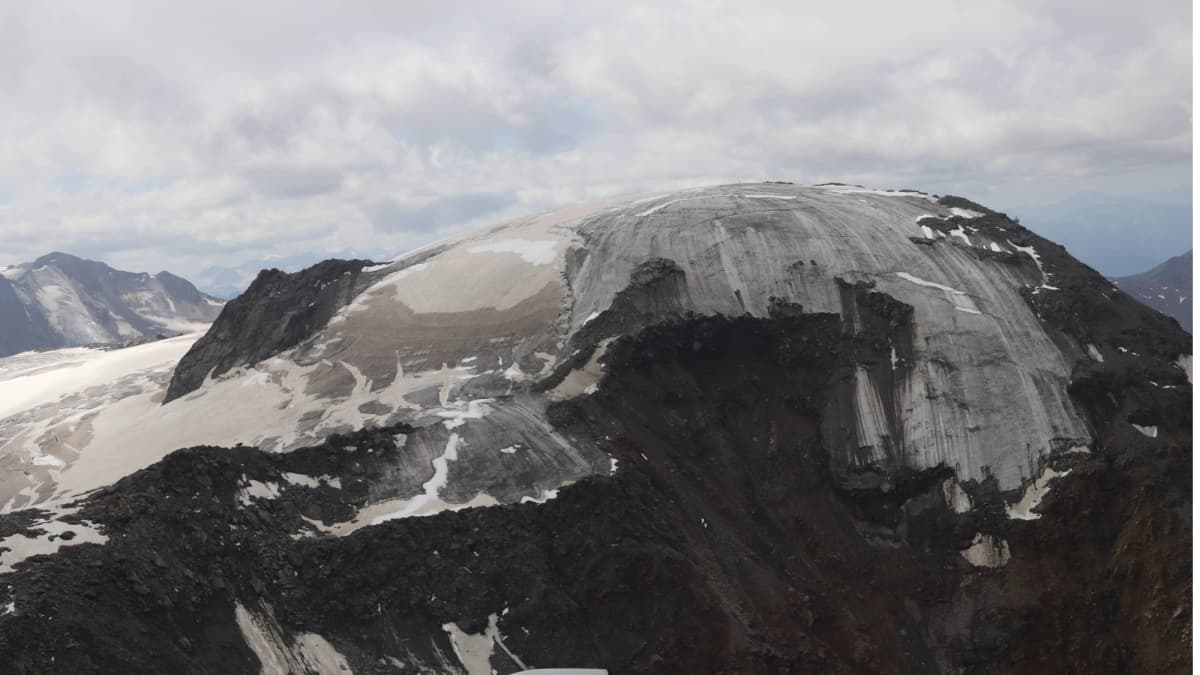
The Weißseespitze glacier, perched at 3,500 meters on the Austria‑Italy border, has become a natural archive for scientists seeking to reconstruct past atmospheres. By drilling deep into the ice, researchers extracted a 10‑meter core that compresses millennia of snowfall, dust, and pollutants into a readable timeline. This type of paleoclimatic evidence is especially valuable in Europe, where few alpine ice caps retain such continuous records, allowing scholars to trace atmospheric composition long before instrumental measurements existed.
Chemical analysis of the core revealed distinct spikes of levoglucosan, a marker of biomass burning, centered around 1128 CE, aligning with documented droughts and forest fires during the Medieval Warm Period. Parallel arsenic and sulfate peaks correspond to intensified silver and copper smelting in the Germanic and Alpine regions and to major volcanic eruptions recorded elsewhere in the globe. Together, these signals illustrate how early human activities—agricultural expansion, mining, and land‑clearance—already left measurable imprints on the atmosphere, challenging the notion that significant anthropogenic influence began only with the Industrial Revolution.
Today, the glacier is receding at an alarming rate; between 2019 and 2025 it lost roughly 4.5 meters of ice, erasing centuries of data in a single generation. Projections suggest that up to 30 percent of Alpine glaciers could disappear by 2030, underscoring the urgency for rapid data retrieval and broader climate‑policy action. Preserving the remaining ice not only safeguards scientific insight but also serves as a stark reminder that climate change threatens to erase the planet’s own memory, limiting our ability to learn from past environmental shifts.


Comments
Want to join the conversation?
Loading comments...