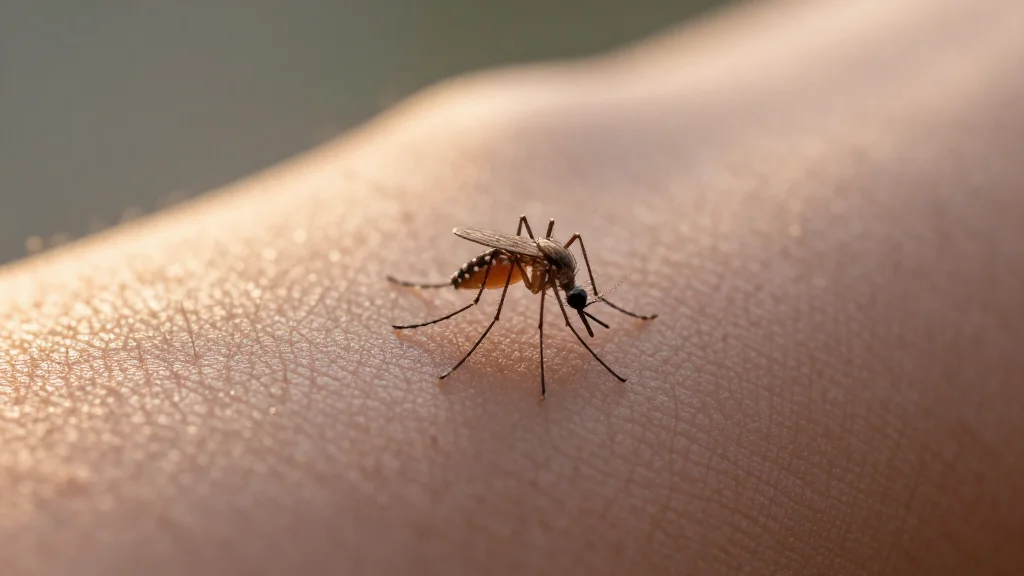
Different People Attract Different Mosquito Species
Why It Matters
The results could reshape vector control by targeting the most attractive human subgroups for each disease‑carrying mosquito, improving interventions. However, translation to real‑world settings remains uncertain.
Key Takeaways
- •Ae. aegypti prefers male scents, 89% attracted.
- •Ae. albopictus linked to specific ketones in skin odor.
- •Cx. quinquefasciatus attracted different participants than Aedes species.
- •Study used Uniport olfactometer with 119 volunteers.
- •Findings limited by lab setting, lacking CO2 and visual cues.
Pulse Analysis
Mosquitoes remain the world’s deadliest insects, transmitting diseases such as dengue, Zika, malaria and West Nile virus. While public health campaigns have long focused on environmental control and insecticide use, the human factor—who gets bitten—has been harder to quantify. Decades of research have shown that skin microbiota and volatile organic compounds create a unique scent fingerprint for each person, but few studies have compared how different mosquito species react to the same set of hosts.
In a pre‑print study posted on bioRxiv, Matthew DeGennaro’s team exposed three major disease vectors—Aedes aegypti, Aedes albopictus and Culex quinquefasciatus—to the arm odors of 119 volunteers inside a Uniport olfactometer. The device isolates odor cues, allowing precise measurement of attraction. Results revealed that Ae. aegypti was highly human‑specialized, with 89% of released mosquitoes drawn to the scents and a statistically significant bias toward male participants. Ae. albopictus showed a strong correlation with certain skin‑derived ketones, whereas Cx. quinquefasciatus favored a completely different subset of individuals, underscoring that each species relies on distinct chemical signatures.
If these laboratory patterns hold in the field, vector control could become far more targeted. Public health agencies might develop personalized repellents or community‑level interventions that focus on the most attractive human subpopulations for each mosquito species, potentially reducing transmission hotspots. Nonetheless, experts warn that the olfactometer omits key cues like carbon dioxide, heat and visual stimuli, and that geographic variation in both mosquitoes and human genetics could alter outcomes. Further field trials are needed to validate whether tailoring strategies to “who attracts which mosquito” can deliver measurable disease‑prevention benefits.
Different people attract different mosquito species
Comments
Want to join the conversation?
Loading comments...