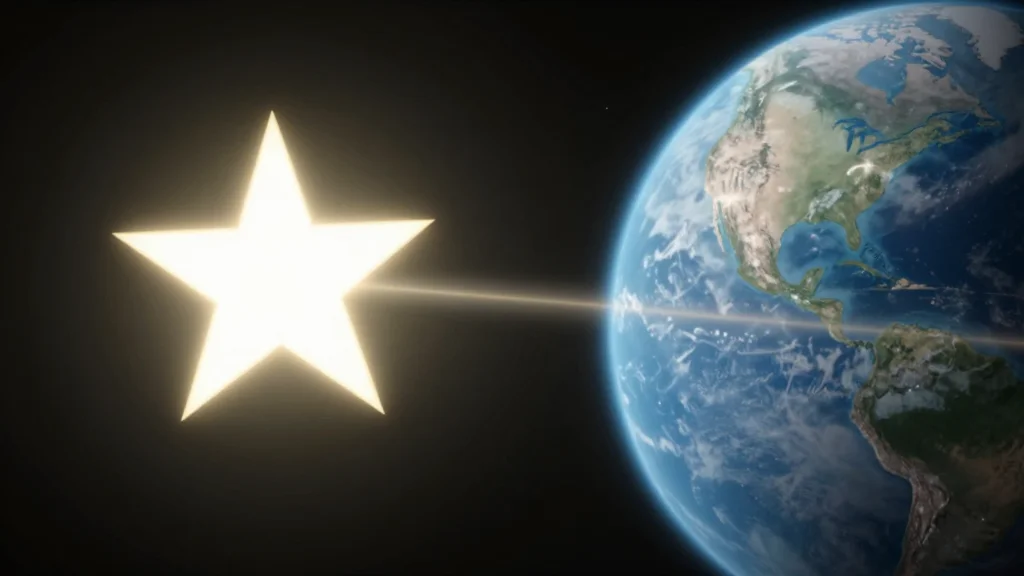
Exoplanet Mirrors Host Star Chemistry, Confirming Planet Formation Theory

Why It Matters
The confirmation that a planet can inherit its host star’s exact chemical fingerprint reshapes how astronomers infer the interior structures of distant worlds. By validating the use of stellar spectra as reliable proxies, the discovery accelerates the characterization of exoplanetary composition, a critical step toward assessing habitability and geological activity. Moreover, the methodological breakthrough—combining high‑resolution optical spectroscopy with infrared atmospheric data—establishes a new standard for precision exoplanet science, enabling researchers to test formation models across a wider variety of planetary systems. Beyond academic interest, the result has practical implications for the allocation of telescope time and the prioritization of targets in the search for life. If stellar chemistry reliably predicts planetary makeup, mission planners can focus limited observational resources on stars whose elemental profiles suggest Earth‑like conditions, thereby streamlining the hunt for biosignatures.
Key Takeaways
- •Exoplanet 320 light‑years away shows identical iron, silicon, magnesium ratios to its host star.
- •High‑resolution ESPRESSO spectroscopy and JWST NIRSpec data were combined for the analysis.
- •Finding validates the long‑standing hypothesis that planetary bulk composition mirrors stellar composition.
- •Result supports using stellar abundances to model planetary interiors and assess habitability.
- •Method sets a new benchmark for future comparative planetology with upcoming missions like ARIEL and ELT.
Pulse Analysis
The breakthrough arrives at a pivotal moment for exoplanet science, where the field is transitioning from discovery to detailed characterization. Historically, the assumption that planets inherit their host star’s chemistry was based on indirect evidence and theoretical models of protoplanetary disks. This study provides the first empirical confirmation, effectively turning a hypothesis into a working principle. The impact is twofold: it legitimizes the use of stellar spectra as a shortcut for estimating planetary interiors, and it raises the bar for observational rigor.
From a market perspective, the validation will likely accelerate investment in high‑precision spectrographs and space‑based infrared observatories. Companies developing next‑generation instruments, such as laser‑frequency comb calibrators for radial‑velocity measurements, can now point to a concrete scientific demand. Likewise, the data‑rich approach demonstrated here aligns with the growing trend of multi‑instrument, multi‑wavelength campaigns, encouraging collaborative funding models that pool resources across ground‑based and space platforms.
Looking ahead, the real test will be whether the chemical concordance holds for smaller, temperate planets where atmospheric loss and interior differentiation could introduce divergences. If future observations confirm a universal star‑planet chemical link, the field may shift toward a taxonomy that classifies exoplanets by stellar fingerprint, streamlining the search for Earth analogues. Conversely, any systematic deviations will refine formation theories, highlighting the role of migration, disk chemistry gradients, and late‑stage accretion. Either outcome will deepen our understanding of planetary origins and guide the next generation of habitability studies.
Exoplanet Mirrors Host Star Chemistry, Confirming Planet Formation Theory
Comments
Want to join the conversation?
Loading comments...