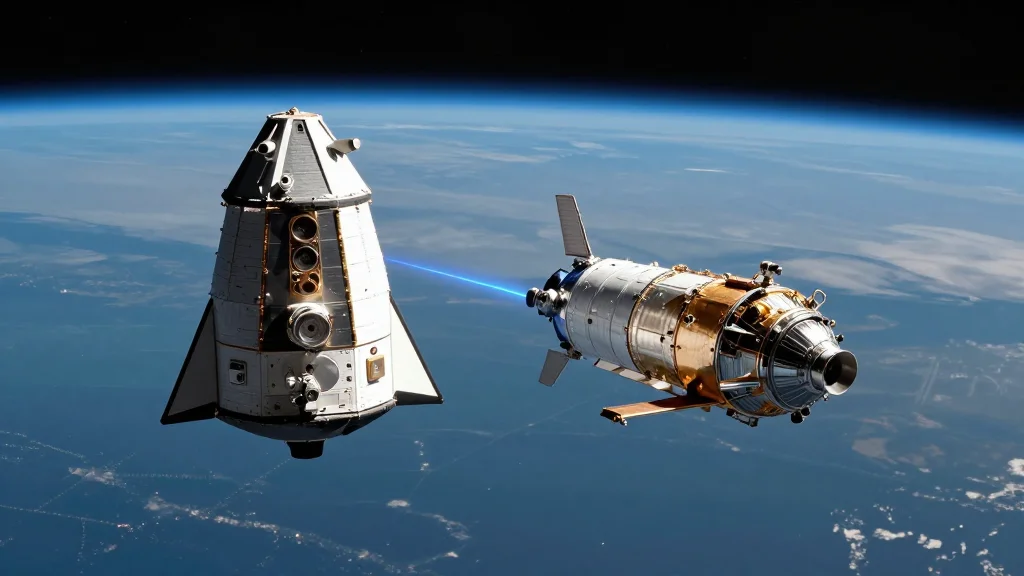
In a First, Artemis II Moon Astronauts Make ‘Ship to Ship’ Call to ISS
Why It Matters
The call validates communication protocols linking lunar and LEO platforms, essential for future Artemis missions and deep‑space habitats. It shows ISS experience directly informs crew safety and mission efficiency on the Moon.
Key Takeaways
- •First human lunar mission contacts ISS
- •Orion was 200,000+ nautical miles from Earth
- •15‑minute audio exchange highlighted “moon joy.”
- •ISS lessons cited for deep‑space operations
- •Crew included NASA and CSA astronauts
Pulse Analysis
The Artemis II mission, NASA’s first crewed flight to the Moon since Apollo, achieved a historic milestone on Tuesday by establishing a direct audio link with the International Space Station. While Orion, christened “Integrity,” cruised more than 200,000 nautical miles from Earth, the three‑person crew—Reid Wiseman, Victor Glover, Christina Koch, and CSA astronaut Jeremy Hansen—spoke for roughly fifteen minutes with ISS veterans Jessica Meir, Chris Williams, Jack Hathaway, and ESA astronaut Sophie Adenot. The informal banter, punctuated by the now‑familiar phrase “moon joy,” underscored the human element of deep‑space exploration.
The call was more than a morale boost; it served as a real‑time validation of the communication architecture that will underpin future Artemis flights and eventual lunar‑orbit habitats. By leveraging the same S‑band and Ku‑band networks that connect the ISS to ground stations, NASA confirmed that signal latency and bandwidth remain manageable even at lunar distances. Astronauts also highlighted how day‑to‑day ISS practices—ranging from food handling to water management—translate to the Orion environment, reinforcing the station’s role as a proving ground for deep‑space crew protocols.
Industry observers see the ship‑to‑ship exchange as a proof point for an integrated low‑Earth‑orbit and cislunar ecosystem. Commercial partners developing lunar landers and habitat modules can now reference a tested communication link between orbital and lunar assets, reducing risk for upcoming Artemis III surface missions. Moreover, the public’s enthusiasm, sparked by the candid “moon joy” remarks, bolsters political and financial support for NASA’s broader Artemis program, which aims to sustain a permanent human presence on the Moon by the late 2020s.
In a first, Artemis II moon astronauts make ‘ship to ship’ call to ISS
Comments
Want to join the conversation?
Loading comments...