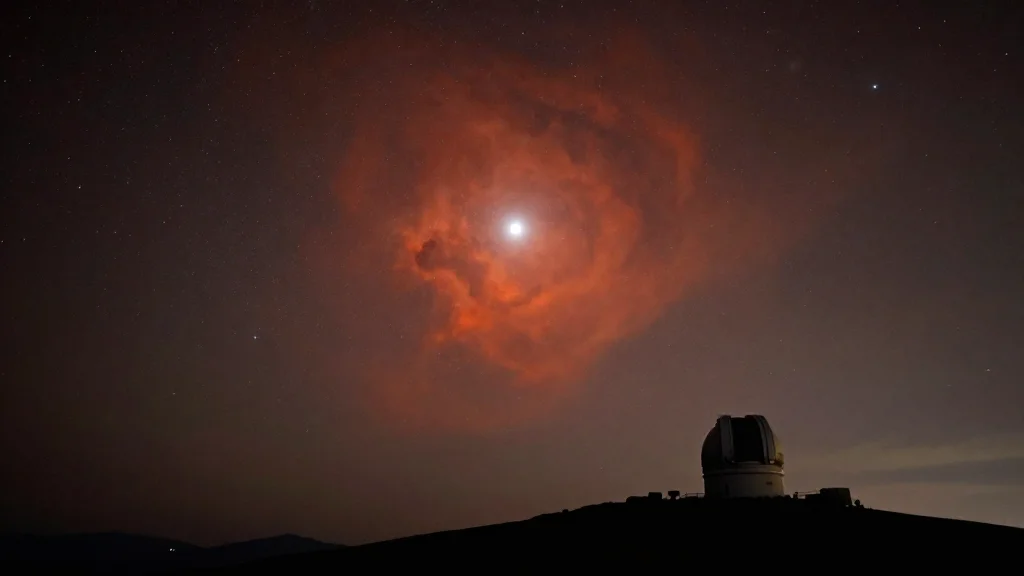
Planetary Collision 11,000 Light‑Years Away Sheds Light on Planet Formation

Why It Matters
Directly witnessing a planetary collision provides empirical evidence that violent impacts are not rare exceptions but integral components of planet formation. This reshapes our understanding of how Earth‑like planets acquire mass, water, and potentially life‑enabling chemistry. Moreover, the ability to detect and analyze such events expands the toolkit for identifying systems where habitability may have been enhanced by post‑impact processes. By establishing a method to spot collision‑generated debris clouds, astronomers can now target a previously invisible phase of planetary evolution. This could accelerate the discovery of worlds that have undergone similar formative events, refining estimates of how common Earth‑analogs might be across the Milky Way.
Key Takeaways
- •Astronomers observed a planetary collision 11,000 light‑years away using infrared detection.
- •The host star, Gaia20ehk, showed irregular brightness dips caused by a hot debris cloud.
- •Research led by Anastasios Tzanidakis of the University of Washington challenges gentle accretion models.
- •The event suggests violent impacts may contribute to delivering water and organics to emerging planets.
- •Future infrared missions will search for similar collisions to gauge their frequency and habitability impact.
Pulse Analysis
The detection of a planetary‑scale impact at such a distance marks a turning point for exoplanetary science, moving the field from indirect inference to direct observation of dynamic processes. Historically, planet formation theories have relied on models calibrated against the Solar System and protoplanetary disk observations. This event injects a real‑world data point that validates the high‑energy collision scenario, reminiscent of the hypothesized Moon‑forming impact, and forces a re‑examination of accretion timescales.
From a market perspective, the breakthrough fuels demand for next‑generation infrared observatories capable of rapid, high‑resolution monitoring of stellar light curves. Companies developing space‑based infrared sensors stand to benefit as funding agencies prioritize missions that can capture transient phenomena. The scientific community, meanwhile, will likely see a surge in proposals aimed at systematic surveys for debris clouds, potentially reshaping the allocation of telescope time across major facilities.
Looking forward, the key question is whether such collisions are common enough to influence the overall architecture of planetary systems. If follow‑up observations confirm a high incidence rate, models of planet habitability will need to incorporate impact‑driven delivery of volatiles as a standard pathway. This could broaden the criteria used in the search for life, emphasizing not just the presence of a planet in the habitable zone but also its collisional history. The coming years will test whether this singular observation is an outlier or the first glimpse of a widespread, yet previously hidden, aspect of planet formation.
Planetary Collision 11,000 Light‑Years Away Sheds Light on Planet Formation
Comments
Want to join the conversation?
Loading comments...