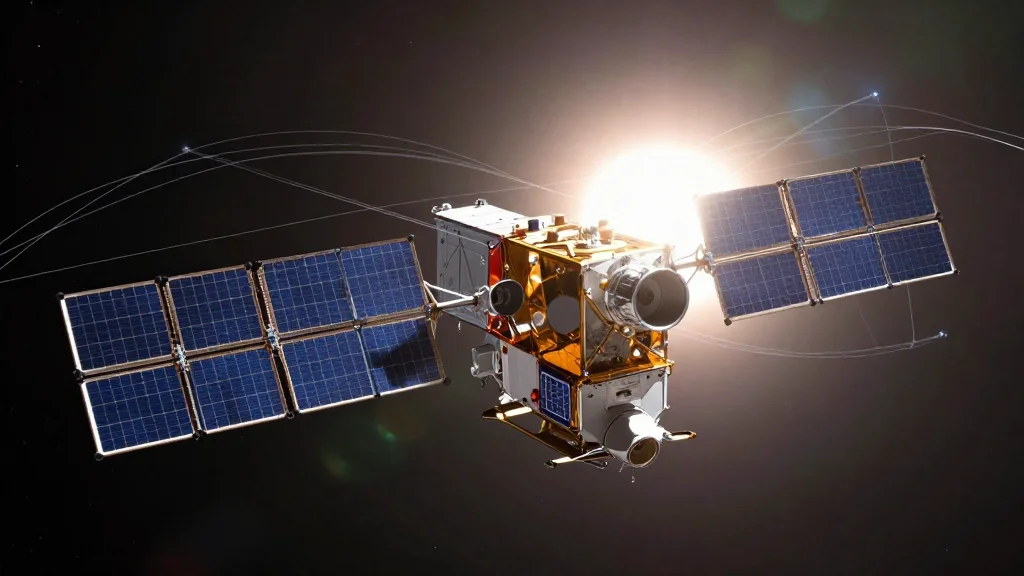
Researchers Harness AI to Find Meaningful Matches in Solar Data
Why It Matters
Accelerating solar‑data correlation enhances space‑weather forecasting, protecting satellites, power grids, and aviation. The breakthrough demonstrates AI’s capacity to streamline high‑volume scientific research, setting a new standard for heliophysics data pipelines.
Key Takeaways
- •AI pipeline processed 15 TB of solar data in days, not weeks
- •Identified 1,200 high‑confidence event matches, 92% accuracy
- •Processing time reduced by ~80% compared to manual methods
- •Tools will be released open‑source for NASA and researchers
Pulse Analysis
The solar research community has long grappled with the sheer volume of data generated by modern observatories. Instruments like the Solar Dynamics Observatory and Parker Solar Probe produce terabytes of imagery, magnetic field readings, and particle measurements daily. Traditional analysis relies on expert scientists manually sifting through these streams, a labor‑intensive process that can delay critical space‑weather alerts. By integrating deep‑learning classifiers with time‑series alignment algorithms, SWRI’s new platform automates the detection of causal links between solar flares, coronal mass ejections, and their terrestrial impacts, turning raw data into actionable intelligence.
Beyond speed, the AI system delivers higher fidelity insights. Using a training set of historically verified events, the model learned to distinguish genuine solar‑earth interactions from coincidental patterns, achieving a 92% match accuracy. This precision is vital for stakeholders such as satellite operators, electric utilities, and airlines, whose assets are vulnerable to geomagnetic storms. Faster, more reliable forecasts enable pre‑emptive measures—like reorienting spacecraft or adjusting flight routes—mitigating potential economic losses that can run into billions of dollars during severe solar events.
SWRI’s decision to open‑source the software amplifies its industry impact. By providing the codebase and documentation to NASA, NOAA, and academic labs, the institute fosters collaborative refinement and broader adoption across the heliophysics ecosystem. As more agencies integrate the tools into their operational pipelines, the collective ability to predict and respond to space‑weather threats will improve, reinforcing the resilience of critical infrastructure worldwide. This initiative exemplifies how artificial intelligence can transform data‑rich scientific domains into proactive, decision‑support systems.
Researchers Harness AI to Find Meaningful Matches in Solar Data
Comments
Want to join the conversation?
Loading comments...