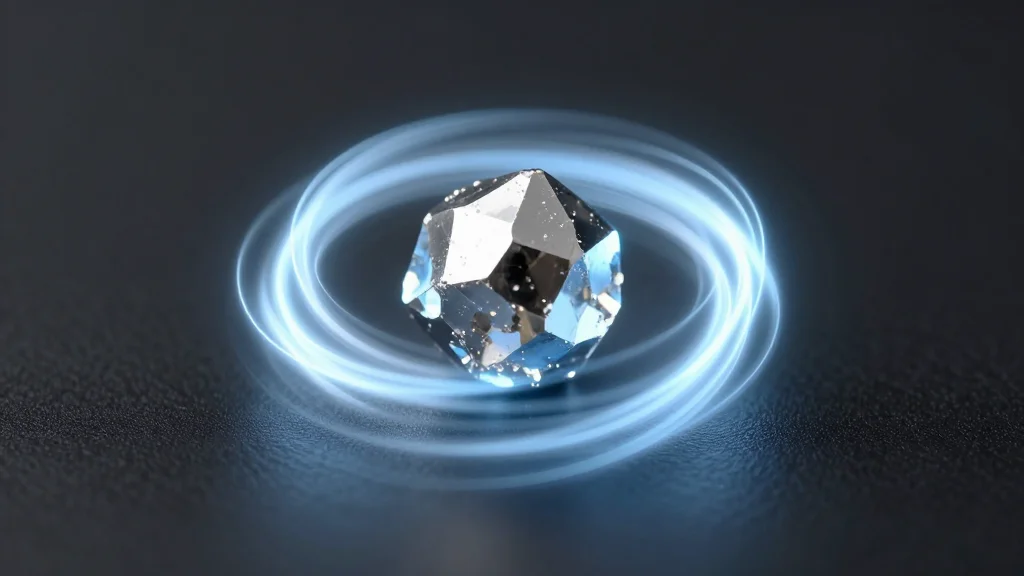
Superconductivity Revives at 40 Tesla in Uranium Ditelluride, Forming a Toroidal Halo

Why It Matters
The Lazarus phase forces a reassessment of the fundamental interplay between magnetism and superconductivity, two forces traditionally viewed as antagonistic. By demonstrating that a strong magnetic field can stabilize, rather than destroy, Cooper pairs under specific geometric conditions, the work expands the design space for quantum materials that must operate in high‑field environments, such as magnetic resonance imaging, particle accelerators, and quantum processors. Beyond basic science, the ability to sustain superconductivity at tens of tesla could reduce the need for costly magnetic shielding in superconducting circuits, lowering system complexity and cost. If the underlying mechanism can be engineered into other compounds, it may accelerate the development of fault‑tolerant qubits and ultra‑sensitive detectors, giving a strategic advantage to research institutions and firms that master this new class of materials.
Key Takeaways
- •UTe₂ loses superconductivity at 10 Tesla, then regains it above 40 Tesla.
- •The revived state forms a three‑dimensional toroidal halo around the crystal’s hard b‑axis.
- •Researchers from Rice University, University of Maryland and NIST authored the study.
- •Phenomenological model links angular momentum of Cooper pairs to field‑induced stabilization.
- •Findings could enable superconducting devices that operate in extreme magnetic fields.
Pulse Analysis
The Lazarus phase marks a rare instance where a magnetic field, long considered the nemesis of superconductivity, becomes a catalyst for its revival. Historically, the quest for high‑field superconductors has focused on materials that raise the critical field limit, often through chemical doping or pressure. UTe₂ flips that script by exploiting directional anisotropy and angular momentum of Cooper pairs, suggesting that geometry can be as powerful a lever as composition.
From a market perspective, the ability to maintain zero resistance at 40 Tesla and beyond could disrupt the superconducting magnet industry, which currently relies on niobium‑tin and high‑temperature cuprates that still falter under extreme fields. Companies developing quantum processors are especially vulnerable to magnetic noise; a material that thrives in such environments could simplify cryogenic system design and improve qubit coherence times. However, the path from laboratory observation to commercial application is steep. The phenomenological model, while insightful, lacks the microscopic detail needed for predictive engineering, and scaling the toroidal halo to macroscopic wires or films remains an open challenge.
Looking ahead, the field will likely see a surge of experimental efforts to replicate the halo in related heavy‑fermion and topological superconductors. Parallel theoretical work will aim to bridge the phenomenological description with band‑structure calculations, potentially uncovering a universal principle for magnetic‑field‑enhanced superconductivity. If successful, this could inaugurate a new class of quantum materials that are not merely resilient to magnetic fields but are actively empowered by them, reshaping both scientific understanding and the commercial landscape of quantum technologies.
Superconductivity Revives at 40 Tesla in Uranium Ditelluride, Forming a Toroidal Halo
Comments
Want to join the conversation?
Loading comments...