Companies Mentioned
Why It Matters
Uniform, high‑quality pitches protect match schedules, broadcast revenue, and set a new benchmark for sustainable stadium infrastructure in global sport events.
Key Takeaways
- •Research spanned five years across three host nations
- •Bermudagrass chosen for heat‑prone stadiums
- •Kentucky bluegrass blended with ryegrass for cool climates
- •Sod‑on‑plastic technique revived from 1994 World Cup
- •Uniform performance standards required despite diverse environments
Pulse Analysis
The 2026 FIFA World Cup will be staged on 16 stadiums spread across Canada, the United States and Mexico, presenting an unprecedented turf‑management challenge. Over the past five years, a multidisciplinary team led by turf‑grass professor John Sorochan has mapped climate variables, soil conditions and altitude effects to devise a unified performance model. Their research proves that a single set of FIFA‑approved criteria can be met whether the pitch sits on the rainy coast of British Columbia, the subtropical heat of Miami, or the thin air of Mexico City at 7,350 feet.
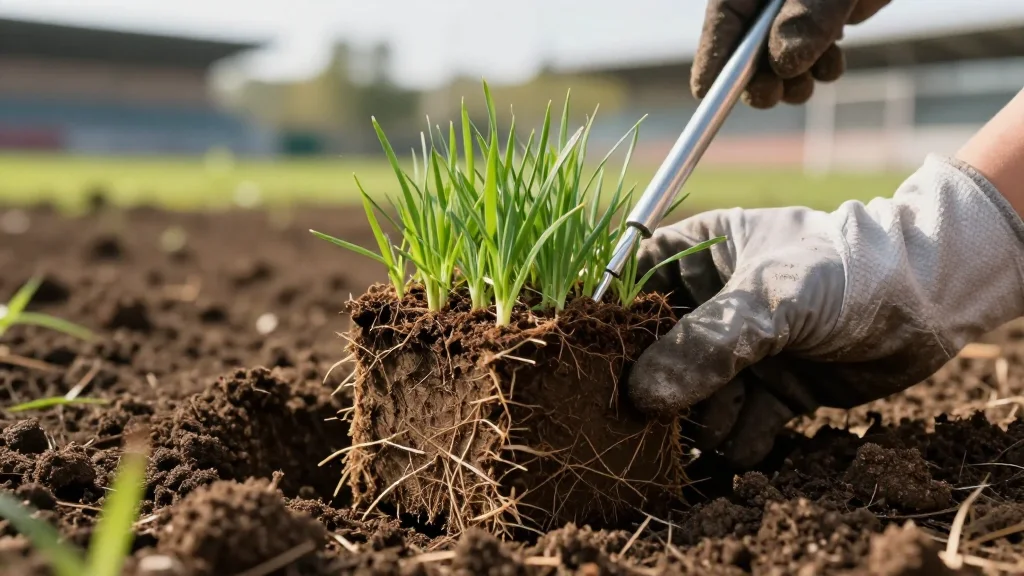
To translate the model into reality, organizers rely on two grass families tailored to local climates. In hotter venues, bermudagrass—renowned for drought tolerance and rapid recovery—forms the base, while cooler cities receive a blend of Kentucky bluegrass and fast‑germinating perennial ryegrass that boosts stability and disease resistance. The construction process also revives the sod‑on‑plastic method first used at the 1994 World Cup, allowing pre‑grown turf trays to be shipped and installed quickly, reducing downtime and ensuring consistent playing surfaces across all venues.
The intensive turf strategy underscores a broader shift toward sustainable, high‑performance infrastructure in global sports. By standardizing grass performance, FIFA reduces the risk of match delays and protects broadcast revenues, while suppliers gain a multi‑year contract pipeline worth millions. Moreover, the data‑driven approach sets a template for future events—Olympics, Rugby World Cup—where climate diversity once dictated costly, ad‑hoc solutions. As climate change intensifies, such scientific, scalable models will become essential for delivering reliable playing fields worldwide. Cities also benefit from reduced water usage and lower maintenance costs.
Turfin’ Safari
Comments
Want to join the conversation?
Loading comments...