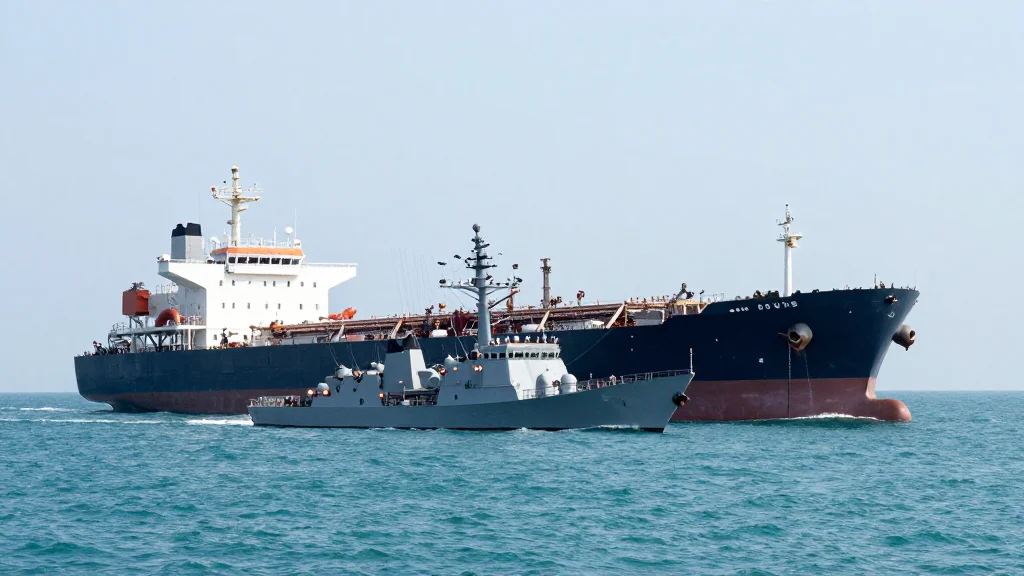
Trump’s Hormuz Blockade Risks Piling Pain on Asia Allies, China
Companies Mentioned

Bloomberg
Why It Matters
The blockade threatens to tighten global oil supplies, driving up prices and inflating costs for Asia’s energy‑dependent economies, while adding geopolitical tension between the U.S., China and regional allies.
Key Takeaways
- •Trump orders Hormuz blockade targeting vessels to/from Iranian ports
- •Brent crude jumps 8.6% to over $103 per barrel
- •Asia imports 80% of its oil via Hormuz; prices surge
- •Japan and South Korea seek alternative supplies amid inflation risk
- •China may leverage mineral exports to pressure US over blockade
Pulse Analysis
The Trump administration’s decision to seal the Strait of Hormuz marks a dramatic escalation in U.S.-Iran tensions and immediately reverberated through global energy markets. By restricting traffic to Iranian ports, the blockade cut off a critical chokepoint that moves roughly three‑quarters of the world’s oil shipments. Brent crude surged to more than $103 a barrel, while European gas futures spiked nearly 18%, underscoring how quickly geopolitical shocks translate into price volatility. Analysts see this as a classic supply‑shock scenario, where limited physical flow forces markets to price in heightened risk, pushing inflationary pressures higher across economies already grappling with post‑pandemic recovery.
For Asian economies, the impact is especially acute. Japan, South Korea and other U.S. allies rely on over 80% of their oil imports passing through Hormuz, making them vulnerable to sudden price spikes and supply disruptions. Governments are already rolling out demand‑side measures—raising thermostat settings, incentivising energy‑saving technologies, and negotiating emergency contracts with alternative exporters. The higher oil costs threaten to erode consumer purchasing power and compress corporate margins, potentially slowing growth in a region that contributes roughly a third of global GDP. Energy‑intensive industries, from petrochemicals to shipping, face tighter cost structures, prompting a faster shift toward diversification of fuel sources and greater emphasis on renewable alternatives.
Beyond the immediate energy shock, the blockade reshapes broader macroeconomic forecasts. Bloomberg Economics outlines three scenarios ranging from a modest price rise to a prolonged shutdown that could push oil to $170 a barrel and trim global growth to 2.2%. Meanwhile, China, a major user of the strait and a dominant supplier of critical minerals, may weaponize its resource leverage to extract concessions from Washington ahead of President Trump’s planned May visit. The interplay of energy security, inflation, and strategic bargaining underscores how a single maritime action can ripple through trade, finance and diplomatic relations, reshaping the global economic outlook for the rest of 2026.
Trump’s Hormuz blockade risks piling pain on Asia allies, China
Comments
Want to join the conversation?
Loading comments...