Battles to Shrink the Federal Reserve's Balance Sheet Begin
Why It Matters
A smaller Fed balance sheet would shift policy transmission from quantitative easing toward broader rate cuts, affecting borrowing costs for households and businesses. The outcome will shape market liquidity, mortgage rates, and overall financial stability.
Key Takeaways
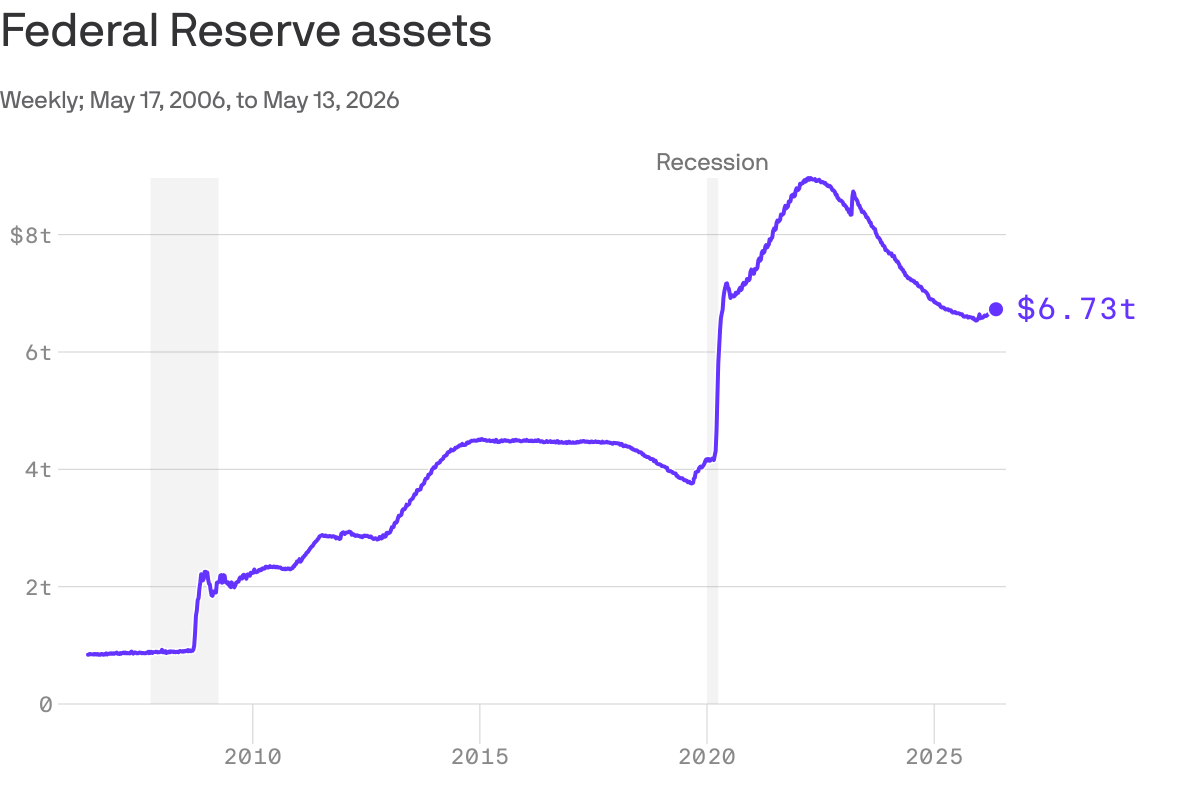
- •Fed balance sheet peaked at $9 trillion in 2022, now $6.7 trillion.
- •New Fed chair Kevin Warsh aims to shrink the balance sheet slowly.
- •Critics warn rapid cuts could lift mortgage rates and destabilize money markets.
- •Governor Michael Barr says balance‑sheet reduction would threaten financial stability.
Pulse Analysis
The Federal Reserve’s balance sheet has become a defining feature of modern monetary policy. Starting with a modest $800 billion before the 2008 crisis, successive rounds of quantitative easing in 2012 and 2020 drove assets to nearly $9 trillion by 2022. Runoff over the past three years trimmed the sheet to $6.7 trillion, but the pandemic‑era expansions left the central bank with a powerful, yet controversial, tool for injecting liquidity into the economy.
Kevin Warsh, the incoming Fed chair, views the oversized portfolio as a source of market distortion that primarily benefits holders of financial assets. He proposes a gradual, deliberate reduction to restore a more traditional policy framework where interest‑rate cuts, rather than balance‑sheet expansion, drive broader economic benefits. Proponents argue that a leaner Fed could lower the cost of borrowing for households and small businesses, while critics caution that pulling cash from the banking system may push mortgage rates higher and strain repo and Treasury markets.
The policy debate is far from settled. Governor Michael Barr and other senior officials have publicly labeled balance‑sheet shrinkage as the "wrong objective," warning it could undermine bank resilience and money‑market functioning. Market participants like GMO’s Roy Henriksson stress the need to align any reduction with a clear demand‑for‑reserves strategy, lest the Fed inadvertently trigger the kind of market stress seen in 2019. As Warsh prepares to assume his role, the Fed’s path forward will hinge on balancing the desire for a smaller footprint with the imperative of preserving financial stability.
Battles to shrink the Federal Reserve's balance sheet begin
Comments
Want to join the conversation?
Loading comments...