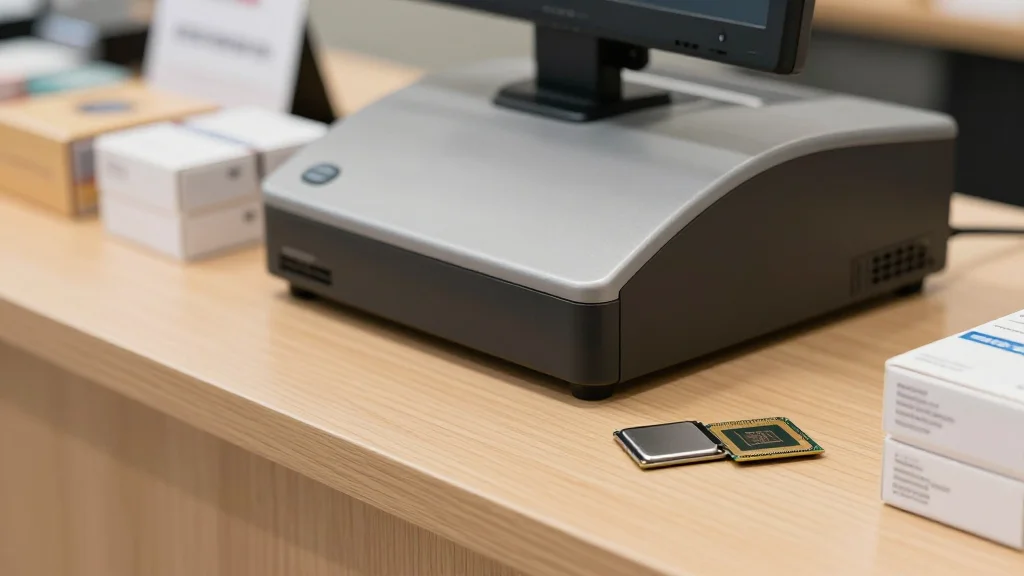
Dollar General Beats Forecast, Micron Joins $1 Trillion Club, Nvidia Unveils Vera CPU

Companies Mentioned
Why It Matters
The three developments illustrate how different segments of the US economy are navigating post‑pandemic challenges. Dollar General’s modest sales growth highlights the strain on low‑income consumers and the importance of operational efficiency for discount retailers. Micron’s entry into the $1 trillion club signals that AI‑driven demand is reshaping the semiconductor landscape, turning a traditionally cyclical commodity into a high‑margin growth engine. Nvidia’s Vera CPU underscores the race to dominate AI infrastructure, a sector poised to become a major driver of future GDP growth. Together, these stories point to a broader narrative: while inflation and supply constraints test traditional business models, technology‑focused firms that can lock in long‑term contracts and innovate at the hardware level are poised to capture outsized upside, influencing employment, investment, and trade balances across the United States.
Key Takeaways
- •Dollar General beat earnings expectations, with net income up 13% and gross margin up 65 bps, but same‑store sales grew only 2% YoY.
- •Micron’s market cap surpassed $1 trillion after high‑bandwidth memory contracts sold out for 2026.
- •Nvidia unveiled the Vera CPU, pairing a Blackwell GPU with an ARM‑based processor to target AI workloads.
- •Retail discount chains face inflation‑driven consumer pressure, while semiconductor memory demand fuels valuation spikes.
- •The AI hardware market, estimated at $150 billion, intensifies competition among Nvidia, Intel and AMD.
Pulse Analysis
Dollar General’s earnings beat reflects a classic retail paradox: operational improvements can lift profitability even when top‑line growth stalls. The 2% same‑store sales increase, below the 3.5% inflation rate, suggests that discretionary spending remains fragile. The company’s aggressive store‑renovation strategy aims to boost basket size and frequency, but success will depend on macro‑economic conditions and the ability to differentiate from rivals like Walmart and Target.
Micron’s ascent to a $1 trillion valuation is less about a one‑off rally and more about structural change in the memory market. AI models now require high‑bandwidth, low‑latency memory, turning DRAM from a price‑sensitive commodity into a strategic asset. Micron’s long‑term contracts through 2029 lock in revenue streams and mitigate the classic boom‑bust cycles that have plagued memory makers. However, the company must navigate capital‑intensive fab expansions and the risk of over‑reliance on a narrow set of AI customers.
Nvidia’s Vera CPU launch marks a strategic pivot from a pure GPU play to a more integrated compute platform. By bundling a GPU with an ARM‑based CPU, Nvidia hopes to capture workloads that demand tight CPU‑GPU coupling, such as autonomous agents and large‑scale inference. The move challenges Intel’s and AMD’s dominance in the CPU arena and could reshape data‑center procurement strategies. If adoption accelerates, Vera could become a cornerstone of the next wave of AI services, further cementing Nvidia’s role as a bellwether for US tech growth.
Dollar General Beats Forecast, Micron Joins $1 Trillion Club, Nvidia Unveils Vera CPU
Comments
Want to join the conversation?
Loading comments...