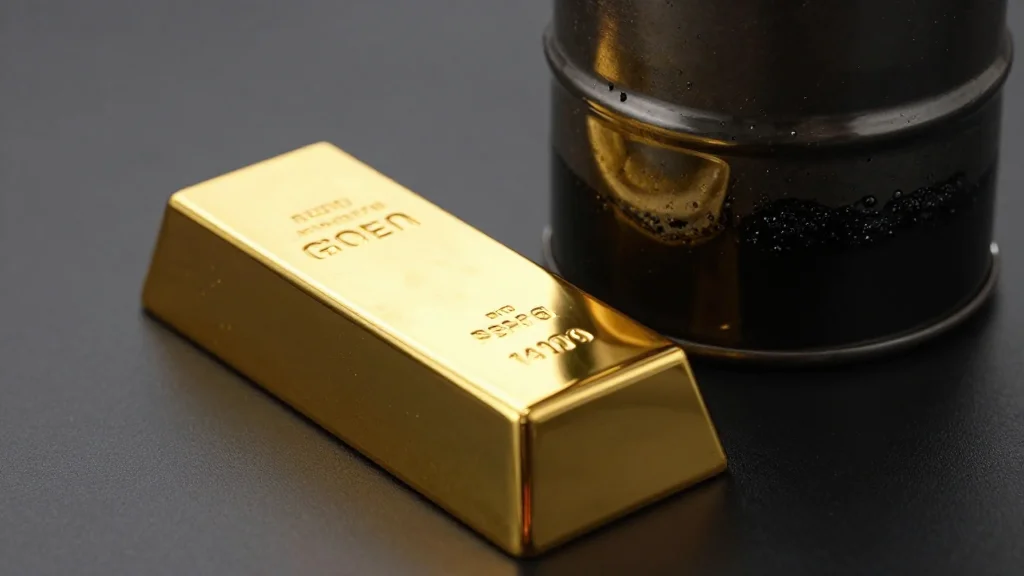
Gold Slides to Weekly Loss as Middle‑East Tensions Keep Oil Prices High

Why It Matters
Gold’s price trajectory is a direct gauge of investor risk appetite and expectations for inflation. A decline in gold while oil climbs suggests that the dollar and real‑interest‑rate outlook are outweighing traditional safe‑haven demand. For the U.S. economy, this dynamic can affect consumer spending, borrowing costs, and the valuation of other asset classes that are sensitive to interest‑rate shifts. If the conflict in the Middle East persists, sustained high oil prices could feed into broader inflation, prompting the Federal Reserve to consider tighter monetary policy. Conversely, a rapid diplomatic breakthrough could lower oil prices, ease inflation pressures, and potentially revive demand for gold as a hedge, influencing portfolio allocations across the United States.
Key Takeaways
- •Spot gold fell 0.2% to $4,685.70/oz on Friday.
- •Gold is down about 3% for the week, marking a weekly loss.
- •Oil prices rose to $107 a barrel as the Strait of Hormuz stayed effectively closed.
- •U.S. dollar strength and rising real‑interest‑rate expectations pressured gold.
- •Future gold moves will hinge on developments in U.S.-Iran talks and Gulf shipping lanes.
Pulse Analysis
The recent gold dip illustrates a nuanced shift in market psychology. Historically, spikes in oil have bolstered gold by stoking inflation fears, but the current environment is dominated by a stronger dollar and rising Treasury yields. The dollar’s advance reflects investors’ search for safety in the face of geopolitical uncertainty, yet that very safety erodes gold’s appeal when real yields become more attractive.
From a historical perspective, periods of heightened Middle‑East tension have produced mixed outcomes for gold. In the early 2000s, oil shocks often coincided with gold rallies, while the post‑2008 era saw the dollar and yields exert a stronger counterforce. The present scenario mirrors the latter pattern: oil’s upward pressure is being offset by monetary dynamics that favor cash and short‑duration bonds.
Looking ahead, the market’s trajectory will be defined by two variables: diplomatic progress and energy supply. A breakthrough in U.S.-Iran negotiations could quickly reverse the dollar’s momentum, lower yields, and revive gold’s safe‑haven status. Conversely, a prolonged closure of the Strait of Hormuz would keep oil prices high, potentially feeding broader inflation and forcing the Federal Reserve to tighten policy, which would further suppress gold. Investors should monitor Treasury yield curves, dollar indices, and any official statements from the State Department for early signals of a shift.
Gold Slides to Weekly Loss as Middle‑East Tensions Keep Oil Prices High
Comments
Want to join the conversation?
Loading comments...