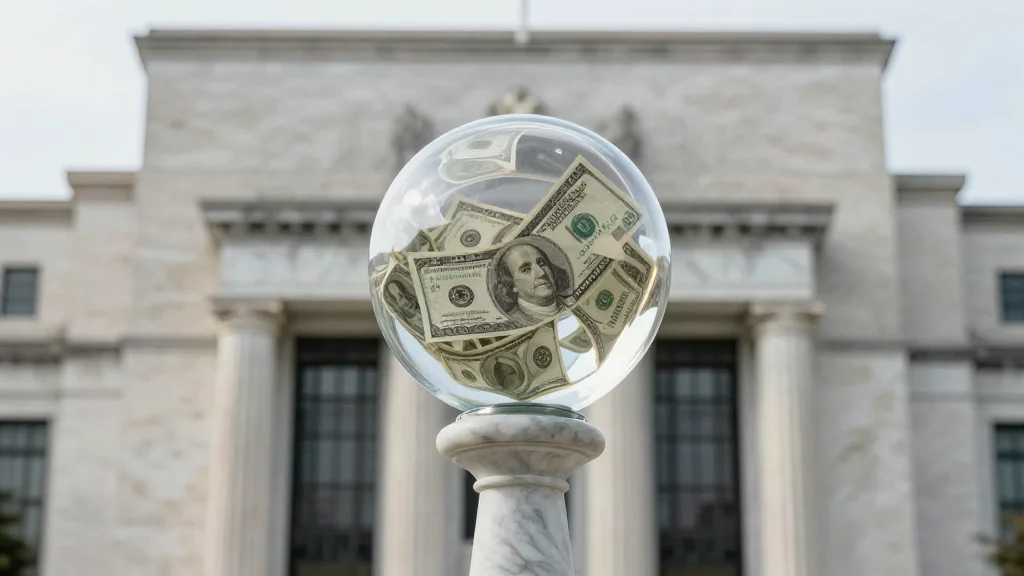
Powell’s Final FOMC Meeting Faces Inflation Spike and Nominee Warsh’s Balance‑Sheet Push

Companies Mentioned
Why It Matters
Powell’s final FOMC meeting underscores a pivotal moment for U.S. monetary policy. The projected inflation surge to 3.56% threatens to derail expectations of further rate cuts, putting upward pressure on borrowing costs and potentially slowing consumer spending. Simultaneously, the prospect of a new chair who favors a substantial balance‑sheet reduction introduces uncertainty about the Fed’s future asset‑purchase strategy and its impact on long‑term interest rates. Together, these dynamics will shape credit conditions, investment decisions and the broader trajectory of the U.S. economy in the coming year. The transition also highlights the political dimension of central‑bank independence. With a president‑elect who has openly criticized the Fed’s current stance, the confirmation of Kevin Warsh—or any nominee—could signal a shift toward more overt coordination between fiscal and monetary policy, a development that could affect market confidence and the credibility of the Fed’s inflation‑targeting framework.
Key Takeaways
- •Jerome Powell chaired his last FOMC meeting on April 29, ending a six‑year tenure.
- •U.S. inflation is projected to rise to 3.56% in April, a 116‑basis‑point two‑month increase.
- •Iran’s shutdown of the Strait of Hormuz triggered the inflation spike by disrupting oil supplies.
- •President‑elect Donald Trump’s Fed chair nominee, Kevin Warsh, calls the Fed’s $6.7 trillion balance sheet "bloated."
- •Warsh’s balance‑sheet reduction plan could raise Treasury yields and increase borrowing costs.
Pulse Analysis
Powell’s exit comes at a rare confluence of macroeconomic stressors: a geopolitical shock that has reignited inflation and a political environment eager for a more dovish monetary stance. Historically, Fed chair transitions have been smooth when policy outlooks align; this time, the divergence between Trump’s preference for aggressive cuts and the data‑driven approach championed by Powell creates a friction point that could manifest in a more volatile policy path.
If Warsh’s balance‑sheet trimming proceeds aggressively, the immediate effect will be higher long‑term rates, which could dampen the housing market and corporate investment. However, a leaner Fed balance sheet might also restore confidence in the central bank’s commitment to price stability, potentially anchoring inflation expectations over the longer term. The key risk is timing: a rapid deleveraging in the midst of still‑elevated inflation could push the economy into a soft landing or even a mild recession, especially if consumer debt service costs rise sharply.
Investors should monitor three signals over the next quarter: (1) the Senate’s confirmation timeline and any concessions Warsh makes regarding balance‑sheet pace; (2) the Fed’s forward guidance on inflation targets and rate projections; and (3) real‑time energy price movements that could either exacerbate or alleviate the inflationary pressure stemming from the Iran‑Israel conflict. The interplay of these factors will dictate whether the U.S. economy can sustain growth without reigniting the inflationary spiral that defined the early 2020s.
Powell’s Final FOMC Meeting Faces Inflation Spike and Nominee Warsh’s Balance‑Sheet Push
Comments
Want to join the conversation?
Loading comments...