Slight Rise for Open Construction Jobs in March
Why It Matters
A lower threshold of construction vacancies eases pressure on the Fed’s monetary policy, but lingering housing weakness and rising energy prices could temper any rate‑cut momentum.
Key Takeaways
- •March construction openings rose to 224,000, still below 2025 levels.
- •Overall U.S. job openings fell to 6.87 million in March.
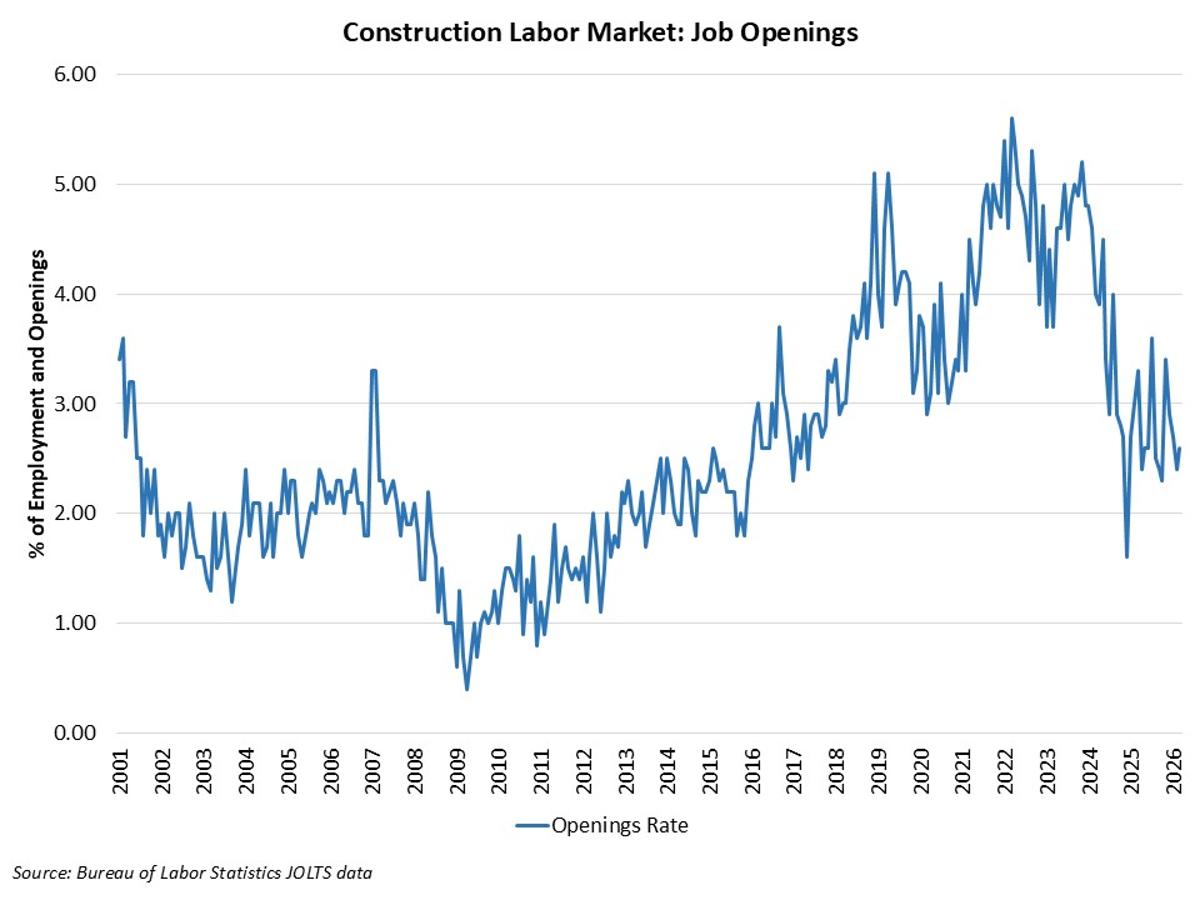
- •Job‑openings rate dropped to 2.6% versus 3.3% a year ago.
- •Layoffs fell to 1.7%; quits increased to 1.7% in construction.
- •Fed may cut rates if openings stay under eight million.
Pulse Analysis
The latest Job Openings and Labor Turnover Survey (JOLTS) shows a modest rebound in construction vacancies, with open positions climbing to 224,000 in March after a February dip. While the increase signals renewed hiring activity, it remains 20% lower than the 278,000 openings recorded a year ago and well beneath the sector’s pre‑pandemic peak. The construction‑job‑openings rate slipped to 2.6%, reflecting a tighter labor market that mirrors the broader decline in total U.S. job openings, which fell to 6.87 million in March.
From a macroeconomic perspective, the sustained sub‑eight‑million level of total job openings is a key signal for the Federal Reserve. Analysts have long argued that once vacancies consistently stay below this threshold, the Fed gains leeway to lower the federal funds rate without reigniting inflation. However, the construction sector’s mixed performance—weak residential demand offset by growth in data‑center and other non‑residential projects—adds nuance. A softer housing market keeps labor demand constrained, while expanding tech‑related construction offers pockets of resilience.
Looking ahead, the construction labor market will likely be shaped by two external forces. First, rising energy prices linked to the ongoing Iran conflict could increase project costs, dampening new starts and further tightening hiring. Second, the Fed’s policy path will hinge on whether vacancy trends continue to ease; a persistent drop below eight million could prompt incremental rate cuts, supporting broader economic activity. Stakeholders should monitor quarterly JOLTS releases, housing starts, and energy price indices to gauge the balance between construction demand and monetary policy.
Slight Rise for Open Construction Jobs in March
Comments
Want to join the conversation?
Loading comments...