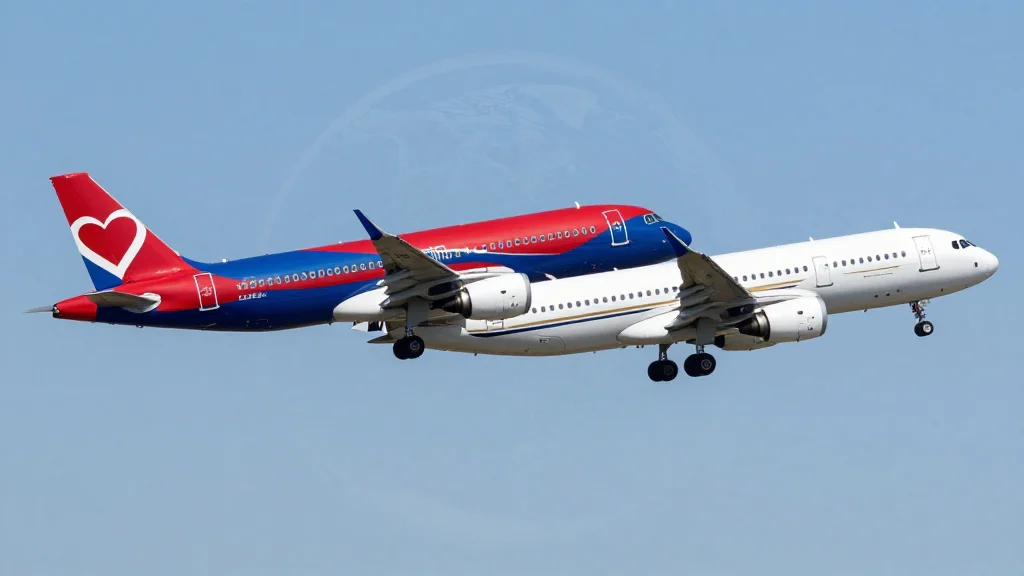
Southwest Airlines Links U.S. Hubs to Singapore Airlines, Expanding Global Reach

Why It Matters
The Southwest‑Singapore Airlines partnership directly ties U.S. domestic travelers to a broader set of international destinations, a linkage that can boost tourism spending, hotel occupancy and ancillary services such as car rentals and dining. By facilitating single‑ticket journeys, the deal lowers friction for U.S. consumers, potentially increasing outbound travel volumes that support jobs in the hospitality sector and generate additional tax revenue for state and local governments. At a macro level, the agreement illustrates how U.S. carriers are adapting to a volatile cost environment. With jet‑fuel bills inflating and profit forecasts slashed, airlines are seeking revenue‑enhancing collaborations rather than costly fleet expansions. Successful interline models could become a template for other low‑cost carriers, helping to stabilize the broader airline industry and mitigate the ripple effects of fuel price shocks on the U.S. economy.
Key Takeaways
- •Southwest Airlines and Singapore Airlines launch an interline partnership covering three U.S. gateways—Los Angeles, Seattle‑Tacoma and San Francisco.
- •Singapore Airlines serves more than 130 destinations in 35 countries, adding nearly 120 new airports to Southwest’s network.
- •U.S. jet‑fuel costs jumped 78 % in April to $6.5 billion, pressuring airline profit forecasts down to $23 billion for 2026.
- •The partnership aims to capture higher‑margin long‑haul traffic and ancillary revenue amid a shrinking profit outlook.
- •Tickets are now available through Southwest’s website and major travel agencies, with full rollout expected in the coming months.
Pulse Analysis
Southwest’s alliance with Singapore Airlines is a pragmatic response to a perfect storm of rising fuel costs, eroding margins and a competitive landscape that increasingly rewards network breadth. Historically, low‑cost carriers have shunned long‑haul routes because of the capital intensity and operational complexity involved. By leveraging Singapore Airlines’ established intercontinental infrastructure, Southwest sidesteps those barriers while still offering customers a seamless travel experience. This mirrors a broader industry shift where carriers are forming strategic partnerships to extend market reach without heavy balance‑sheet investment.
The timing is critical. Fuel price spikes have forced legacy carriers to raise fares by up to 20 % and, in some cases, suspend routes. Southwest’s low‑fare model is especially vulnerable to such cost pressures, but the partnership opens a new revenue stream that can offset domestic price sensitivity. Moreover, the alliance could stimulate demand for premium ancillary services—such as upgraded seating, in‑flight connectivity and bundled travel packages—that traditionally command higher margins. If Southwest can translate the expanded network into measurable load‑factor gains, it may set a precedent for other U.S. ultra‑low‑cost carriers to pursue similar interline deals, potentially reshaping the competitive dynamics of trans‑Pacific travel.
From a macroeconomic perspective, the deal may help cushion the U.S. tourism sector from the fallout of higher travel costs. By simplifying the booking process for international trips, the partnership could encourage more Americans to travel abroad, supporting jobs in hospitality, retail and transportation that have been hit hard by recent fuel‑price volatility. In the longer term, such collaborations could foster a more resilient airline ecosystem, better equipped to absorb external shocks—whether geopolitical, commodity‑price driven, or regulatory—thereby contributing to a steadier flow of tourism‑related economic activity across the United States.
Southwest Airlines Links U.S. Hubs to Singapore Airlines, Expanding Global Reach
Comments
Want to join the conversation?
Loading comments...