Why It Matters
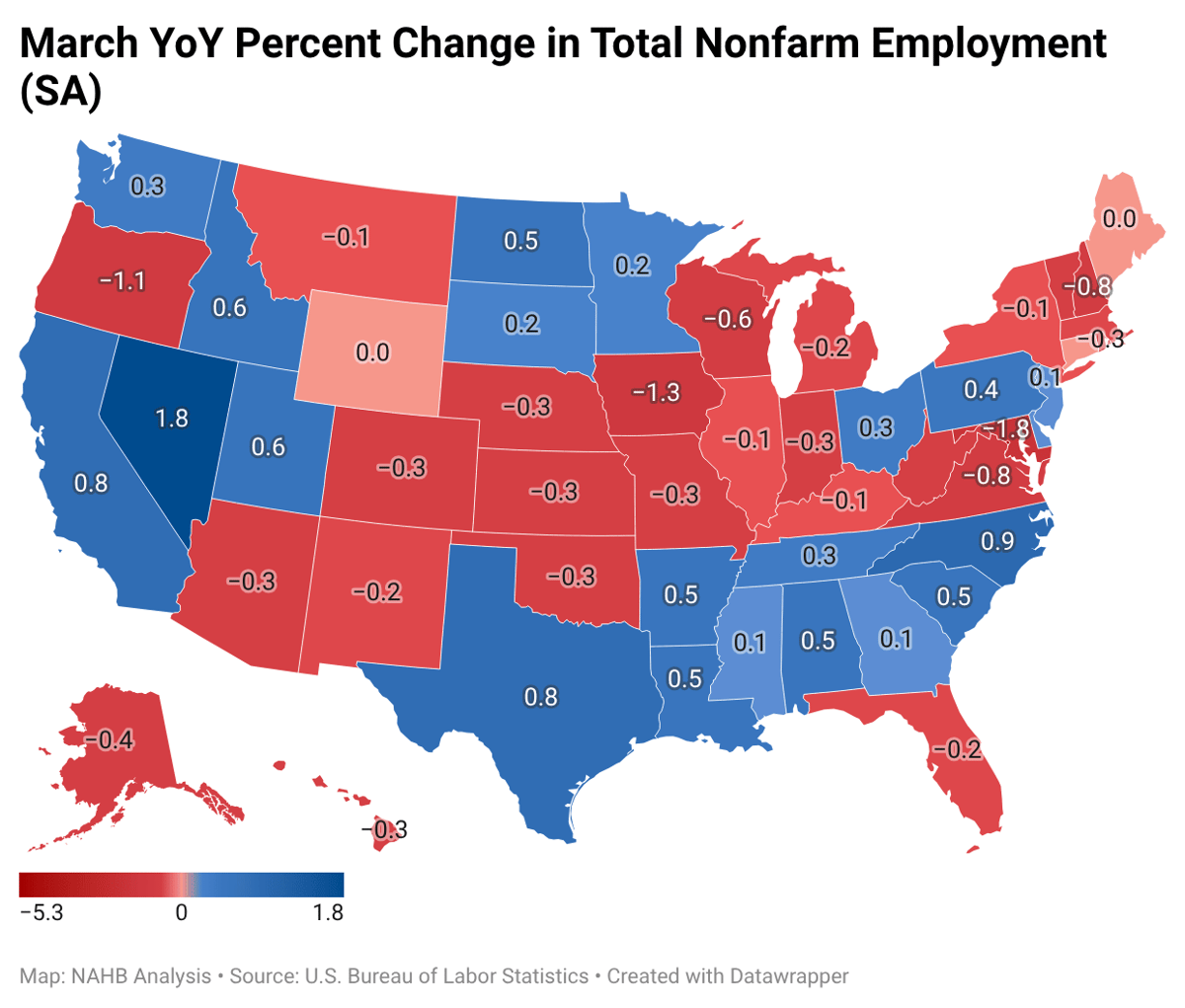
The mixed state‑level performance signals uneven economic momentum, affecting regional hiring, wage pressure and policy decisions. Tracking these divergences helps investors and policymakers gauge where growth is sustainable and where labor markets remain fragile.
Key Takeaways
- •Texas added 46,800 jobs, leading March state gains
- •Oregon lost 4,800 jobs, the largest state decline
- •Construction added 26,000 jobs, Ohio posted biggest gain
- •South Dakota unemployment hit 2.3%, the lowest nationwide
- •DC unemployment rose to 6.3%, highest among states
Pulse Analysis
March’s employment report underscores a bifurcated labor market. While the nation added 178,000 jobs, the distribution was uneven: Sun‑belt powerhouses such as Texas, California and Florida drove the bulk of the increase, whereas a cluster of 15 states, highlighted by Oregon’s 4,800‑job loss, lagged behind. This regional disparity reflects differing industry mixes, migration patterns, and fiscal policies, suggesting that national headline numbers can mask localized weakness that may influence consumer spending and corporate expansion strategies.
The construction sector, a bellwether for both residential demand and infrastructure investment, posted a modest net gain of 26,000 jobs. Ohio’s 5,300‑job surge points to robust activity in the Midwest, while Nevada’s 2,600‑job drop signals strain in markets dependent on tourism‑linked development. Year‑over‑year, construction employment rose 57,000 jobs, driven largely by Texas’s 21,600‑job increase, indicating that regional supply‑chain capacity and housing affordability remain pivotal factors for future growth. Stakeholders should monitor these trends as they affect material costs, labor shortages, and real‑estate pricing.
Unemployment rates further illustrate the uneven recovery. South Dakota’s 2.3% rate suggests a tight labor market that could spur wage inflation, whereas the District of Columbia’s 6.3% rate—exacerbated by massive federal layoffs—highlights lingering structural challenges. States with rates above 5% such as Michigan, Illinois and California may face heightened policy pressure to stimulate job creation. Understanding these nuanced dynamics equips investors, business leaders, and policymakers with the insight needed to allocate resources effectively and anticipate shifts in regional economic health.
State-Level Employment Situation: March 2026
Comments
Want to join the conversation?
Loading comments...