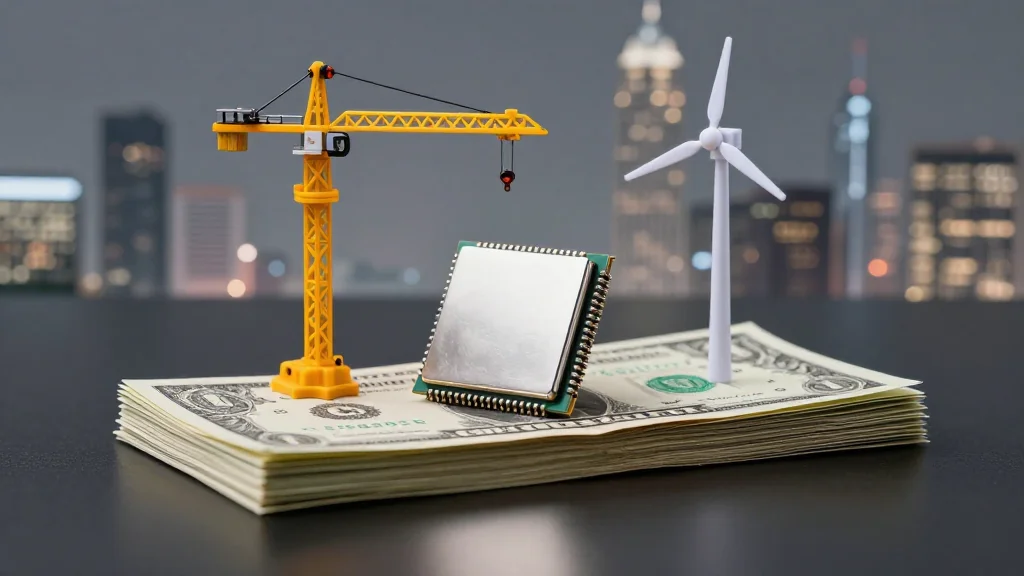
Trump Adviser Projects 6% US GDP Growth, Triple Mainstream Forecasts

Why It Matters
A 6% growth forecast, if credible, would dramatically alter the macroeconomic outlook for the United States. It would justify continued or expanded fiscal stimulus, potentially easing the Federal Reserve’s justification for higher interest rates and influencing bond yields, equity valuations, and the dollar’s strength. Moreover, the projection fuels a political narrative that Trump‑era tax and spending policies are delivering unprecedented growth, which could shape upcoming legislative battles and the administration’s ability to push further reforms. Conversely, if the forecast proves overly optimistic, it could erode confidence in the White House’s economic messaging, embolden critics of the tax cuts, and reinforce calls for more cautious monetary policy. The tension between the adviser’s bullish view and mainstream forecasts underscores a broader debate about the sustainability of AI‑driven capital investment and the real‑world impact of recent fiscal measures on productivity and inflation.
Key Takeaways
- •Kevin Hassett predicts US GDP growth north of 6% for 2026, triple mainstream forecasts.
- •Hassett cites a March capital‑spending surge and AI‑related factory construction as drivers.
- •Q1 2026 GDP grew at a 2% annualized rate; last near‑6% growth was 5.7% in 2021.
- •Mainstream forecasters expect 2.2‑2.6% growth for 2026, consistent with recent trends.
- •Inflation remains above target at 3.5% PCE, and oil price volatility adds downside risk.
Pulse Analysis
Hassett’s 6% projection is less a data‑driven forecast than a policy‑driven narrative. By tying growth to the One Big Beautiful Bill Act and AI‑centric capital spending, the adviser is framing fiscal stimulus as the engine of a new growth wave. Historically, tax‑cut‑driven booms have delivered short‑term spikes but often ran into supply‑side constraints and inflationary pressures, as seen after the 2017 reforms. The AI investment surge may indeed boost equipment orders, but translating that into sustained productivity gains requires a skilled workforce and supply‑chain resilience—areas where the US still lags.
Market participants are likely to treat Hassett’s comments as a catalyst for short‑term optimism, especially in sectors tied to AI hardware, construction, and industrial equipment. However, the Fed’s mandate to curb inflation will dominate policy decisions. If inflation stays near 3.5% and wages keep rising, the central bank may maintain a tighter stance, dampening the impact of any fiscal boost. Moreover, the geopolitical backdrop—rising oil prices from Iran‑related tensions—adds a layer of uncertainty that could offset any domestic stimulus.
In the longer run, the real test will be whether the projected factory turn‑on materializes into measurable output growth. If the US can sustain a pipeline of AI‑driven capital projects, it could narrow the productivity gap with peers and justify a more expansionary fiscal stance. If not, the 6% claim may be relegated to campaign rhetoric, reinforcing the need for a balanced approach that couples tax incentives with investments in education, infrastructure, and supply‑chain robustness.
Trump Adviser Projects 6% US GDP Growth, Triple Mainstream Forecasts
Comments
Want to join the conversation?
Loading comments...