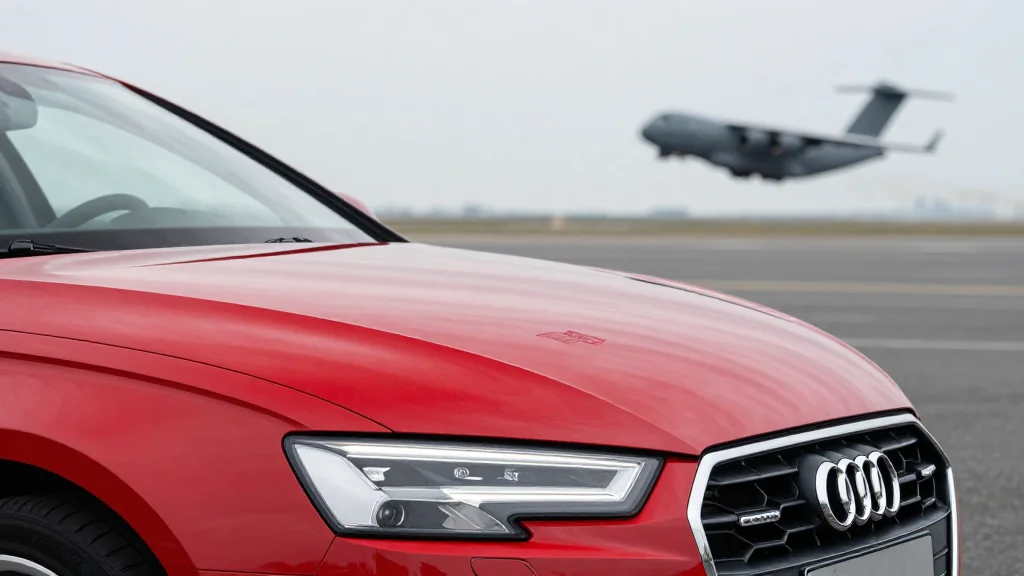
Trump Hikes EU Auto Tariffs to 25% and Orders 5,000‑troop Pullback From Germany

Companies Mentioned
Why It Matters
The 25% tariff on EU automobiles directly affects the U.S. auto market, where European brands hold a sizable share of premium sales. Higher prices could depress consumer demand, reduce dealership revenues, and erode jobs linked to import distribution and servicing. At the same time, the troop pullback signals a potential re‑orientation of U.S. defense spending, with budgetary savings that may be redirected to other priorities, but also risks weakening the credibility of NATO’s collective defense guarantee. Together, these actions could reshape trade balances, influence inflationary pressures, and alter the strategic calculus of U.S. allies. Beyond immediate economic effects, the tariff and troop decisions test the resilience of the post‑World‑II transatlantic order. If Europe responds with retaliatory tariffs, U.S. exporters could face new barriers, while a reduced U.S. military presence may embolden regional adversaries. The convergence of trade and security policy underscores how intertwined economic and geopolitical strategies have become under the current administration.
Key Takeaways
- •President Trump announced a 25% tariff on EU cars and trucks, targeting German automakers.
- •Pentagon confirmed the withdrawal of about 5,000 U.S. troops from Germany within 6‑12 months.
- •Trump accused Germany of violating a 2025 trade deal and criticized Chancellor Friedrich Merz.
- •European officials warn the tariff could breach WTO rules and trigger retaliation.
- •The troop drawdown reduces U.S. forces in Germany from 36,436 to roughly 31,000 personnel.
Pulse Analysis
Trump’s dual strategy of economic coercion and military realignment reflects a broader attempt to extract concessions from European allies. By leveraging the lucrative automotive sector—a high‑margin, high‑visibility industry—Washington is applying pressure where it can quickly affect political capital in Berlin and Paris. Historically, tariffs of this magnitude have led to price spikes, reduced sales volumes, and supply‑chain disruptions, as seen in the 2018 U.S.-China trade war. The current move could similarly depress U.S. consumer confidence, especially among affluent buyers who favor European luxury brands, and may accelerate a shift toward domestic or Asian competitors.
On the defense side, the troop reduction aligns with Trump’s long‑standing rhetoric that European nations should shoulder more of their own security costs. While the Pentagon frames the pullback as a “theater requirement” decision, the timing—coinciding with the tariff announcement—suggests a coordinated signal to Europe: fiscal and security cooperation are now contingent on political alignment. This could force NATO to renegotiate burden‑sharing formulas, potentially accelerating European defense spending but also risking gaps in collective readiness.
The convergence of trade and defense policy creates a feedback loop that could destabilize the transatlantic alliance. If Europe retaliates with its own tariffs, U.S. exporters in agriculture, aerospace, and technology could face new barriers, eroding trade surpluses. Simultaneously, a diminished U.S. presence in Germany may embolden Russian or Iranian aggression in adjacent theaters, compelling Europe to invest heavily in its own deterrence capabilities. The administration’s gamble hinges on whether the short‑term leverage gained from tariffs outweighs the long‑term costs of a frayed alliance and disrupted supply chains. Market participants, from auto dealers to defense contractors, will be watching closely as diplomatic talks unfold in Brussels and Washington.
Trump hikes EU auto tariffs to 25% and orders 5,000‑troop pullback from Germany
Comments
Want to join the conversation?
Loading comments...