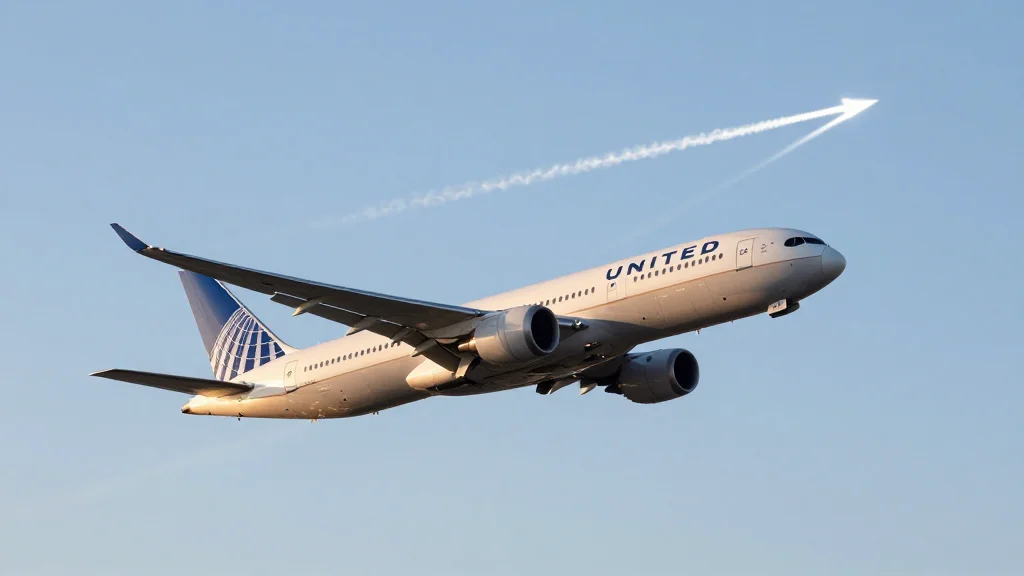
United Airlines Raises $2 Billion in Unsecured Bonds and Cuts $3.1 Billion of Debt in Q1

Companies Mentioned
Why It Matters
United Airlines’ aggressive balance‑sheet management strengthens a key pillar of the U.S. transportation sector, which contributes roughly 2% of GDP and supports millions of jobs. By reducing debt and securing low‑cost financing, the carrier can better absorb volatile fuel prices, protect earnings, and invest in premium products that drive higher yields. The move also signals to investors that large U.S. airlines remain resilient, potentially lowering borrowing costs across the industry and supporting broader economic stability. The $2 billion bond issuance adds liquidity to the corporate bond market at a time when the Federal Reserve is tapering its balance sheet. If United’s financing terms prove favorable, other capital‑intensive firms may follow, easing credit conditions for sectors ranging from manufacturing to logistics, and reinforcing the United States’ position as a hub for high‑volume, high‑margin services.
Key Takeaways
- •United Airlines issued $2 billion in unsecured bonds, its first such offering since 2019.
- •The airline paid down $3.1 billion of debt, including $2 billion in slot‑secured notes.
- •First‑quarter free cash flow reached $2.9 billion, supporting a $14.6 billion revenue record.
- •Operating revenue grew 10.6% year‑over‑year; premium revenue rose 13.6% on added capacity.
- •Management targets a double‑digit pretax margin by 2027 and aims for investment‑grade credit.
Pulse Analysis
United’s capital‑raising and debt‑reduction strategy reflects a broader shift among legacy carriers toward financial resilience in an environment of rising fuel costs and uncertain macro‑policy. By locking in low‑cost unsecured debt, United not only improves its leverage ratios but also diversifies its funding sources away from traditional secured aircraft loans, which often carry higher covenants. This flexibility could allow the airline to accelerate fleet modernization, particularly the rollout of A321 XLRs that promise longer range with lower operating costs.
The premium‑revenue boost underscores a structural change in consumer behavior: business travelers and affluent leisure passengers are gravitating toward higher‑margin products, a trend accelerated by post‑pandemic confidence and the airline’s enhanced loyalty program. If United can sustain a 13.6% premium‑revenue uplift, it may offset the 5.9% rise in CASM‑ex, delivering a net margin improvement that rivals have struggled to achieve.
From a macro perspective, United’s actions could have a ripple effect on the U.S. economy. Strong airline cash flows support ancillary industries—airport services, tourism, and regional commerce—while a healthier balance sheet reduces the risk of default that could strain municipal bond markets tied to airport financing. Moreover, the bond issuance adds depth to the high‑yield corporate market, offering investors a relatively stable asset amid equity volatility. If the Federal Reserve continues to raise rates, United’s proactive debt management may serve as a template for other capital‑intensive firms seeking to lock in financing before borrowing costs climb further.
Overall, United’s Q1 performance signals that major U.S. carriers can navigate cost pressures while still investing in growth. The company’s ability to generate robust free cash flow and improve its credit profile will be a bellwether for the health of the broader transportation sector and, by extension, the U.S. economy’s capacity to sustain consumer spending and business travel in the coming years.
United Airlines Raises $2 Billion in Unsecured Bonds and Cuts $3.1 Billion of Debt in Q1
Comments
Want to join the conversation?
Loading comments...