Why It Matters
Sustained job growth amid higher interest rates signals labor‑market resilience, supporting consumer spending and monetary‑policy decisions. The weakening participation rate and ongoing federal job losses highlight structural headwinds that could temper future growth.
Key Takeaways
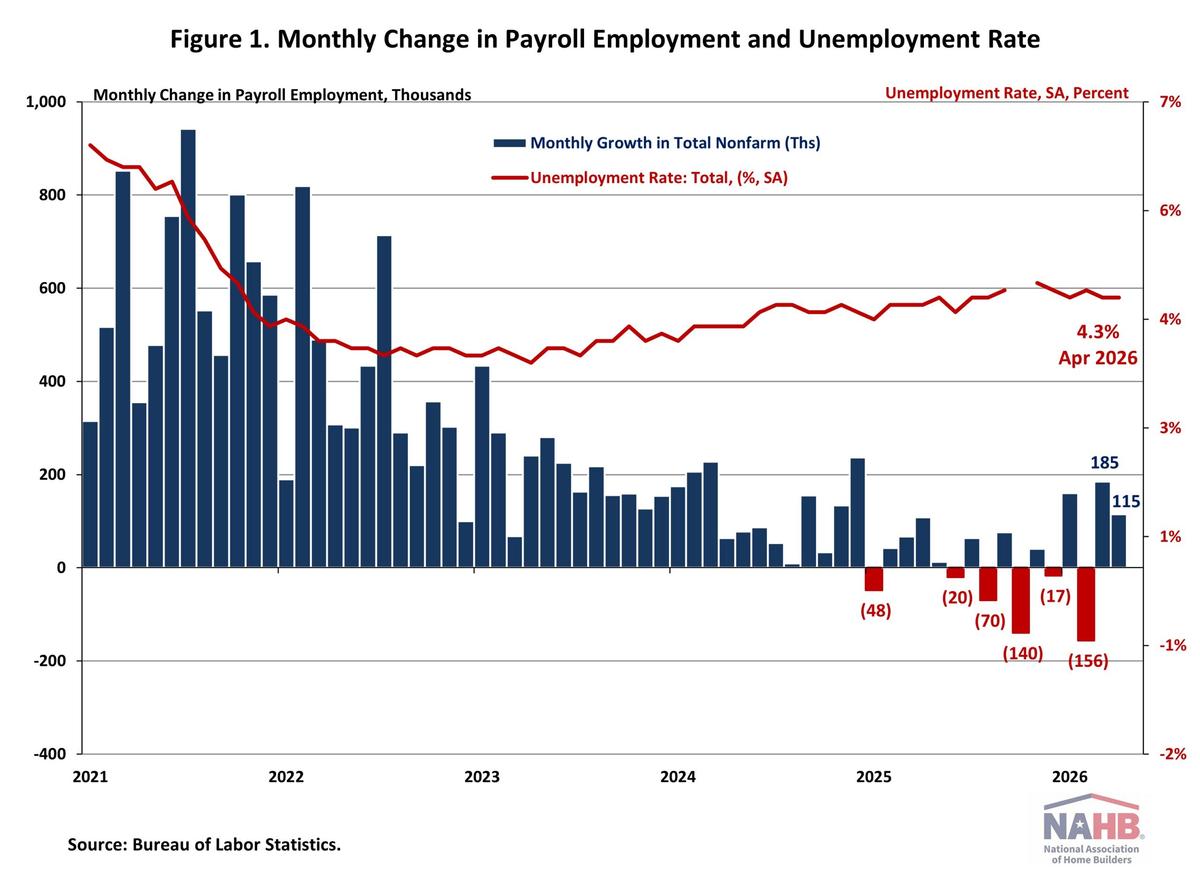
- •April added 115,000 nonfarm jobs, beating 2025 pace
- •Unemployment held at 4.3% despite higher interest rates
- •Health care, transportation, and retail led job gains
- •Labor force participation fell to 61.8%, lowest since 2021
- •Residential construction employment down 49,200 year‑to‑date
Pulse Analysis
April’s employment report underscores a surprisingly robust labor market in a period of elevated borrowing costs and heightened geopolitical tension. While the Federal Reserve’s policy rate remains restrictive, employers added 115,000 jobs, a pace that outstrips the 2025 average of 10,000 per month and narrows the gap with the pre‑pandemic norm. The resilience is anchored in service‑oriented sectors—health care, transportation, and retail—where demand for labor remains strong despite supply‑chain disruptions and consumer‑price pressures. This continued hiring supports household income growth, which in turn bolsters consumer confidence and spending, a key engine for GDP.
Wage dynamics add another layer of nuance. Average hourly earnings rose 3.6% year‑over‑year, still modestly below the prior‑year rate but comfortably above the current inflation trajectory. The earnings‑inflation spread, persisting for nearly two years, suggests that productivity gains are translating into real‑pay improvements, a rare alignment in recent cycles. Yet the labor‑force participation rate slipped to 61.8%, its lowest point since late 2021, indicating that a segment of the working‑age population remains on the sidelines, potentially limiting the economy’s capacity to fully capitalize on the hiring momentum.
The construction sector tells a more mixed story. While total construction employment rose modestly, residential construction continues to shed jobs, with a cumulative loss of 49,200 positions over the past year—the longest annual decline since the Great Recession. This downturn reflects lingering affordability challenges as mortgage rates climb, dampening new‑home starts and renovation activity. Policymakers and developers will be watching these trends closely; a sustained slump in residential labor could signal deeper weaknesses in the housing market, influencing future fiscal and monetary strategies aimed at stabilizing growth.
U.S. Economy Adds 115,000 Jobs in April
Comments
Want to join the conversation?
Loading comments...