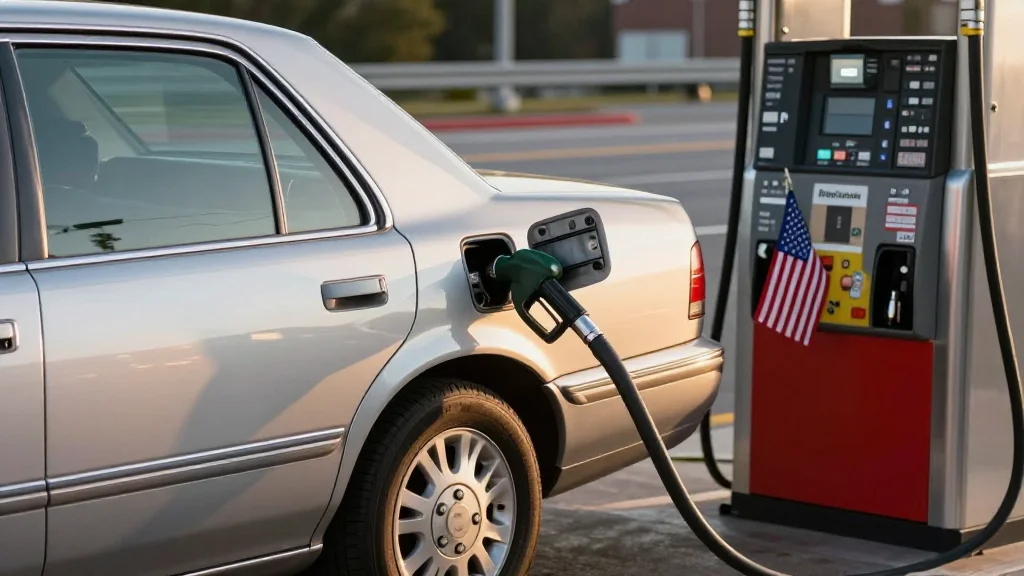
U.S. Gas Prices Reach $4.51/gal on Memorial Day, Adding $2 Billion to Consumer Costs

Why It Matters
Rising gasoline prices directly affect household budgets, especially for the 45 million Americans traveling during Memorial Day. An extra $2 billion in fuel spending reduces disposable income, which can dampen retail sales and slow the post‑pandemic economic rebound. Moreover, fuel costs are a core component of the Consumer Price Index; sustained elevations could keep headline inflation above the Federal Reserve’s 2 percent target, influencing monetary policy decisions. The price spike also underscores the vulnerability of U.S. energy markets to geopolitical shocks. The closure of the Strait of Hormuz—a chokepoint for roughly 20 percent of global oil shipments—demonstrates how quickly external conflicts can translate into domestic price volatility, prompting calls for greater strategic petroleum reserves and diversification of supply sources.
Key Takeaways
- •National average gasoline price hits $4.51 per gallon on Memorial Day, the highest since summer 2022.
- •GasBuddy estimates an additional $2 billion in fuel spending for the four‑day holiday, or $22 million per hour.
- •California leads with $6.12 per gallon; Mississippi records the lowest at $3.97.
- •45 million Americans plan trips of 50+ miles; 39.1 million expected to drive.
- •Prices rose after the Iran‑U.S. conflict closed the Strait of Hormuz, highlighting geopolitical risk.
Pulse Analysis
The Memorial Day gas price surge is a textbook case of how geopolitical events can quickly reverberate through domestic consumer markets. While the U.S. has built a robust strategic petroleum reserve, the immediate impact of a chokepoint closure is felt at the pump, eroding real wages just as the economy is trying to sustain its post‑pandemic growth trajectory. Historically, spikes of this magnitude have pressured the Federal Reserve to keep rates higher for longer, as inflation expectations become anchored to energy costs.
From a market perspective, the episode may accelerate the shift toward alternative fuels and electric vehicles. Automakers have already signaled plans to increase EV offerings, and higher gasoline prices could hasten consumer adoption, especially among price‑sensitive segments. Investors are likely to watch the policy response closely; any move to release additional strategic reserves or negotiate a rapid diplomatic resolution could provide a short‑term price cushion, while a prolonged stalemate may keep fuel costs elevated, squeezing profit margins for transportation‑heavy sectors such as airlines and logistics.
Looking ahead, the key variable remains the timeline for reopening the Strait of Hormuz. If diplomatic talks yield a swift agreement, gasoline could retreat toward the $3.00‑$3.20 range De Haan expects, restoring some consumer confidence. Conversely, a protracted impasse would embed higher fuel costs into the inflation narrative, potentially prompting the Fed to maintain a tighter monetary stance, which could slow borrowing and dampen broader economic activity.
U.S. Gas Prices Reach $4.51/gal on Memorial Day, Adding $2 Billion to Consumer Costs
Comments
Want to join the conversation?
Loading comments...