Why It Matters
Sustained job creation and low unemployment support consumer spending and bolster the Fed's confidence in a soft landing, while sectoral imbalances signal where policy attention may be needed.
Key Takeaways
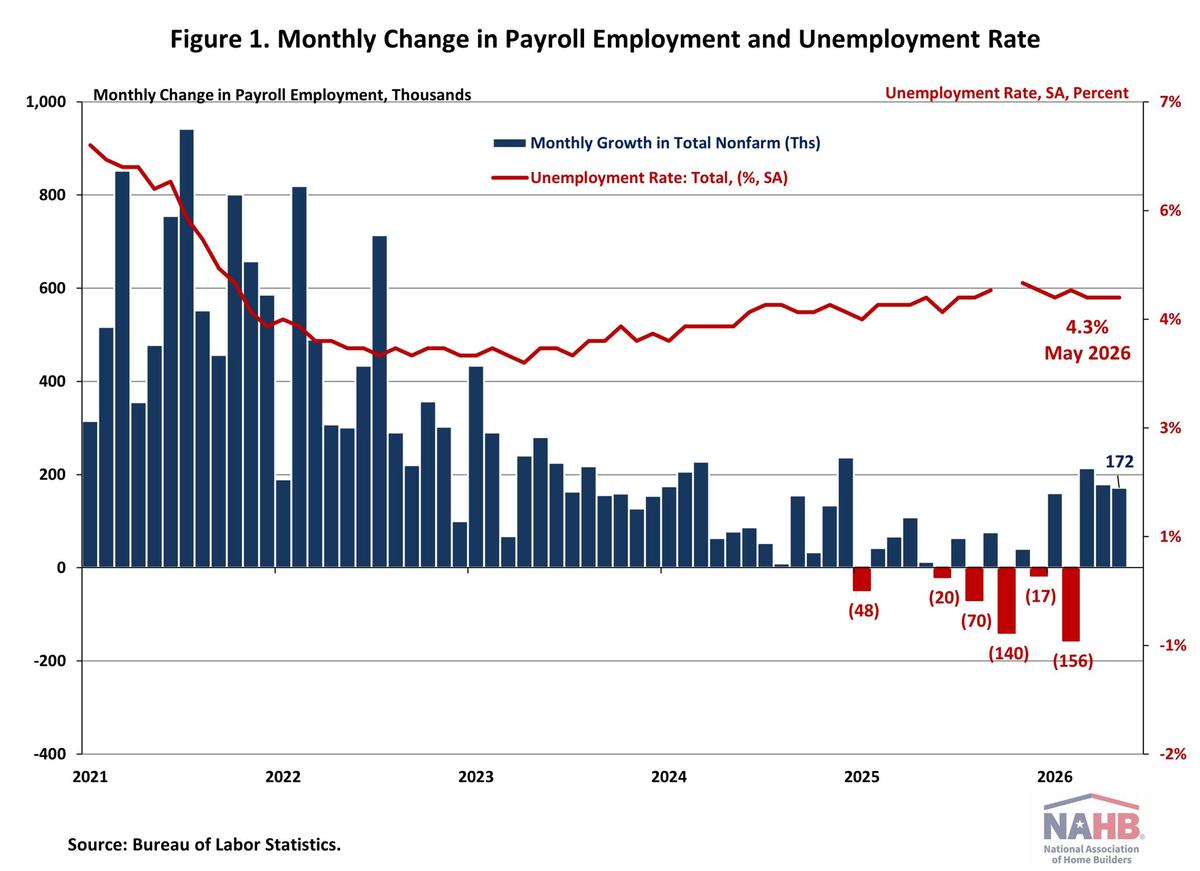
- •Nonfarm payrolls rose 172,000 in May, unemployment steady at 4.3%.
- •Leisure, hospitality, local government, and health care drove job gains.
- •Financial activities lost 22,000 jobs, continuing a decline since 2025.
- •Wage growth slowed to 3.4% YoY, still outpacing inflation.
- •Residential construction employment down 33,300 jobs year‑over‑year.
Pulse Analysis
The latest BLS report underscores a labor market that remains a cornerstone of the U.S. economy despite lingering inflation concerns. Adding 172,000 jobs in May, the payroll gains outpace the 2025 average of 10,000 and approach the 2024 pace of 122,000, suggesting that the post‑pandemic recovery is still gaining momentum. This resilience helps sustain consumer confidence, a key driver of GDP growth, and gives the Federal Reserve more flexibility as it balances rate policy against price pressures.
Sectoral analysis reveals a mixed picture. Leisure and hospitality, local government, and health care posted the strongest gains, reflecting robust consumer demand and continued public‑sector hiring. In contrast, financial activities posted a 22,000‑job loss, extending a downward trend that began in 2025, while residential construction continues to lag, shedding 33,300 jobs over the past year. The construction slowdown highlights lingering supply‑chain constraints and a cautious housing market, which could temper broader employment momentum if not addressed.
Wage growth, while moderating to 3.4% year‑over‑year, remains above inflation, preserving real purchasing power for workers and reinforcing spending power. However, the labor‑force participation rate’s stagnation at 61.8%—its lowest since 2021—signals that a segment of the population remains disengaged, limiting the labor market’s full potential. Policymakers will watch these dynamics closely, balancing the need to sustain job growth with measures to boost participation and address sector‑specific weaknesses, especially in construction and finance.
U.S. Labor Market Remains Resilient in May
Comments
Want to join the conversation?
Loading comments...