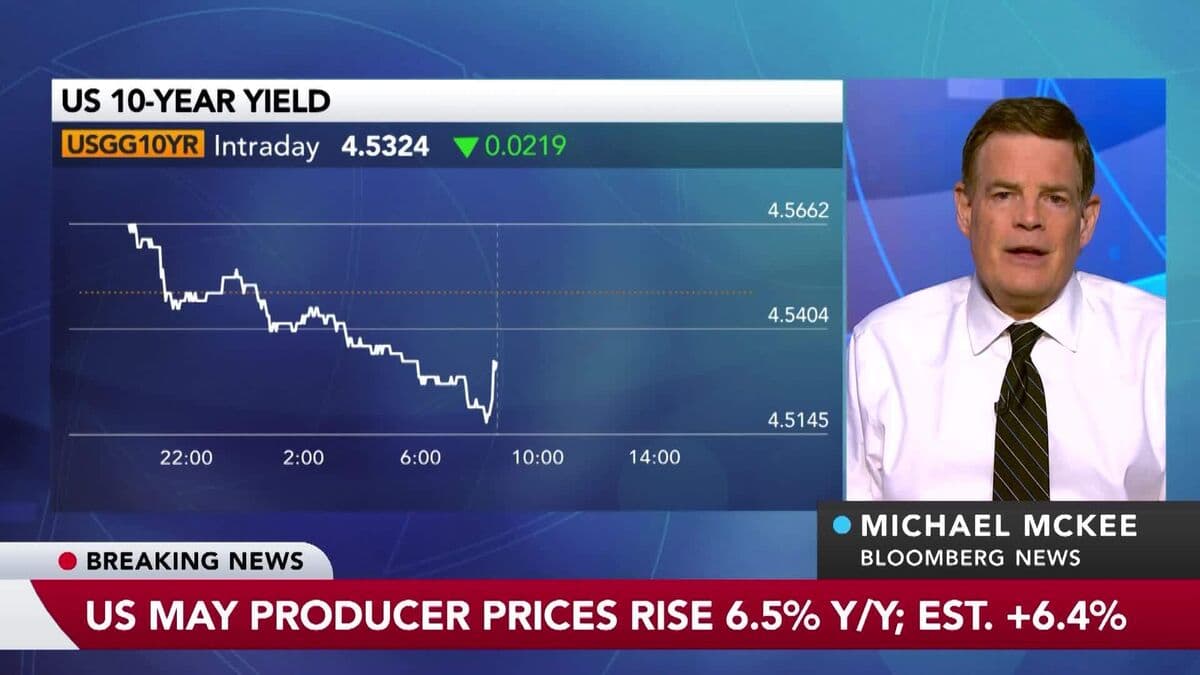
US PPI Climbs at Fastest Pace in More Than Three Years
Companies Mentioned

Bloomberg
Why It Matters
The rapid PPI acceleration signals heightened input‑cost pressures for manufacturers and could force higher consumer prices, prompting the Federal Reserve to reassess its tightening stance. It also highlights the vulnerability of supply chains to geopolitical shocks, especially in energy markets.
Key Takeaways
- •May PPI rose 6.5% YoY, fastest since Nov 2022
- •Monthly PPI increase of 1.1% driven mainly by energy
- •Final‑demand goods prices up 2.8% in May, biggest since 2009
- •Energy component surged 10.7%, accounting for 80% of overall rise
- •Services inflation remained muted, rising only 0.3% year‑over‑year
Pulse Analysis
The producer‑price index (PPI) is a leading gauge of inflation because it tracks cost changes at the wholesale level before they reach consumers. May’s 6.5% year‑over‑year jump eclipses the last three‑year high and outpaces the consumer‑price index, suggesting that firms are already feeling the squeeze from higher raw‑material and energy expenses. The data also underscores how geopolitical events, such as the Iran conflict, can quickly ripple through global commodity markets, amplifying price volatility.
A deeper look at the components reveals that energy prices surged 10.7%, propelling the overall index. This energy shock lifted final‑demand goods prices by 2.8%, the steepest monthly rise since the PPI’s inception in 2009. By contrast, services inflation stayed near flat, up only 0.3% YoY, indicating that the current pressure is concentrated in tangible inputs rather than labor‑driven costs. The pronounced goods‑side inflation pressures manufacturers’ margins, especially for wholesalers and retailers who must absorb higher wholesale costs or pass them on to end‑customers.
Looking ahead, the Fed faces a tighter policy dilemma. Persistent upstream price pressures could feed through to consumer prices, potentially prompting a more aggressive rate‑hike cycle despite recent signs of cooling inflation. Companies will need to manage inventory and hedging strategies to mitigate energy volatility, while investors should watch for earnings revisions in sectors heavily reliant on commodity inputs. The PPI’s trajectory will remain a critical barometer for both monetary policy and corporate pricing power in the coming months.
US PPI Climbs at Fastest Pace in More Than Three Years
Comments
Want to join the conversation?
Loading comments...