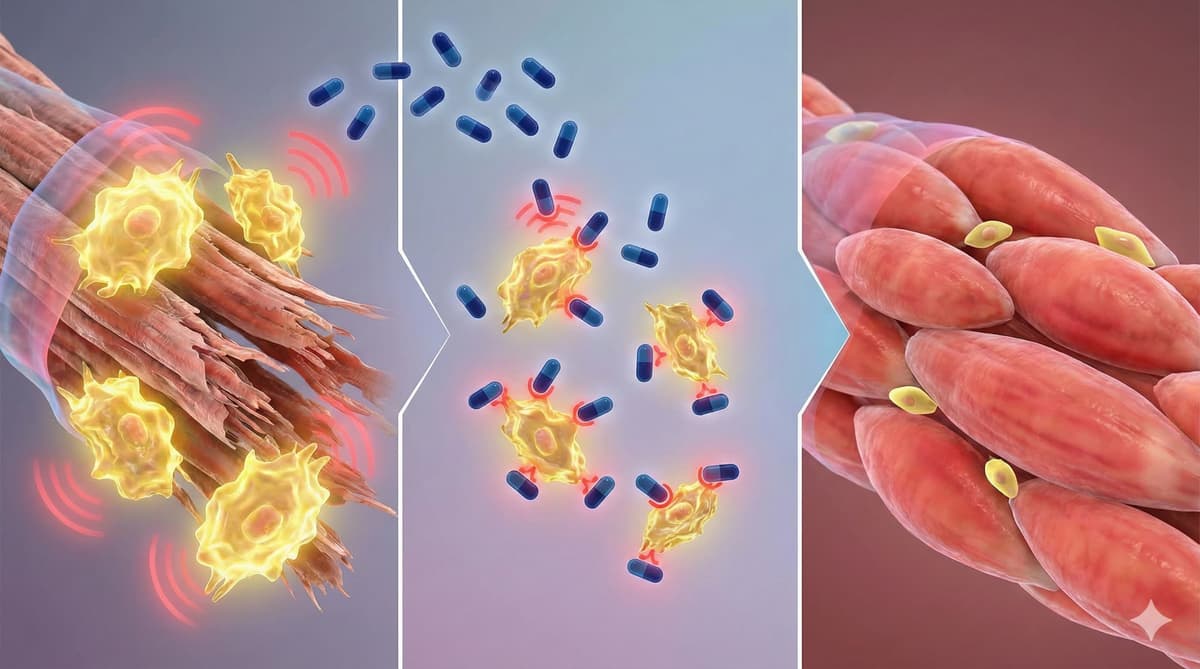
HIV Drug (Maraviroc) Reverses Muscle Aging by Purging “Zombie Cell” Signals
Key Takeaways
- •75 mg daily achieves ~80% average CCR5 occupancy in humans
- •No human efficacy data for sarcopenia at any dose
- •Mouse study used 10 mg/kg IP, high exposure needed
- •Muscle penetration of maraviroc is poorly characterized
- •Senomorphic effect may require intermittent CCR5 blockade
Pulse Analysis
Maraviroc, a CCR5 antagonist approved for HIV treatment, has attracted attention beyond virology because its receptor‑blocking action also modulates inflammatory pathways linked to cellular senescence. By attenuating the chronic secretion of SASP factors, the drug is hypothesized to act as a senomorphic agent, potentially slowing the decline of skeletal‑muscle stem cells that underlies sarcopenia. This mechanistic rationale aligns with a growing trend of repurposing existing pharmaceuticals for age‑related indications, offering a shortcut to market compared with de‑novo drug discovery.
The preclinical evidence rests on a single study from the Chinese University of Hong Kong, where aged mice received 10 mg/kg of maraviroc via intraperitoneal injection for three months. The high systemic exposure produced measurable improvements in muscle fiber size and strength, but the dosing regimen does not translate directly to the oral 75‑150 mg daily doses used in humans. Pharmacokinetic data show that maraviroc is about 76 % protein‑bound and concentrates unevenly across tissues, leaving its penetration into the muscle stem‑cell niche largely unknown. Moreover, the mouse model employed a dose that far exceeds the exposure achieved with standard HIV therapy, raising questions about safety and efficacy at lower, clinically approved levels.
For investors and biotech firms, the allure lies in a potential low‑cost, FDA‑approved platform that could be repositioned for the booming anti‑aging market. However, the absence of human efficacy data, coupled with uncertainties around tissue distribution and optimal dosing, means that robust clinical trials are essential before any commercial claims can be made. Until such data emerge, clinicians and consumers should view maraviroc’s muscle‑aging promise as speculative, not a proven therapeutic option.
HIV Drug (Maraviroc) Reverses Muscle Aging by purging “Zombie Cell” Signals
Comments
Want to join the conversation?