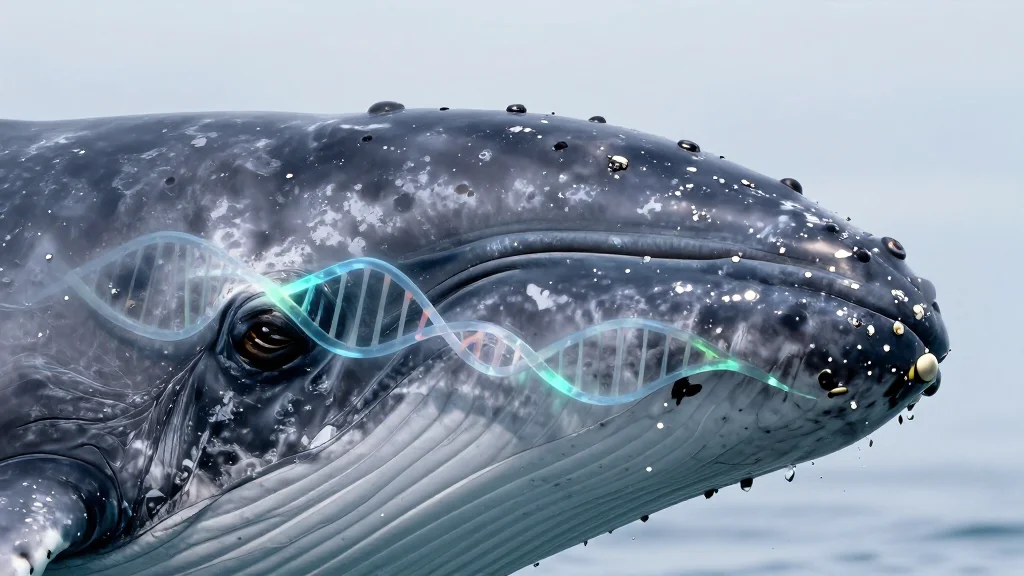
In Whales, a Long Life Absent Cancer Results From Superior DNA Repair Mechanisms

Key Takeaways
- •Bowhead whales live >200 years with exceptionally low cancer rates
- •Study shows whales possess superior DNA repair capacity, not TP53 duplication
- •Enhanced genome maintenance links to longevity across large, long‑lived mammals
- •Understanding whale mechanisms could inspire new human anti‑cancer therapies
- •Peto's paradox highlights evolutionary pressure for novel anticancer strategies
Pulse Analysis
Peto's paradox— the observation that larger, longer‑lived animals do not suffer proportionally higher cancer rates—has driven scientists to hunt for hidden anticancer defenses. Recent comparative genomics spotlighted the bowhead whale, a cetacean that can exceed two centuries in age, as a model of extreme cancer resistance. While elephants rely on an expanded repertoire of the TP53 tumor‑suppressor gene, whales lack such duplications, prompting researchers to look elsewhere. The new study reveals that bowhead cells repair DNA damage more efficiently, maintaining genomic integrity despite the sheer number of cell divisions required for a massive, long‑lived organism.
The research team sequenced multiple whale genomes and performed functional assays that demonstrated heightened activity of nucleotide‑excision repair and homologous recombination pathways. These mechanisms swiftly correct oxidative lesions and double‑strand breaks, preventing the accumulation of oncogenic mutations. Moreover, the whales' cellular environment appears to favor error‑free repair over mutagenic processes, a trait that correlates with their extraordinary lifespan. By mapping the specific proteins and regulatory networks involved, scientists have begun to chart a blueprint of natural genome stewardship that could be emulated in biomedical contexts.
Translating whale‑derived DNA repair strategies into human medicine remains speculative but promising. If key enzymes or regulatory motifs can be safely introduced or up‑regulated in human cells, they may bolster the body’s intrinsic defenses against cancer and age‑related genomic decay. However, challenges include ensuring precise control to avoid unintended consequences such as excessive cell death or genomic instability. Ongoing interdisciplinary collaborations between evolutionary biologists, geneticists, and pharmaceutical developers aim to bridge this gap, potentially ushering in a new class of longevity‑focused therapeutics rooted in nature’s own solutions.
In Whales, a Long Life Absent Cancer Results from Superior DNA Repair Mechanisms
Comments
Want to join the conversation?