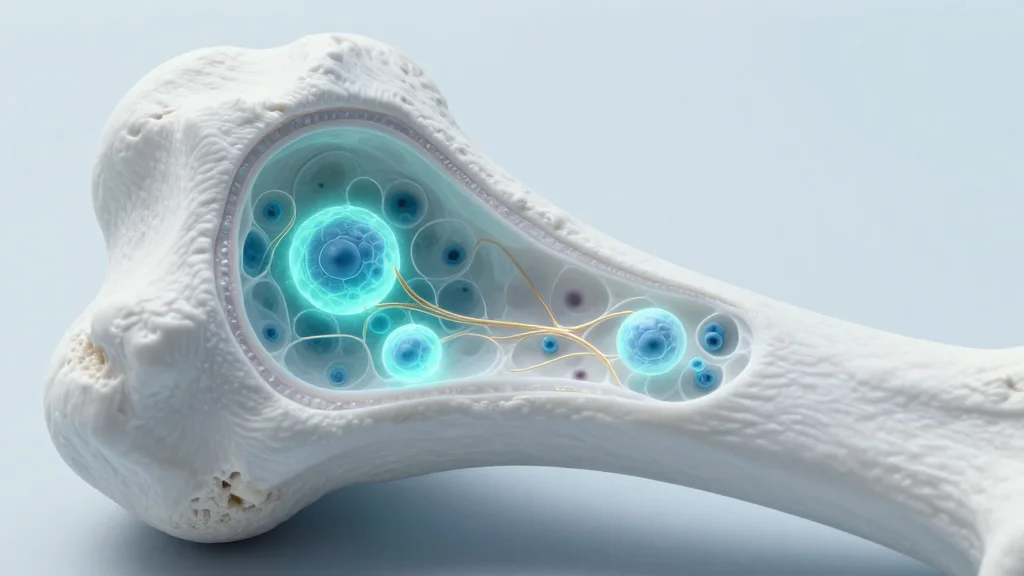
Thrombospondin-1 Secreted by Senescent Cells Impairs Bone Regeneration

Key Takeaways
- •Thbs1 from senescent BMSCs triggers M1 macrophage polarization.
- •Thbs1 binds TGF‑β receptor, represses PINK1, causing mitophagy loss.
- •M1 macrophages release IL‑6, activating STAT3 and blocking osteogenesis.
- •AAV9 Thbs1 knockdown shifts macrophages to M2, restores bone repair.
- •Thbs1/TGF‑β/Smad3 axis is a promising target for aging bone therapy.
Pulse Analysis
The accumulation of senescent cells in the bone marrow creates a hostile microenvironment known as inflammaging, where the senescence‑associated secretory phenotype (SASP) releases a cocktail of cytokines and matrix proteins. Among these, thrombospondin‑1 (Thbs1) has emerged as a pivotal factor that reshapes immune‑stromal crosstalk, undermining the delicate balance required for skeletal homeostasis. By examining transcriptomic signatures of aged mesenchymal stromal cells, scientists have pinpointed Thbs1 as a markedly up‑regulated SASP component that directly influences macrophage behavior.
Mechanistically, Thbs1 engages the TGF‑β type II receptor on macrophages, triggering Smad3‑mediated transcriptional repression of the mitophagy regulator PINK1. The resulting mitochondrial dysfunction elevates superoxide production, skewing macrophages toward the pro‑inflammatory M1 phenotype. These M1 cells secrete IL‑6, which activates the JAK/STAT3 pathway in neighboring stromal cells, suppressing osteogenic gene programs and reinforcing Thbs1 expression in a self‑amplifying loop. This cascade links mitochondrial quality control to systemic bone loss, illustrating how a single SASP factor can orchestrate multi‑cellular degeneration.
Therapeutically, the study demonstrates that AAV9‑delivered Thbs1 knockdown in aged rats restores mitophagy, converts macrophages to a reparative M2 state, and accelerates bone defect closure. Targeting Thbs1 therefore offers a dual benefit: mitigating chronic inflammation while re‑establishing the cellular environment needed for new bone formation. As the global population ages, interventions that disrupt this Thbs1‑driven axis could become valuable assets for orthopedic biotech pipelines, potentially reducing the economic burden of fracture‑related hospitalizations.
Thrombospondin-1 Secreted by Senescent Cells Impairs Bone Regeneration
Comments
Want to join the conversation?