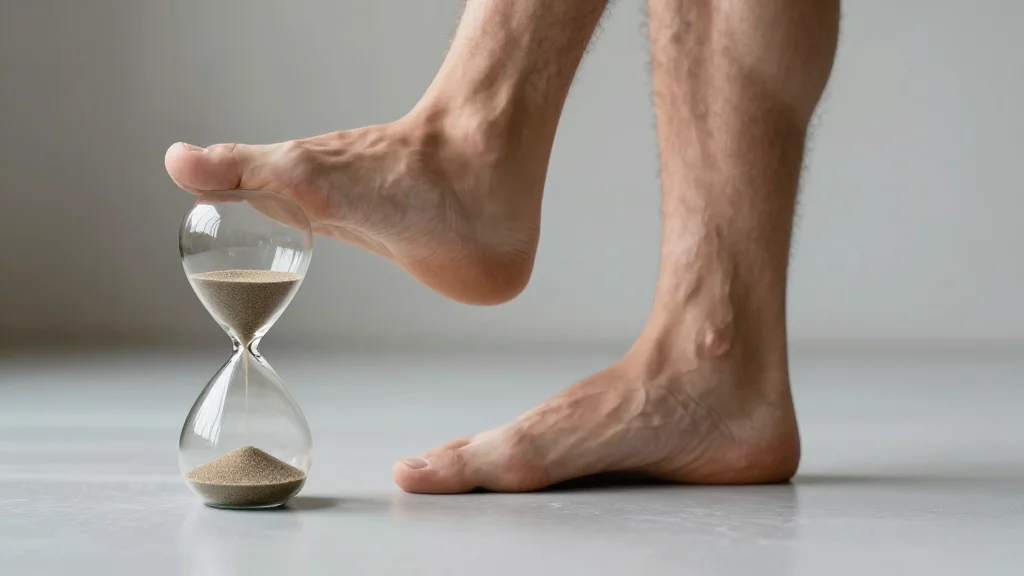
Bryan Johnson Unveils Simple Balance Test to Gauge Biological Age

Companies Mentioned
Why It Matters
The introduction of a free, easily administered biological‑age test could democratize longevity monitoring, shifting the focus from expensive lab work to everyday self‑assessment. By linking balance—a readily observable function—to age, Johnson's protocol may inspire a wave of low‑cost diagnostics that empower individuals to track and intervene in age‑related decline earlier. Moreover, the data generated by millions of users could feed large‑scale studies, enhancing our understanding of how functional metrics correlate with molecular markers of aging. If validated, the test could also pressure traditional health‑tech firms to incorporate functional assessments into their platforms, fostering a more holistic view of health that blends physiological, cognitive, and performance data. This convergence could accelerate personalized longevity strategies and stimulate investment in integrated bio‑monitoring solutions.
Key Takeaways
- •Bryan Johnson unveiled a one‑leg balance test to estimate biological age at a San Francisco event.
- •Standing time is mapped to age ranges: 0‑7 sec = 60‑80 years, 7‑15 sec = 40‑60 years, 15‑30 sec = 20‑40 years.
- •The test requires only a timer and can be performed anywhere, appealing to DIY biohackers.
- •Critics note that balance can be affected by short‑term factors, limiting its diagnostic precision.
- •Potential integration with other biomarkers could create a composite biological‑age score.
Pulse Analysis
Johnson's balance test arrives at a pivotal moment for the biohacking ecosystem, where the demand for actionable, low‑cost health data is outpacing the supply of validated tools. Historically, longevity tracking has hinged on expensive blood panels and imaging studies, limiting participation to affluent early adopters. By distilling a complex physiological process—neuromuscular coordination—into a simple timer, Johnson lowers the entry threshold and taps into the growing DIY health movement.
The test's viral potential lies in its shareability. A short video of a user holding a pose for 20 seconds can generate immediate social proof, driving community engagement and data collection at scale. This grassroots data could become a valuable asset for AI‑driven health platforms seeking real‑world performance metrics. However, the scientific community will demand rigorous validation before the test can be considered a reliable proxy for biological age. Without peer‑reviewed studies linking balance duration to cellular aging markers, the protocol risks being dismissed as anecdotal.
From an investment perspective, Johnson's move may signal a shift toward hybrid diagnostics that blend functional tests with molecular data. Venture capitalists are already funding startups that fuse wearables with blood‑test subscriptions; a validated balance metric could complete the triad, offering a comprehensive, tiered approach to longevity monitoring. If Johnson can substantiate his claims, the test could become a cornerstone of next‑generation health dashboards, prompting incumbents to adapt or risk obsolescence.
Bryan Johnson Unveils Simple Balance Test to Gauge Biological Age
Comments
Want to join the conversation?
Loading comments...