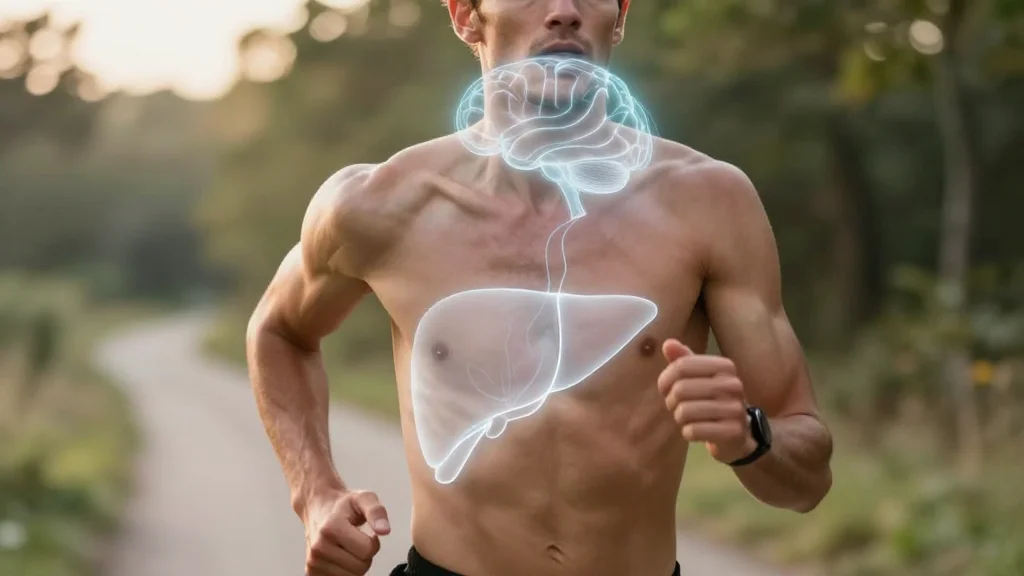
Exercise‑Triggered Liver Protein Restores Memory in Mice, Offering New Biohacking Pathway

Why It Matters
The discovery provides a concrete biological mechanism linking physical activity to cognitive resilience, a cornerstone of many biohacking protocols. By pinpointing a liver‑derived factor that can reverse memory deficits, the research offers a target for future therapeutics that could complement lifestyle‑based strategies. Moreover, it validates the concept that peripheral organs can be engineered or modulated to deliver neuroprotective benefits, expanding the toolbox for both clinicians and DIY health enthusiasts. For the broader biohacking community, the findings could shift emphasis from purely brain‑centric interventions to holistic, whole‑body approaches. If a safe, scalable method to deliver the protein emerges, it may democratize access to neuro‑enhancement, reducing reliance on costly or risky pharmaceuticals and reinforcing the value of exercise as a foundational biohack.
Key Takeaways
- •Exercise induces a liver protein that fully restores memory in mouse models of cognitive decline.
- •Injecting the isolated protein into sedentary mice replicates the memory‑boosting effect.
- •The protein appears to enhance synaptic plasticity and suppress neuroinflammation.
- •Study suggests a muscle‑liver‑brain signaling pathway that could be targeted by future neuro‑enhancement products.
- •Human trials are projected within 3‑5 years, pending safety and regulatory clearance.
Pulse Analysis
The muscle‑liver‑brain axis uncovered by this study could become a linchpin for the next wave of biohacking innovations. Historically, the field has gravitated toward direct brain interventions—nootropics, neurostimulation, and gene editing. This work flips the script, showing that peripheral signals can rewrite neural function, a concept that aligns with the growing systems‑biology mindset among elite biohackers.
From a market perspective, the finding is likely to attract venture capital looking for “exercise mimetics” that can be delivered as pills or injectables. Companies already exploring myokine‑based therapies may pivot to include hepatokines, expanding the competitive landscape. However, the path to commercialization is fraught with challenges: scaling protein production, ensuring blood‑brain barrier penetration, and navigating regulatory scrutiny over claims of cognitive enhancement.
Strategically, the research reinforces the timeless advice that regular aerobic activity is a low‑cost, high‑return biohack. Until a synthetic analogue proves safe and effective in humans, the most pragmatic takeaway for the community is to prioritize consistent exercise. In the meantime, the scientific community will watch closely as the protein moves from rodent models to primates and, eventually, to human trials, potentially redefining how we think about non‑pharmacologic brain health interventions.
Exercise‑Triggered Liver Protein Restores Memory in Mice, Offering New Biohacking Pathway
Comments
Want to join the conversation?
Loading comments...