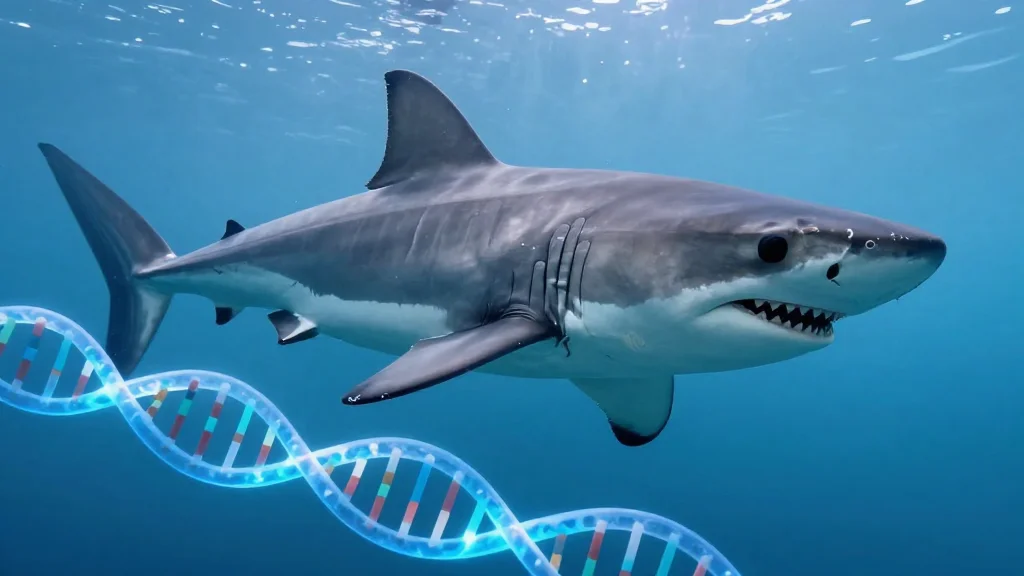
Greenland Shark Genome Unveiled, Offering Clues to Extreme Longevity

Why It Matters
The Greenland shark genome provides the first comprehensive genetic blueprint of a vertebrate that routinely outlives humans by centuries. By pinpointing molecular features—tightened chromatin, enhanced DNA repair, and unique ferroptosis regulators—that may contribute to such longevity, the study opens new avenues for biohackers seeking to extend human healthspan. Moreover, the public release of raw sequencing data democratizes access, allowing both academic and DIY researchers to test hypotheses about aging mechanisms without the need for costly de‑novo sequencing. If the identified pathways prove functional in mammals, they could reshape the anti‑aging market, spurring investment in epigenetic drugs, ferroptosis inhibitors, and gene‑editing strategies. Conversely, the work also underscores the limits of cross‑species translation, reminding the biohacking community that evolutionary context matters when borrowing longevity tricks from deep‑sea sharks.
Key Takeaways
- •Chromosome‑level Greenland shark genome assembled (5.9 Gb, N50 = 233 Mb, 96.7 % completeness).
- •Unique amino‑acid substitutions found in linker histone H1.0, predicted to enhance chromatin compaction.
- •Expanded gene families linked to immune function, cancer resistance, DNA repair, and ferroptosis identified.
- •Publicly released raw data (NCBI BioProject PRJNA1218902) enable global research and biohacking exploration.
- •Potential to inform human anti‑aging strategies through epigenetic and ferroptosis‑targeted interventions.
Pulse Analysis
The Greenland shark genome marks a watershed for longevity research, not because it will instantly translate into human life‑extension pills, but because it supplies a rare, high‑resolution view of the genetic architecture that supports centuries‑long survival. Historically, most longevity studies have focused on short‑lived model organisms—worms, flies, and mice—where genetic manipulation is straightforward. This new dataset forces the field to confront a vertebrate that has evolved longevity through a suite of subtle, possibly synergistic changes rather than single‑gene knockouts.
From a market perspective, the biohacking sector is poised to capitalize on these findings. Companies that specialize in epigenetic modulators can now benchmark their compounds against the shark's H1.0 variants, potentially accelerating pre‑clinical validation. Meanwhile, the ferroptosis connection aligns with a growing interest in lipid‑peroxidation pathways, already attracting venture capital for neurodegenerative disease therapeutics. The open‑access nature of the data lowers entry barriers, allowing small labs and citizen scientists to contribute to target discovery, which could democratize the anti‑aging pipeline.
Looking ahead, the critical challenge will be functional translation. The shark's low metabolic rate and cold environment are integral to its longevity, and replicating those conditions in humans is neither feasible nor desirable. Success will likely hinge on isolating conserved molecular mechanisms—such as chromatin stability—that can be modulated without wholesale physiological overhaul. If researchers can demonstrate that tweaking human H1.0 or ferroptosis regulators yields measurable health‑span benefits, the biohacking community could see a shift from speculative supplements to evidence‑based, genome‑informed interventions.
Greenland Shark Genome Unveiled, Offering Clues to Extreme Longevity
Comments
Want to join the conversation?
Loading comments...