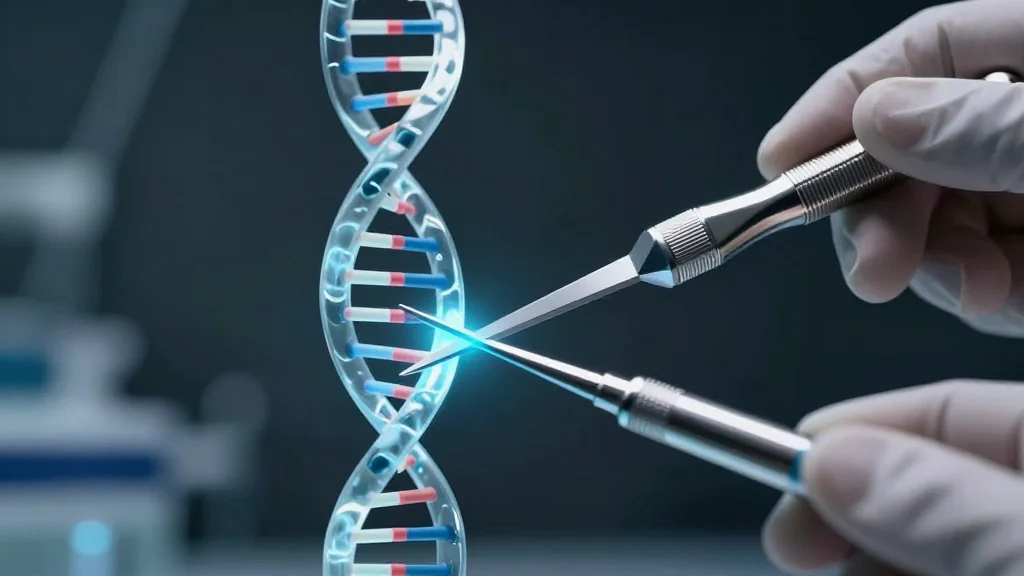
Helmholtz HIRI Team Unveils CRISPR ‘Molecular Scalpel’ to Erase Undesired Cells

Why It Matters
The ability to excise specific cell populations without affecting surrounding tissue could dramatically improve the safety of cell‑based therapies, a major bottleneck in regenerative medicine and oncology. By providing a programmable kill‑switch, the Cas12a2 platform may also enable new strategies for combating age‑related cellular dysfunction, a key target for biohacking and longevity research. Moreover, the collaboration between academic labs and a biotech firm illustrates how translational pathways are accelerating, potentially shortening the timeline from discovery to market. Beyond medicine, the technology raises profound ethical questions. If the tool becomes accessible to non‑clinical users, it could empower biohackers to experiment with cellular rejuvenation or disease‑prevention protocols outside regulated environments. This dual‑use potential will likely spark policy discussions about oversight, licensing, and the responsible dissemination of powerful genome‑editing tools.
Key Takeaways
- •Helmholtz HIRI and partners publish Nature paper on Cas12a2‑based cell‑killing system
- •RNA‑triggered activation causes non‑specific DNA shredding, killing target eukaryotic cells
- •Quotes from Ryan Jackson, Chase Beisel, and Yang Liu highlight the tool’s destructive mechanism
- •Potential applications include purging unedited cells in stem‑cell therapies and targeting senescent cells
- •Next steps: mouse‑model validation, toxicology studies, and IND‑ready development
Pulse Analysis
The Cas12a2 molecular scalpel arrives at a moment when the bio‑tech industry is hungry for solutions that can safely manage cellular heterogeneity. Traditional CRISPR approaches focus on precise edits, but they lack a built‑in safety net for cells that escape correction. By converting a bacterial immune protein into a programmable cell‑elimination engine, the Helmholtz team flips the script: instead of fixing DNA, they destroy it when a specific RNA cue appears. This paradigm shift could lower the regulatory burden for cell‑therapy manufacturers, who currently must demonstrate exhaustive removal of potentially tumorigenic cells through costly sorting methods.
Historically, the field has struggled to translate CRISPR’s bacterial origins into eukaryotic contexts without collateral damage. The study’s success hinges on the specificity of the RNA trigger, a design that can be fine‑tuned through guide‑RNA engineering. If off‑target activation can be minimized, the platform may become a universal safety module that can be grafted onto any gene‑editing pipeline. However, the very power that makes it attractive also fuels bio‑security concerns. The same mechanism that can purge senescent cells could, in the wrong hands, be weaponized to target specific cell types in a population.
From a market perspective, Akribion Therapeutics’ involvement signals that venture capital is already eyeing the commercial upside. Investors are likely to fund pre‑clinical programs that demonstrate efficacy in high‑value indications such as CAR‑T cell manufacturing, where eliminating residual malignant cells is critical. Meanwhile, the biohacking community may view the technology as a DIY route to cellular rejuvenation, prompting a clash between open‑source ethos and the need for stringent oversight. The coming months will reveal whether the molecular scalpel can navigate the tightrope between therapeutic promise and ethical responsibility.
Helmholtz HIRI Team Unveils CRISPR ‘Molecular Scalpel’ to Erase Undesired Cells
Comments
Want to join the conversation?
Loading comments...