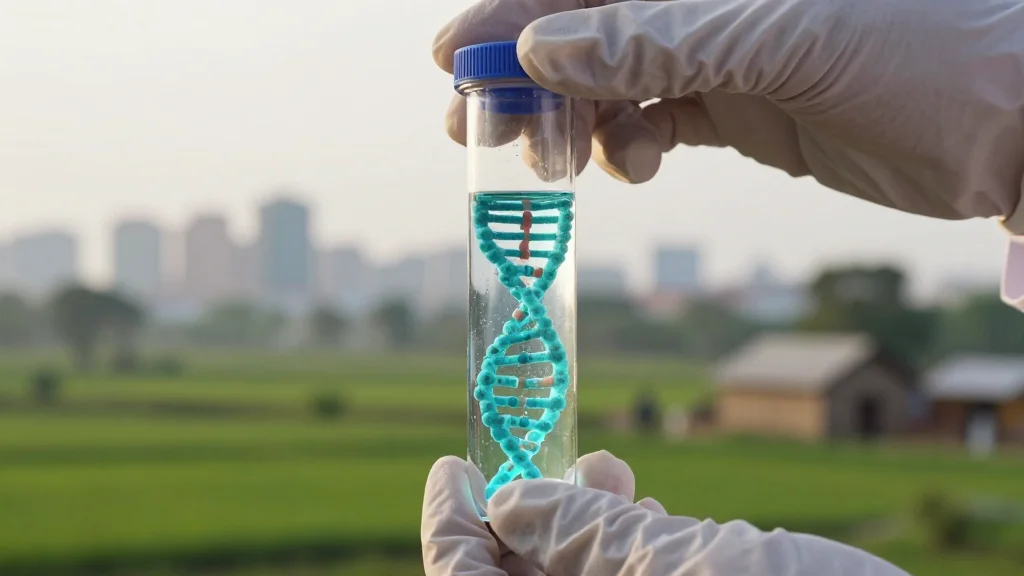
India Launches BHARAT Study, First Nationwide Search for Aging Biomarkers

Why It Matters
The BHARAT study tackles a critical blind spot in aging research: the over‑reliance on Western‑centric data to build biological‑age clocks. By generating a large, demographically representative Indian dataset, the project promises to improve the accuracy of age‑prediction tools for a population that comprises over 1.4 billion people. This could reshape public‑health strategies, enabling earlier detection of age‑related decline and more targeted preventive measures. For the biohacking community, BHARAT offers a potential gold standard for calibrating personal longevity metrics. Current consumer‑grade biological clocks often extrapolate from datasets that do not reflect the genetic and environmental realities of South Asian individuals. Access to population‑specific biomarkers and AI‑derived models could empower biohackers to design interventions that are scientifically grounded and culturally relevant, accelerating the adoption of precision longevity practices worldwide.
Key Takeaways
- •IISc launches BHARAT, India's first large‑scale, multi‑omics aging study.
- •Study led by Suramya Asthana and Deepak Kumar Saini, targeting a demographically balanced cohort.
- •Integrates epigenomics, proteomics, metabolomics, lipidomics, metagenomics, and immune phenotyping.
- •Aims to develop population‑specific biological‑age clocks and resilience biomarkers.
- •Open‑access dataset and predictive models slated for release within two years.
Pulse Analysis
The BHARAT initiative arrives at a pivotal moment when the biohacking sector is increasingly demanding granular, individualized data to fine‑tune longevity protocols. Historically, the field has leaned on aging clocks such as Horvath's epigenetic clock, which, while scientifically robust, were calibrated on predominantly European ancestry cohorts. This mismatch has led to systematic errors when applying those clocks to South Asian populations, potentially misguiding both clinical decisions and DIY biohacking interventions. BHARAT's commitment to a multi‑modal, AI‑enhanced pipeline could set a new benchmark for regional biomarker discovery, compelling commercial providers of biological‑age tests to diversify their reference panels or risk obsolescence.
From a market perspective, the study's open‑access ethos may catalyze a wave of startups and research groups building on the BHARAT dataset. Companies that can translate the raw omics data into user‑friendly dashboards, nutrigenomics recommendations, or targeted supplement regimens will likely capture a growing segment of health‑conscious consumers in India and the diaspora. Moreover, the hub‑and‑spoke model demonstrates a scalable blueprint for other emerging economies seeking to establish their own precision‑aging infrastructures without the prohibitive costs of building centralized facilities.
Looking forward, the true impact of BHARAT will hinge on its ability to move beyond cross‑sectional snapshots toward longitudinal tracking of interventions. If the consortium can sustain participant follow‑up and integrate interventional data—such as dietary changes, exercise regimens, or pharmacologic agents—it will provide the biohacking community with the causal evidence needed to shift from speculative self‑experimentation to evidence‑based longevity engineering. In that scenario, BHARAT could become the cornerstone of a new era where population‑specific biology informs both public health policy and individual biohacking strategies.
India Launches BHARAT Study, First Nationwide Search for Aging Biomarkers
Comments
Want to join the conversation?
Loading comments...