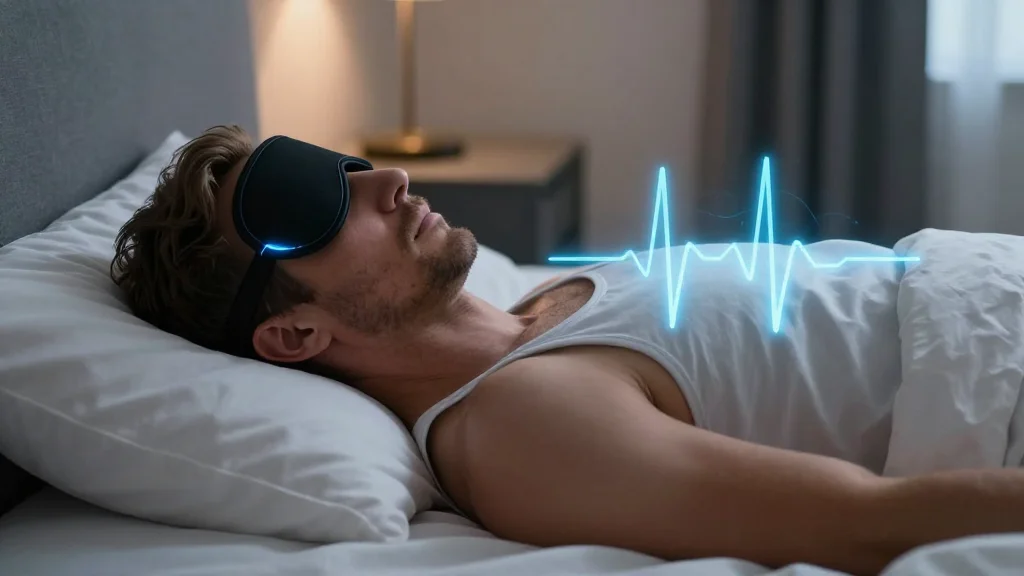
Irregular Bedtimes Linked to Double Cardiac Risk in 10‑Year Study

Why It Matters
Cardiovascular disease remains the leading cause of death worldwide, and biohackers have long sought granular, data‑driven ways to mitigate that risk. By pinpointing bedtime variability as a quantifiable predictor, the study provides a concrete target for lifestyle engineering, potentially reducing reliance on pharmaceuticals for primary prevention. Moreover, the research validates the use of consumer wearables for clinical‑grade monitoring, blurring the line between personal health tracking and epidemiological surveillance. If the biohacking industry adopts bedtime regularity as a core metric, we could see a wave of new products—smart alarm clocks, circadian‑aligned lighting, and AI‑driven sleep‑schedule coaches—entering the market. Such tools would not only empower individuals but also generate large datasets that could refine future risk models, creating a feedback loop between personal optimisation and public‑health research.
Key Takeaways
- •Study of 2,000 adults (average age 46) tracked with wrist activity monitors for 7 days
- •Irregular bedtime variability (>30 min nightly) doubled risk of heart attack, stroke or heart‑failure hospitalization
- •Findings held after adjusting for sleep duration, smoking, hypertension and other risk factors
- •Device‑measured sleep timing proved more reliable than self‑reported logs
- •Implications for biohackers: bedtime consistency can be monitored via wearables and targeted with low‑cost interventions
Pulse Analysis
The discovery that bedtime regularity alone can double cardiovascular risk reshapes the biohacking playbook. Historically, the community has focused on macro‑level inputs—nutrition, exercise, nootropics—while treating sleep as a passive backdrop. This study forces a pivot toward chronobiology, positioning sleep timing as a primary lever rather than a secondary benefit. Companies that have built ecosystems around sleep tracking (e.g., Oura, Whoop) now have a compelling clinical narrative to market their data beyond performance metrics, potentially unlocking new revenue streams tied to health‑outcome guarantees.
From a market perspective, the findings could accelerate consolidation among wearable manufacturers and health‑tech platforms seeking to embed circadian‑alignment services. Investors may view the data as validation for startups offering AI‑driven bedtime coaching, prompting a wave of funding rounds focused on behavioural nudges rather than hardware alone. However, the observational nature of the research also invites skepticism; without randomized intervention trials, the causal pathway remains speculative. Biohackers and clinicians alike will likely demand proof‑of‑concept studies that test whether fixing bedtime variability translates into measurable reductions in event rates.
Looking ahead, the integration of sleep‑timing analytics into electronic health records could create a new preventive‑care metric, akin to blood pressure or cholesterol. If insurers begin to recognise consistent bedtime as a reimbursable preventive measure, the biohacking community could find itself at the forefront of a broader public‑health shift, turning a personal optimisation habit into a population‑level intervention.
Irregular Bedtimes Linked to Double Cardiac Risk in 10‑Year Study
Comments
Want to join the conversation?
Loading comments...