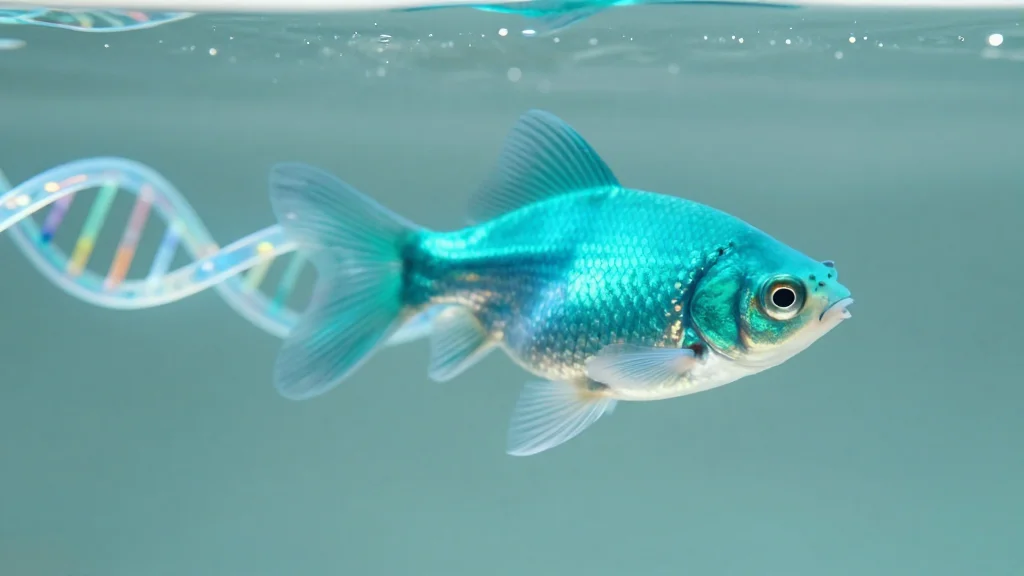
Killifish Gene Links Fast Growth to Shorter Lifespan, Study Finds

Why It Matters
The killifish discovery provides the first concrete genetic mechanism linking early‑life fitness to later‑life disease in a vertebrate, validating a core tenet of evolutionary biology. For the biohacking field, which often touts gene editing as a shortcut to enhanced performance and longevity, the study highlights a biological ceiling: accelerating growth may inherently raise cancer risk. Understanding the molecular underpinnings of this trade‑off could steer biohackers toward safer, more targeted interventions rather than blunt genetic acceleration. Moreover, the creation of an immunodeficient killifish model equips researchers with a rapid, cost‑effective platform to test anti‑aging drugs and gene‑therapy approaches. This could accelerate the pipeline from discovery to human trials, but only if the underlying trade‑offs are respected and mitigated.
Key Takeaways
- •CRISPR editing of vgll3 in African turquoise killifish speeds growth and early reproduction
- •Edited fish show ~30% shorter median lifespan and >40% tumor incidence versus <5% in controls
- •Study provides experimental evidence for antagonistic pleiotropy in a vertebrate model
- •Quotes from Itamar Harel emphasize the evolutionary nature of the trade‑off and cancer risk
- •New immunodeficient killifish line enables tumor transplantation studies for anti‑aging research
Pulse Analysis
The vgll3 findings arrive at a moment when the biohacking community is increasingly experimenting with gene‑editing kits and DIY CRISPR kits. While the allure of faster growth or earlier puberty may seem attractive for performance enhancement, the killifish data warns that such gains are not without cost. Historically, attempts to boost the IGF‑1 axis in mice have produced similar longevity penalties, reinforcing the idea that growth pathways are tightly coupled to aging mechanisms.
From a market perspective, the study could temper enthusiasm for commercial gene‑editing services that promise rapid health benefits. Investors may shift focus toward therapies that modulate downstream effectors of vgll3 rather than the gene itself, seeking to preserve the early‑life advantages while protecting DNA integrity. Companies developing senolytics or DNA‑repair enhancers could find a new validation point in the killifish model, positioning themselves as safer alternatives to blunt genetic acceleration.
Looking ahead, the key challenge will be to translate these findings from a three‑month fish lifespan to human biology, where the temporal scales and tissue complexities differ dramatically. Nonetheless, the killifish offers a uniquely tractable system to dissect the timing of gene expression, stem‑cell dynamics, and tumorigenesis. If researchers can identify modifiers that blunt the oncogenic side‑effects of vgll3 activation, the biohacking field may gain a blueprint for decoupling youthful vigor from age‑related disease—a goal that has long been described as the holy grail of longevity science.
Killifish Gene Links Fast Growth to Shorter Lifespan, Study Finds
Comments
Want to join the conversation?
Loading comments...