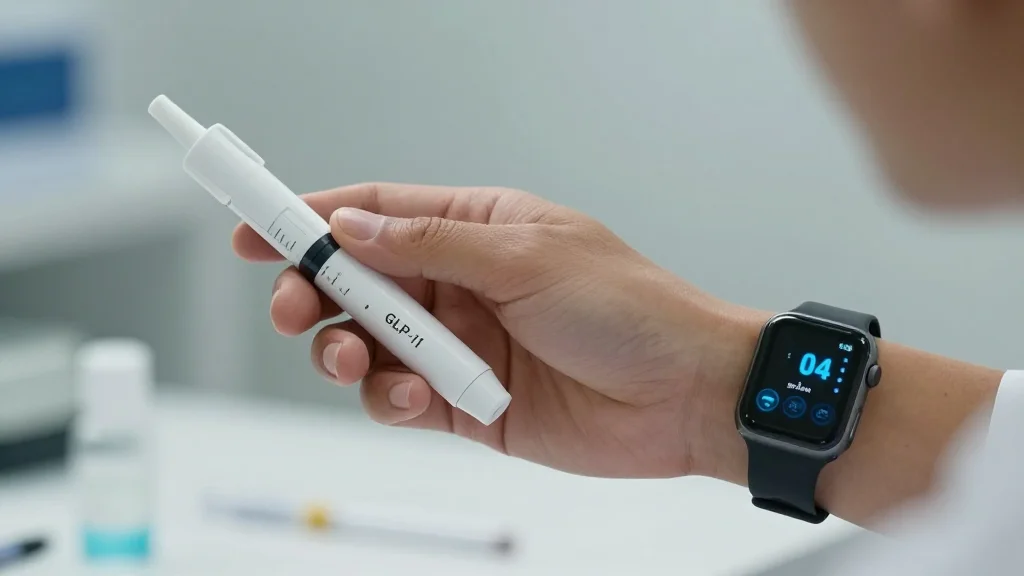
Omada Health Study Shows 6% Weight Loss and Muscle Preservation on GLP-1 Program

Companies Mentioned
Why It Matters
The Omada Health study provides the first large‑scale evidence that a structured digital coaching layer can materially improve the body‑composition outcomes of GLP‑1 therapies, a class of drugs that has reshaped obesity treatment in the past few years. For the biohacking ecosystem, the results validate a hybrid approach that blends pharmaceutical potency with data‑driven lifestyle interventions, potentially setting a new standard for safe, lean‑preserving weight loss. If the model proves cost‑effective and can be integrated into broader health‑insurance plans, it could accelerate the adoption of precision‑weight‑loss programs beyond niche early adopters, influencing how biohackers, clinicians and insurers think about the interplay between medication and behavior change.
Key Takeaways
- •245 adults with obesity participated; 151 used Omada's GLP‑1 Care Track, 94 were controls.
- •Omada members lost 6.0% of starting weight versus 3.3% for controls.
- •Body‑fat percentage fell by 3.3 points for members, roughly double the control reduction.
- •Muscle‑mass share increased nearly threefold among Omada participants.
- •Members reported greater gains in mental health, physical function and confidence.
Pulse Analysis
Omada Health’s trial arrives at a moment when GLP‑1 drugs are both celebrated for their efficacy and scrutinized for cost and long‑term safety. By demonstrating that a digital coaching overlay can double fat loss and protect lean mass, Omada positions itself at the intersection of pharma and tech, a space that has historically been fragmented. The company’s ability to collect granular, daily data from at‑home scales also creates a rich dataset that could feed predictive algorithms, further personalizing interventions.
Historically, weight‑loss programs have struggled to sustain muscle preservation, especially when rapid fat loss is driven by appetite suppression alone. The study’s strength‑focused exercise component appears to be the differentiator, echoing findings from earlier clinical trials that resistance training mitigates lean‑mass loss. For biohackers, this reinforces the principle that pharmacology should be paired with targeted physical stimulus to achieve optimal outcomes.
Looking ahead, the key challenge will be translating these results into a scalable, affordable offering. If insurers adopt Omada’s model, the cost barrier of GLP‑1 drugs could be offset by reduced downstream health expenditures linked to obesity‑related complications. Conversely, if the program remains a premium service, its impact may stay confined to a relatively affluent segment of the biohacking community. The upcoming peer‑reviewed publication and potential insurer partnerships will be critical signals of whether this hybrid approach can become a mainstream tool for body‑composition optimization.
Omada Health Study Shows 6% Weight Loss and Muscle Preservation on GLP-1 Program
Comments
Want to join the conversation?
Loading comments...