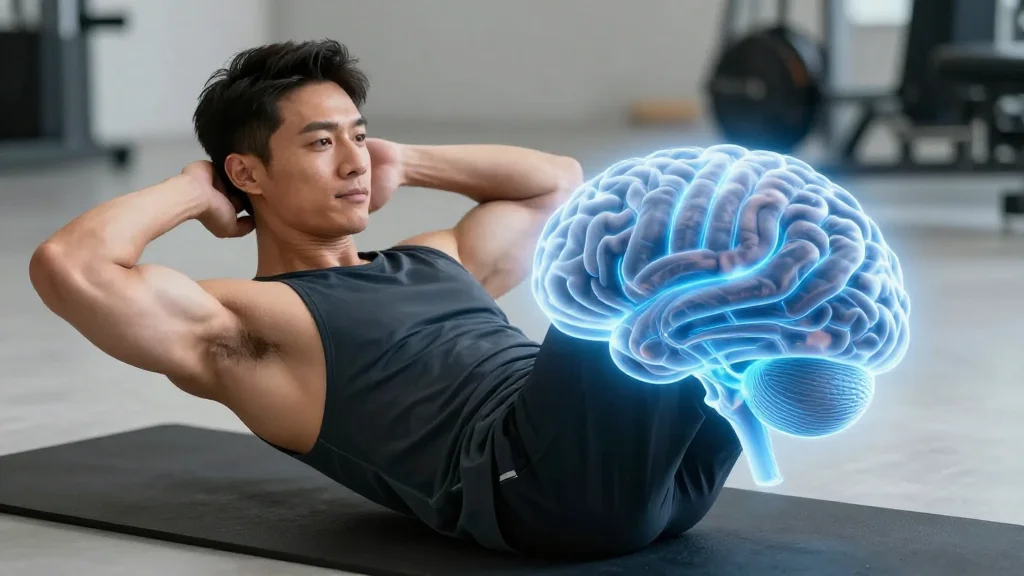
Penn State Study Shows Core Muscle Contractions Pump Brain Fluid, Boosting Cognitive Health

Why It Matters
Linking core muscle activity to cerebrospinal fluid dynamics provides a tangible, actionable pathway for individuals seeking to protect brain health through lifestyle choices. By identifying a mechanical pump that clears metabolic waste, the study offers a scientifically validated rationale for incorporating core‑strength exercises into daily routines, potentially reducing the incidence of neurodegenerative diseases. Moreover, the discovery could inspire new wearable technologies that monitor abdominal pressure and optimize exercise protocols for maximal brain‑clearing benefits. For the broader biohacking ecosystem, the research validates a long‑standing hypothesis that physical movement directly supports cognition. It shifts the conversation from anecdotal claims to a mechanistic model, enabling developers to design evidence‑based interventions, from smart fitness equipment to targeted training programs, that aim to harness the hydraulic effect for neuroprotection.
Key Takeaways
- •Penn State researchers found abdominal contractions act as a hydraulic pump moving the brain.
- •Live mouse imaging showed brain displacement correlates with core muscle tension.
- •Simulations indicate this movement drives cerebrospinal fluid flow, clearing waste.
- •Study published in Nature Neuroscience provides a mechanistic link between exercise and brain health.
- •Future human trials will test whether core‑strength routines improve cognitive outcomes.
Pulse Analysis
The Penn State discovery arrives at a moment when the biohacking community is hungry for low‑cost, high‑impact interventions that can be self‑administered. Historically, the cognitive benefits of exercise have been attributed to increased blood flow, neurotrophic factors, and reduced inflammation. This new hydraulic model adds a physical dimension, suggesting that even sub‑maximal core activation can generate measurable brain movement and fluid exchange. If human studies confirm the effect, we could see a paradigm shift where core‑strength metrics become as central to cognitive health dashboards as heart‑rate variability or sleep quality.
From a market perspective, the finding opens avenues for wearable tech firms to embed abdominal pressure sensors into fitness apparel, providing real‑time feedback on the ‘brain‑pump’ effect. Companies that already track CSF dynamics via MRI may partner with exercise platforms to validate the correlation in larger cohorts. Investors are likely to view this as a low‑risk, high‑reward opportunity, given the minimal regulatory hurdles for non‑pharmacologic interventions.
Looking ahead, the key challenge will be translating murine biomechanics to the human spine and abdominal cavity, which differ in scale and compliance. Nonetheless, the principle that gentle, rhythmic core contractions can stimulate CSF flow is compelling. Should clinical trials demonstrate cognitive preservation or slowed disease progression, we could witness a new class of preventive neurology protocols that blend physical therapy with neuro‑science, cementing core training as a cornerstone of biohacking regimens.
Penn State Study Shows Core Muscle Contractions Pump Brain Fluid, Boosting Cognitive Health
Comments
Want to join the conversation?
Loading comments...