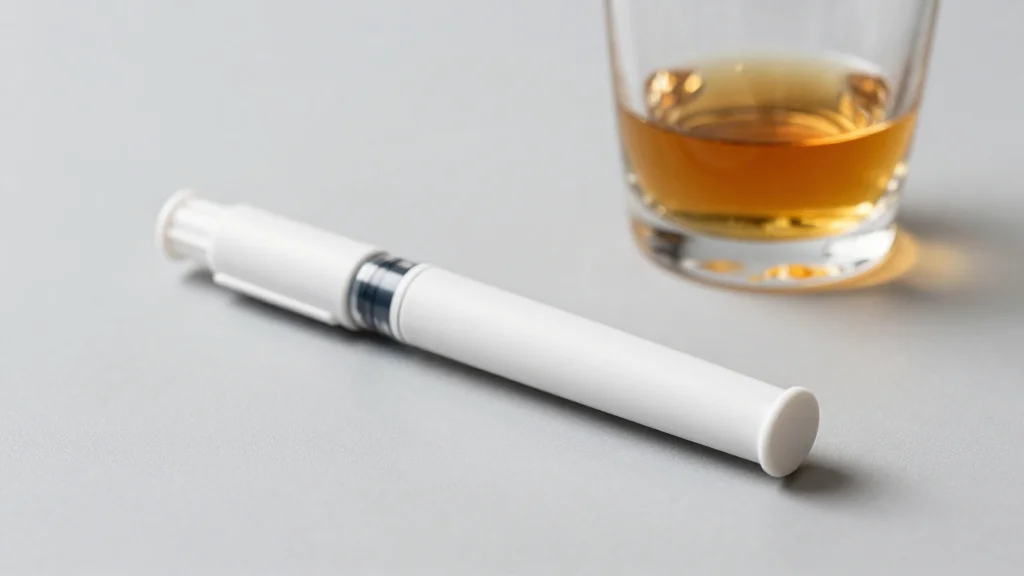
Semaglutide Cuts Heavy Alcohol Drinking in Obese Patients, Lancet Trial Shows

Why It Matters
Alcohol use disorder accounts for roughly five percent of global deaths each year, yet only three medications are FDA‑approved, and they are underprescribed. A drug that simultaneously addresses obesity—a major risk factor for severe alcohol‑related disease—could close a critical treatment gap. For the biohacking community, the study validates a mechanistic link between metabolic hormones and reward pathways, offering a scientifically grounded target for self‑experimentation. Moreover, the commercial implications are sizable: GLP‑1 agonists already generate multi‑billion‑dollar revenues, and an added indication for AUD could double the market size, reshaping pricing, insurance coverage, and access dynamics. Beyond immediate therapeutic prospects, the trial underscores a broader shift toward repurposing existing biologics for neuropsychiatric conditions. If semaglutide’s efficacy holds in larger cohorts, it may spur a wave of research into other hormone‑mimetic agents, accelerating a new frontier where metabolic and mental health intersect.
Key Takeaways
- •Randomized, double‑blind trial shows semaglutide cuts heavy drinking days by 40 % in obese AUD patients.
- •Study published in The Lancet; 200 participants; 24‑week treatment period.
- •Only three FDA‑approved AUD drugs exist (disulfiram, acamprosate, naltrexone).
- •GLP‑1 agonists modulate brain reward pathways, linking metabolism to addiction.
- •Phase‑III multinational trial planned for 2027 to confirm findings and seek FDA label expansion.
Pulse Analysis
The semaglutide trial marks a watershed moment for both the pharmaceutical industry and the biohacking ecosystem. Historically, GLP‑1 drugs were positioned as metabolic tools; this study reframes them as neuromodulators capable of reshaping addictive behavior. From a market perspective, the potential label expansion could add an estimated $5‑$7 billion in annual sales, given the prevalence of AUD and the high cost of existing treatments. Companies will likely accelerate pipeline diversification, seeking to pair GLP‑1 agonists with behavioral therapies to create bundled solutions.
For biohackers, the data provide a rare instance where a DIY‑friendly compound is backed by rigorous clinical evidence. This could legitimize a subset of the community that has long operated on anecdotal reports, prompting more structured self‑experiments and possibly fostering collaborations with academic labs. However, the regulatory environment may tighten as insurers and health authorities grapple with off‑label use, especially if demand outpaces supply.
Looking ahead, the key risk lies in translating short‑term reductions in heavy drinking into sustained abstinence or moderation. Long‑term safety, especially concerning pancreatic and gallbladder effects, remains a concern. If phase‑III trials confirm durability and safety, semaglutide could become the first GLP‑1 drug with a dual indication, setting a precedent for repurposing metabolic agents across a spectrum of neuropsychiatric disorders.
Semaglutide Cuts Heavy Alcohol Drinking in Obese Patients, Lancet Trial Shows
Comments
Want to join the conversation?
Loading comments...