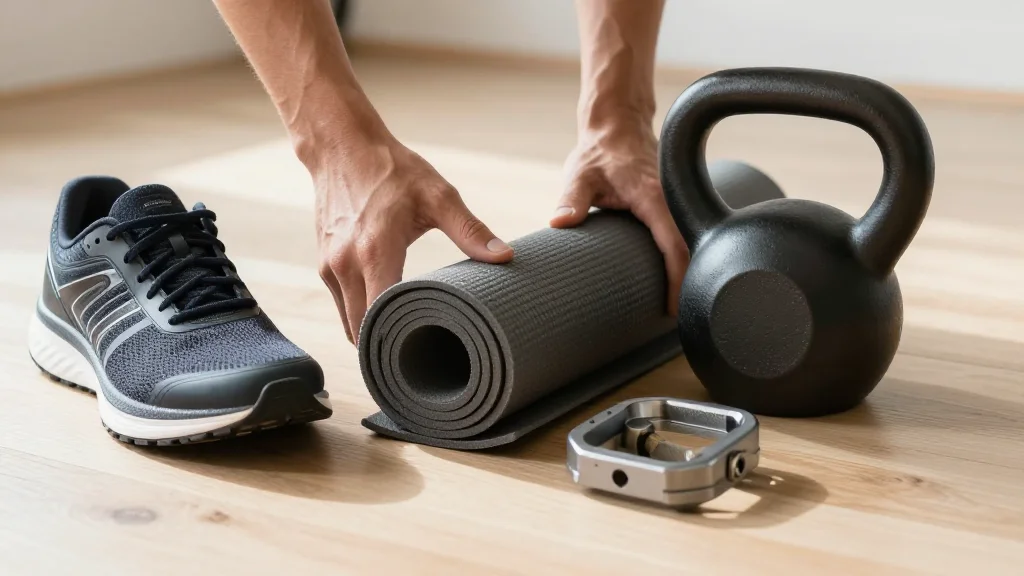
Study Finds Exercise Variety Cuts Mortality Risk, Extending Lifespan

Why It Matters
The study reframes a core assumption in the biohacking community: that more minutes of exercise automatically translate into longer life. By highlighting the independent contribution of activity variety, it opens a new avenue for interventions that are both scientifically grounded and practically accessible. This could accelerate the adoption of diversified fitness programs, influencing everything from consumer wearables to corporate wellness policies. Moreover, the research underscores the importance of holistic lifestyle data in longevity science. As biohackers increasingly rely on granular metrics, integrating variety into health dashboards could improve predictive models for mortality risk, ultimately guiding more personalized and effective longevity strategies.
Key Takeaways
- •Study analyzed 111,467 participants from two long‑term health cohorts.
- •Higher variety of physical activities linked to a statistically significant lower mortality risk.
- •Benefit plateaued after a certain activity‑variety threshold, suggesting an optimal “sweet spot.”
- •Findings challenge the biohacker focus on sheer exercise volume and minutes tracked.
- •Implications for wearables, health guidelines, and longevity‑focused product development.
Pulse Analysis
The shift from volume‑centric to variety‑centric exercise metrics marks a subtle but potentially disruptive change in the biohacking market. Historically, the industry has capitalized on quantifiable outputs—step counts, heart‑rate zones, and calorie burn—to sell devices and subscription services. This study injects a qualitative dimension that is harder to automate, forcing tech firms to rethink data collection and user engagement strategies. Companies that can seamlessly integrate activity‑type recognition—perhaps through AI‑enhanced motion sensors—will gain a competitive edge.
From a competitive standpoint, the research also narrows the gap between mainstream fitness advice and the high‑tech biohacking narrative. Traditional public‑health agencies have long advocated for varied physical activity, but the new data provides a peer‑reviewed, large‑scale validation that resonates with the data‑driven mindset of biohackers. This convergence could lead to partnerships between health agencies and tech platforms, accelerating the diffusion of variety‑focused recommendations.
Looking ahead, the real test will be whether the observed association translates into actionable protocols that demonstrably extend lifespan in controlled trials. If subsequent studies confirm causality, we may see a wave of “variety‑optimized” training programs, new supplement formulations aimed at recovery across multiple movement modalities, and insurance products that reward diversified activity patterns. For now, the study offers a compelling hypothesis: that the secret to longevity may lie not in doing more, but in doing more kinds.
Study Finds Exercise Variety Cuts Mortality Risk, Extending Lifespan
Comments
Want to join the conversation?
Loading comments...