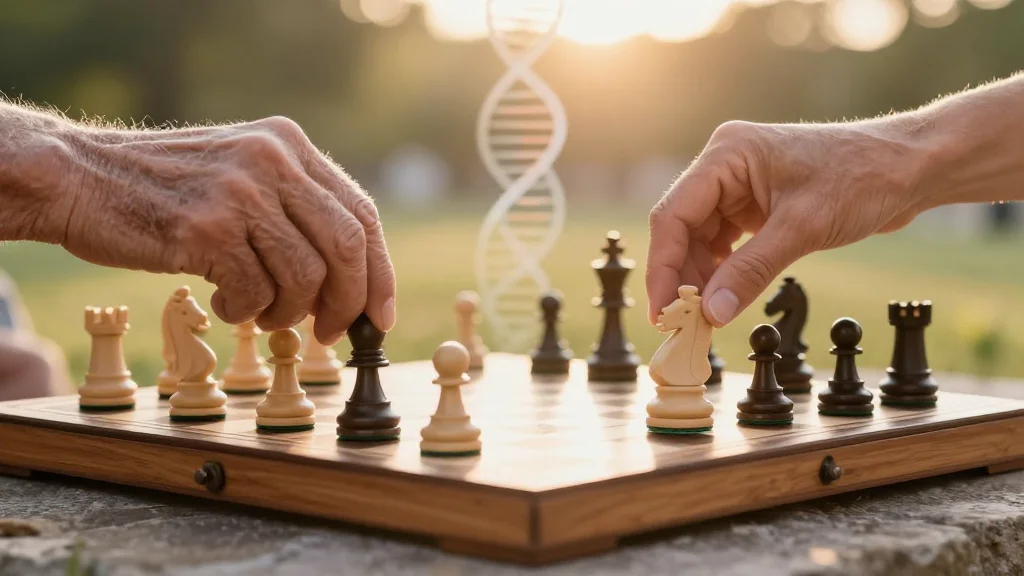
Study Finds Non‑Exercise Activities Cut Frailty Risk by Up to 4% in Seniors

Why It Matters
The study provides the first large‑scale, longitudinal evidence that purely mental and social activities can independently reduce frailty, a key predictor of morbidity and mortality in older adults. For the biohacking community, this validates a low‑cost, low‑risk avenue to influence biological aging, expanding the repertoire beyond diet, exercise and pharmacological interventions. It also underscores the importance of holistic lifestyle design, where mental engagement is treated as a core pillar of longevity strategy. Beyond individual practice, the research could reshape public‑health messaging and insurance models by recognizing cognitive engagement as a preventive health measure. If insurers begin to reward such activities, a new market incentive will emerge, encouraging technology developers to create evidence‑based tools that track and promote mental fitness alongside physical metrics.
Key Takeaways
- •12,862 Australians aged 70+ were tracked for 11 years.
- •Regular chess playing cut frailty risk by about 4%.
- •Study isolated mental/social activities from exercise and diet.
- •Findings support non‑exercise biohacks for slowing biological aging.
- •Potential for digital‑health platforms to add cognitive‑fitness modules.
Pulse Analysis
The Australian cohort study arrives at a moment when the biohacking ecosystem is diversifying beyond the classic triad of diet, exercise and supplements. Historically, longevity research has emphasized caloric restriction, resistance training and pharmacologic agents such as senolytics. This new evidence shifts part of the focus toward the brain’s role in systemic health, echoing earlier work linking cognitive reserve to reduced dementia risk. By quantifying a 4% frailty reduction, the study offers a concrete metric that can be incorporated into risk‑assessment algorithms used by insurers and health‑tech firms.
From a market perspective, the data opens a niche for companies that can reliably deliver cognitive challenges at scale. Existing brain‑training apps have faced skepticism over efficacy; however, a peer‑reviewed longitudinal study provides a credible foundation for product differentiation. Investors may now view mental‑fitness platforms as complementary to wearables that monitor heart rate variability or sleep, creating bundled solutions that address both physiological and neurological aging pathways.
Looking ahead, the next research frontier will likely explore interaction effects—whether combining mental stimulation with other biohacks yields additive or multiplicative benefits. If future trials confirm synergistic outcomes, we could see a new class of integrated longevity protocols that prescribe a daily “biohack stack” of mental, physical and metabolic interventions. For now, the study equips biohackers with a data‑backed, low‑cost tool: engage the mind, and you may help the body stay younger.
Study Finds Non‑Exercise Activities Cut Frailty Risk by Up to 4% in Seniors
Comments
Want to join the conversation?
Loading comments...