Health Longevity Secrets
The Longevity Nerve: The Missing Link in Stress, Aging & Brain Health | Elisabetta Burchi MD
Why It Matters
Understanding and enhancing vagal function offers a drug‑free pathway to mitigate chronic stress, a major driver of age‑related disease, making it a promising tool for public health and personal longevity. As stress levels rise in modern life, accessible neuromodulation could empower individuals to take proactive control of their nervous system and improve long‑term health outcomes.
Key Takeaways
- •Vagus nerve links brain, heart, gut, immune system.
- •Low vagal tone predicts aging and poor health outcomes.
- •Transauricular stimulation boosts parasympathetic activity non‑invasively.
- •Heart rate variability reflects vagal tone and overall resilience.
- •Neuromodulation offers drug‑free stress reduction and longevity benefits.
Pulse Analysis
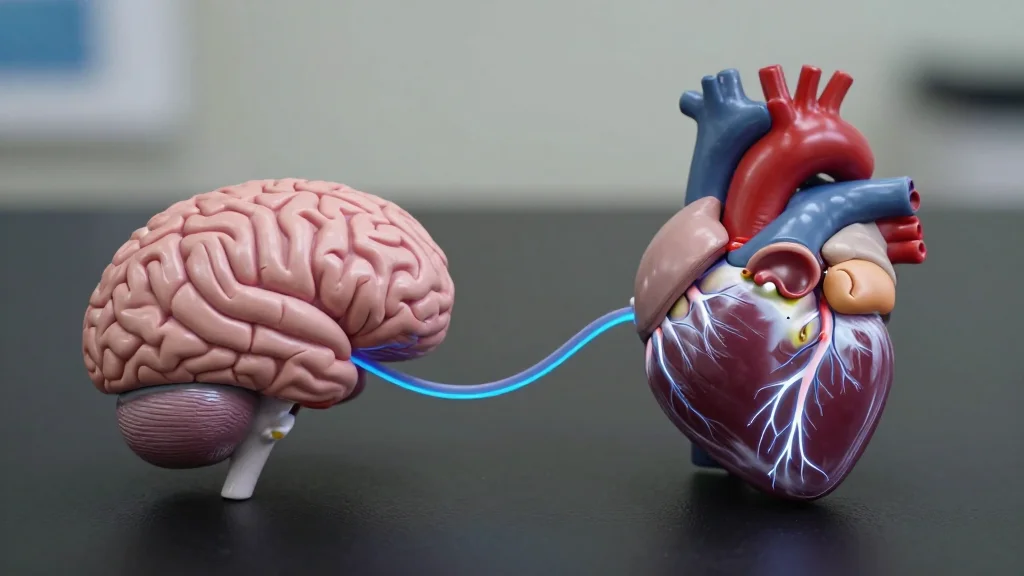
The vagus nerve is the longest cranial nerve, extending from the brainstem to the heart, lungs, gut and immune organs. Acting as the principal conduit of the parasympathetic branch of the autonomic nervous system, it continuously monitors internal signals and triggers the “rest‑and‑digest” response that counterbalances the sympathetic “fight‑or‑flight” surge. Because it integrates cardiovascular, respiratory, gastrointestinal and immune functions, the vagus serves as a biological hub for stress regulation, cognition, and overall homeostasis. Understanding this circuitry reshapes how clinicians view health beyond disease treatment, positioning nerve balance as a cornerstone of longevity.
Research consistently links low vagal tone with reduced heart‑rate variability (HRV), a metric that reflects the heart’s ability to adapt to physiological demands. Declining HRV is a hallmark of aging and predicts higher risk for metabolic syndrome, cardiovascular disease, and mental health disorders. Chronic activation of the sympathetic system—common in modern stressors—diminishes vagal influence, creating a feedback loop that accelerates cellular wear and inflammation. By quantifying HRV through wearable devices, clinicians can gauge autonomic balance in real time, offering a non‑invasive biomarker for stress resilience and long‑term health outcomes.
Modern neuromodulation translates this biology into therapy. Transauricular vagus nerve stimulation (taVNS) delivers mild electrical pulses to the ear’s auricular branch, activating parasympathetic pathways without surgery. Clinical trials from companies like Parasym have shown taVNS improves HRV, lowers inflammatory markers, and reduces symptoms of depression and anxiety—all factors that influence lifespan. Because the technology is portable and inexpensive, it aligns with the growing demand for drug‑free stress management tools in corporate wellness and preventive medicine. As evidence accumulates, investors and health systems are positioning taVNS as a scalable solution for enhancing resilience, cognition, and longevity.
Episode Description
What if one nerve quietly connects your brain to your heart, gut, immune system, and even how long you live? Dr. Elisabetta Burchi explains why the vagus nerve may be the missing link in stress resilience, cognition, and longevity.
CHAPTERS:
0:00 - The vagus nerve and longevity medicine
0:27 - Show intro
1:18 - Welcome Dr. Elisabetta Burchi from Florence
2:04 - Psychiatry, neuroscience, INSEAD MBA
6:25 - Joining Parasym as 4th employee
14:10 - What is the vagus nerve? Neuromodulation 101
18:00 - Autonomic nervous system: sympathetic vs. parasympathetic
20:00 - Fight-or-flight and the modern chronic stress problem
23:22 - Chronic stress as a driver of disease and aging
26:30 - Vagus nerve stimulation as therapy
28:40 - Vagal tone, HRV, and aging
30:36 - Invasive vs. noninvasive VNS
33:00 - How transcutaneous auricular VNS works
34:00 - Published findings: HRV, inflammation, cognition
36:00 - 55+ published clinical trials
36:30 - Cardiovascular, long COVID, fibromyalgia
38:00 - Cognitive enhancement in healthy people
40:00 - How to use it: 30-minute sessions
43:00 - Sleep improvement
45:50 - Athletic recovery and performance anxiety
47:22 - Elisabetta's personal routine
49:56 - The future of neuromodulation
55:00 - Long COVID data
57:00 - Longevity medicine and vagal neuromodulation
58:42 - Closing
REFERENCES:
Parasym / Nurosym Scientific Evidence (50+ Studies):
nurosym.com/scientific-evidence
taVNS Improves Long COVID Symptoms (Frontiers in Neurology, 2024):
PMC11097097
Cholinergic Anti-Inflammatory Pathway (PMC, 2018):
PMC5826620
HRV and Exceptional Longevity (Frontiers, 2020):
PMC7527628
Baseline HRV as Guide to taVNS Response (Translational Psychiatry, 2025):
PMC12689627
GUEST: Dr. Elisabetta Burchi, MD, MBA - Head of Research, Parasym
HOST: Dr. Robert Lufkin MD
New episodes every Tuesday & Thursday. Subscribe so you don't miss one.
Continue this conversation on Substack: https://robertlufkinmd.substack.com
Lies I Taught In Medical School — Free sample chapter: https://www.robertlufkinmd.com/lies/
Web: https://www.robertlufkinmd.com
YouTube: https://www.youtube.com/robertlufkinmd
X: https://x.com/robertlufkinmd
Instagram: https://www.instagram.com/robertlufkinmd/
TikTok: https://www.tiktok.com/@robertlufkin
LinkedIn: https://www.linkedin.com/in/robertlufkinmd/
Comments
Want to join the conversation?
Loading comments...