

Symmetry: Nature’s Compression Tool Reducing Model Complexity
The reason symmetry is so important in physics is because symmetry is a highly effective compression operator. If a system is invariant under some symmetry, you only need to explain one axis of it. Scientific models represent the systematic exploitation of the universe's internal redundancies through symbolic logic.

Physics History: A Program Synthesis Quest for Simplicity
We should view the history of physics as a long-running program synthesis task. Kepler and Newton were searching the space of possible symbolic models to find the simplest one that would best satisfy available observations.
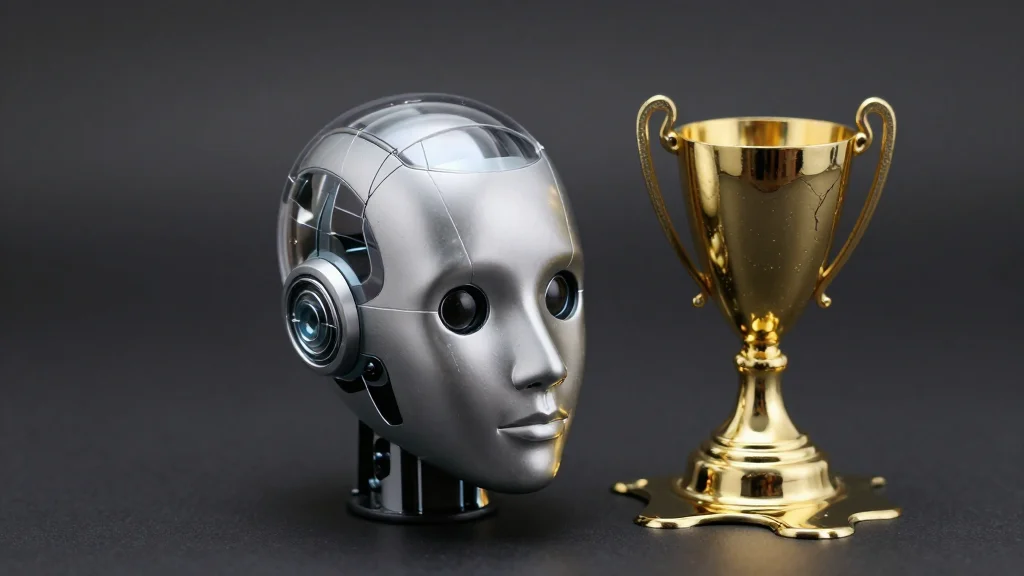
Meta's Model Prioritizes Benchmarks Over Real Utility
The new model from Meta is already looking like a disappointment: overoptimized for public benchmark numbers at the detriment of everything else. Knowing how to evaluate models in a way that correlates with actual usefulness is a core competency for...
Most DL Researchers only Know Gradient Descent, Ignore Alternatives
One thing about DL researchers that has always been surprising to me, is that a lot of them have never been exposed to forms of learning other than fitting the parameters of a curve via gradient descent, and are even...

Symbolic Learning Reverses Code, Beats Curve‑Fitting
With curve-fitting, you are recording a lossy approximation of the output of some generative program. With symbolic learning, you are losslessly reverse-engineering the source code of the generative program. Symbolic learning won't be the best fit for all problems, but for...

Base LLMs Lack Fluid Intelligence; Newer LRMs May Solve Math
Paper below tested a variety of base LLMs (no TTA) on generalization-focus math problems and found that they can't reason and can't do math. All true... but the fact that base LLMs have zero fluid intelligence, while extremely controversial back in...

Few Experiments, Symbolic Compression Built the Atomic Bomb
Science went from the initial observation of radioactivity to a working atom bomb over 47 years via only about 9 distinct key experiments -- extremely few data points -- and symbolic models concise enough they would fit on a single...

Keras Kinetic: Decorator‑Based TPU/GPU Jobs Made Simple
Perhaps the craziest thing that was introduced on the Keras community call today: Keras Kinetic, a new library that lets you run jobs on cloud TPU/GPU via a simple decorator -- like Modal but with TPU support. When you call a...

Good Framework Design Yields High Performance with Minimal Effort
JAX is what a well-designed low-level machine learning framework looks like. Good design lets you deliver much greater performance with much lower effort. Bad design is the exact opposite.

Established Firms Win by AI‑enhanced Products and New Ventures
Some of the biggest beneficiaries of AI will be established companies with a profitable business model that manage to leverage AI to make their existing products more compelling and even start new ones (like Adobe Podcast which is both new...

Sycamore: Enterprise Agent OS by Sri's Stellar Team
Sri is building Sycamore: an agent OS for the enterprise. Great team and great product concept. Can't wait for the launch :)

Secure Sandbox Empowers Local AI Assistants with Control
OpenClaw has proven that local AI assistants have product-market fit. But the big issue with them has been security. The team at @Pokee_AI is fixing it with PokeeClaw: works like OpenClaw, but with in a secure sandbox architecture with isolated environments, approval workflows,...

We Can Build 3000‑Elo Chess Engine in 24 Hours
Let me explain what I mean using your chess analogy... Imagine a world where chess doesn't exist. In this world, humanity encounters an alien species, and they say "let's play a game of Glurg, it's our traditional pastime. Here are the...

Intelligence Is Bounded Ratio, Not Unlimited Scalar
One of the biggest misconceptions people have about intelligence is seeing it as some kind of unbounded scalar stat, like height. "Future AI will have 10,000 IQ", that sort of thing. Intelligence is a conversion ratio, with an optimality bound....
Future Class Divide: Focus vs AI‑Controlled Slop
A lot of folks talk about "escaping the permanent underclass". If AGI pans out, the future class divide won't be based on wealth, but on cognitive agency. There will be a "focus class" (those who control their attention and actually...

Agent-Native Payments Set to Drive 10x Transaction Surge
I basically agree. Agents are soon going to be buying services/resources online, and the world is going to need agent-native payment infra, like Sam's @agentcashdev We're probably looking at a >10x transaction increase.
True AGI Must Self‑Create Its Own Problem Harnesses
AGI will make its own harness (or whatever else it needs to solve a new problem). As long as you need a human engineer to handcraft a task-specific harness/system for each new problem, AI isn't general. It's an automation tool...

New AGI Eval Highlights Gaps, Drives Real Progress
If you care about the rate of AGI progress, you should be excited about a new eval that focuses research efforts by pointing out important gaps & providing a way to measure progress towards fixing them If instead you only care...

AI Must Master Tiny Scientific Loops Before Curing Cancer
Many people expect that current AI is ready to cure cancer and do breakthrough new science. ARC-AGI-3 envs are like a microcosm of the scientific method: you must observe a tiny world, form a theory of how it works, test...

Ordinary Testers Solve ARC‑AGI‑3 Tasks without Training
To be clear, all ARC-AGI-3 environments are feasible by humans with no prior ARC-AGI-3-specific training. Our bar for feasibility is the following... Each environment was seen by 10 human testers. If 2 testers could independently clear it (successfully solving *all* levels...

ARC-AGI-4 Slated for Early 2027, Yearly Benchmarks
For those wondering about ARC-AGI-4 timing: it will be released in early 2027. We are aiming for a yearly release schedule for new benchmarks. We are also aiming for each new benchmark to be fully unsaturated upon release, and to...
ARC Prize Sets Actionable Goals and Tracks AGI Progress
ARC Prize's mission is to provide actionable goals for AGI research and to measure progress towards them.
ARC-AGI: Evolving Benchmark, Not Final AGI Test
Keep in mind: ARC-AGI is *not* a final exam that you pass to claim AGI. Including ARC-AGI-3. The benchmarks target the residual gap between what's hard for AI and what's easy for humans. It's meant to be a tool to measure...

True AGI Learns New Tasks as Efficiently as Humans
Human-level general intelligence is achieved when an AI system can approach a new task and figure it out, without human intervention, *with the same learning efficiency as humans*. If every new task requires human intervention, it's not general. If every new...

ARC-AGI-3 Launch Next Week After Year-Long Team Triumph
The ARC-AGI-3 launch is next week. Incredible work by the team over the past year.

Science Needs Exploration, Not Just AI‑Curated Knowledge
Current AI is a librarian of existing knowledge. Science requires an explorer of the unknown. You don't win a Nobel Prize by staying in the library.

Latent Space: Vectors Unleash Pure Possibility
There is a poetic depth to the term "latent space" that transforms vector coordinates into a frontier of pure possibility
Future Breakthroughs Will Come From Beyond Parametric Models
The next major breakthrough will branch out at a much lower level than deep learning model architecture. It will be a new approach. A better model architecture can lead to incremental data efficiency & generalization gains, but it won't fix...

Coining “Selfmaking”: Crafting Identity Through Creation
There should be a word for this trait. Something like "selfmaking". You make your self by making things yourself.
Self‑thinking Needed Before genAI; Missed It? Good Luck
The time to learn how to think for yourself was before genAI, if you missed your chance, good luck

Prompt Engineering Shows We're Still Far From AGI
The persisting importance of prompt engineering -- and now harness engineering -- is one of the best indicators of how far we are from AGI. A general system doesn't need a task-specific harness. And when provided with instructions, it is...

Sell Automation Tools Widely; Keep Inventions for Personal Profit
If you build an automation machine, the way to monetize it is to sell it to as many people as possible -- anyone who has tasks to automate. But if what you build is an invention machine, then the best way...

Seeking Latest AI-Generated Music Hits and Tools
What's the SotA for AI music generation these days? Any AI generated bangers you've listened to lately?

Current AI Still Mirrors Human Guidance, Not Autonomy
The bottleneck of current AI is simple: the techniques we use are still predicated on pattern memorization and retrieval, and thus they need *someone* to tell them which patterns to memorize (training data, RL envs...) That role cannot yet be played...

Civilian Tech Now Fuels Military; AI Will Speed It
Up until roughly the 1970s, most civilian technological progress was downstream of military technological progress. The trend has since inverted. Today most of the modern (e.g. Ukraine) military playbook comes from consumer tech from the past two decades. With AI entering...

AI Agents Becoming Independent Economic Actors Within Two Years
AI agents will soon graduate to fully-fledged economic actors that buy services, compute, and even data in the course of accomplishing high-level goals. 1-2 years before we start seeing this at scale.

More Raw Data ≠ Higher Intelligence, Says Visual Compression
I keep reading this take (below) every few months, presented as if extremely profound, and it is just offensively dumb. It confuses data and information, it ignores the fact that not all information is equally valuable, and it ignores the...

AGI Emergence Unpredictable: Build, Don’t Theorize
It's basically impossible to predict what emergent properties you might get from scaling up a given algorithm. That's why AGI is much more an engineering endeavor than a theoretical one. It's a process of discovery through building.
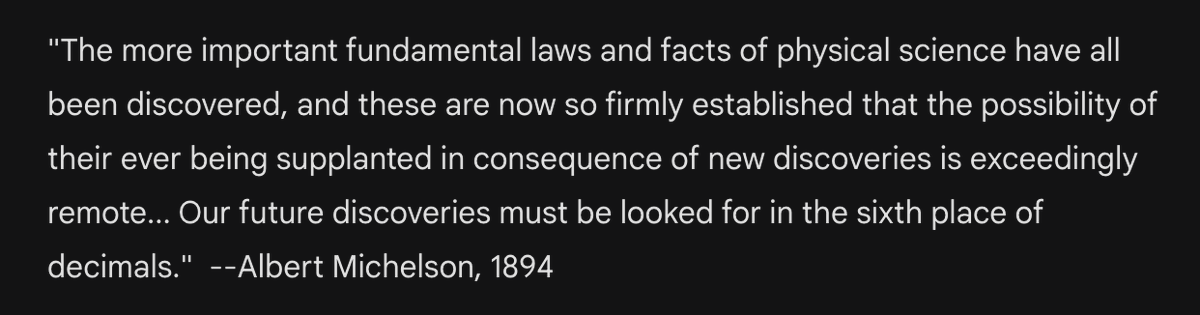
AI Today Mirrors 1870s Physics: Early Yet Transformative
If you ever feel like you're late to the game, consider that in the 1890s many scientists thought physics as a field was completely solved (quote below is from Albert Michelson in 1894). On the front of intelligence science, it feels...
Task-Specific Training Covers Minuscule Slice of Possible Tasks
By explicitly training on specific tasks, we ended up covering a very large area (in absolute terms) of the space of all possible tasks humans can do, but this large area only amounts to 0.00...01% of the total space. And...

AI Excels with Familiar Tasks, Stalls on Novel Domains
Even after the steep progress of the past 3 months, it remains that AI performance is tied to task familiarity. In domains that can be densely sampled (via programmatic generation + verification), performance is effectively unbounded, and will keep increasing...

Principled Stance on Surveillance & Killbots Earns Respect
I gained a lot of respect for Dario for being principled on the issues of mass surveillance and autonomous killbots. Principled leaders are rare these days
We Choose AI's Impact, Not Its Destiny
A lot of the current discourse about AI comes from a fatalistic position of total surrender of agency: "tech is moving in this direction and there's nothing anyone can do about it" (suspiciously convenient for those who stand to benefit...

Cheaper Engineer Hiring Accelerates Software Ecosystem Growth
It's probably accelerating from here. More code, more software engineers. More apps, more SaaS usage and revenue. More cloud consumption. And a whole lot of tokens through it all. If the cost of hiring software engineers was previously a bottleneck on...
AI's Task-Specific Skills Don't Equal General Intelligence
The field of AI is still struggling with the fact that task-specific skill is not the same as general intelligence

AI Boosts Engineer Efficiency, Driving Higher Demand
It is becoming clearer that Jevons paradox applies to competent human software engineers. If AI makes them more efficient and more productive, demand for their work will increase.
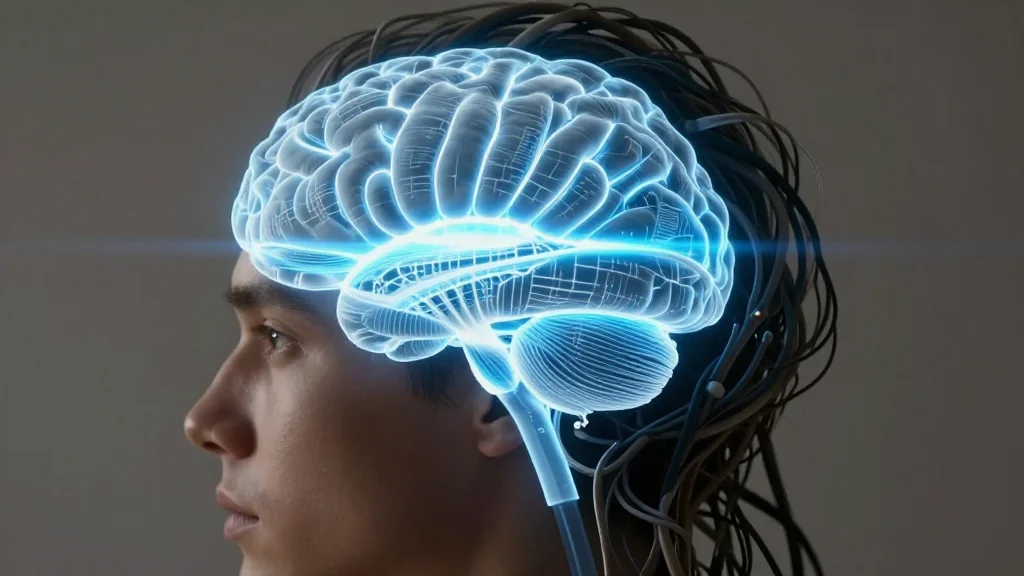
Use AI to Amplify Thinking, Not Replace It
The best way to use AI is an interface to information that lets you deepen and improve your own knowledge and mental models. The worst way to use AI is as a crutch to outsource and forsake your own cognition

Agentic Coding Mirrors ML, Inheriting Its Pitfalls
Sufficiently advanced agentic coding is essentially machine learning: the engineer sets up the optimization goal as well as some constraints on the search space (the spec and its tests), then an optimization process (coding agents) iterates until the goal is...

Google Grants TPU Compute Awards for Keras 3 Researchers
If you're a researcher in academia using Keras 3 (PhD student, postdoc, professor...) and you want to train on TPUs, you could receive compute awards from Google for your research. Google is running a new academic grant program, separate from...

6th‑Gen AV Platform Costs Halve
The 6th gen platform reportedly costs ~$70k per vehicle ($50k base + $20k custom fit & sensors). The cost has room to fall by 50% in the next 2 years (>$30k vehicle + $10k sensors). Waymo currently does over 500,000 driverless...