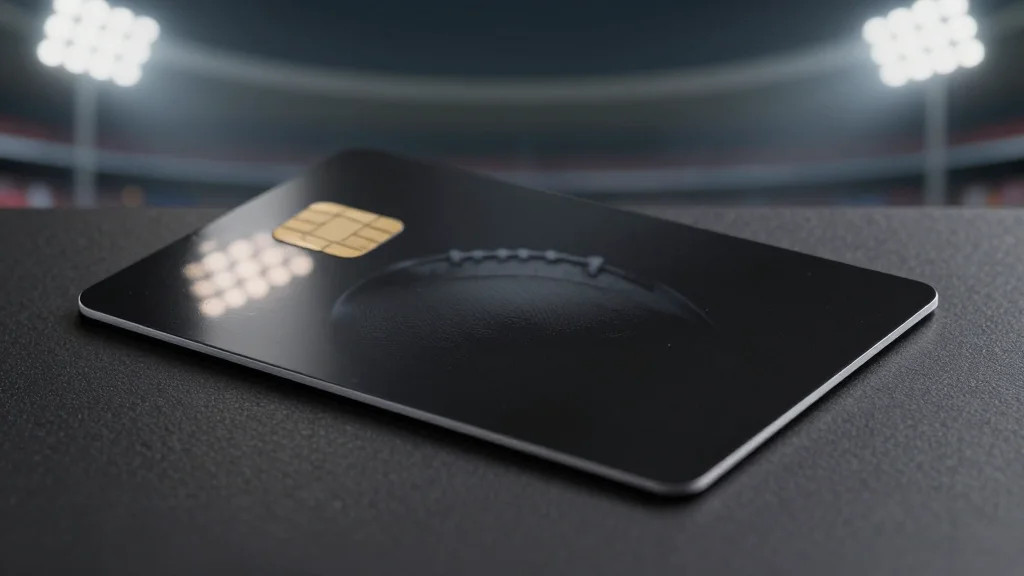
Fanatics and American Express Launch Co-Branded Card to Monetize Sports Fandom

Companies Mentioned
Why It Matters
The Fanatics‑American Express alliance illustrates how payment providers are evolving from mere transaction processors to data‑driven marketing platforms. By embedding loyalty rewards directly into the payment experience, both firms can capture richer consumer insights, drive higher spend, and deepen brand affinity among a demographic that traditionally resists generic advertising. For the digital marketing industry, this partnership showcases a blueprint for monetizing fandom through integrated commerce, loyalty, and experiential incentives. Moreover, the deal underscores the growing importance of vertical‑specific ecosystems—sports, in this case—where brands can bypass broader ad networks and engage fans at moments of high emotional relevance. As more merchants adopt similar co‑branded cards, the competitive landscape for loyalty programs will shift toward partnerships that combine payment scale with niche community reach.
Key Takeaways
- •Fanatics and American Express launch a co‑branded card that earns FanCash on everyday purchases.
- •The partnership targets roughly 80% of Amex U.S. cardmembers who identify as sports fans.
- •Cardholders receive elevated status in Fanatics ONE and exclusive access to events and collectibles.
- •The deal expands Fanatics’ advertising inventory and provides Amex with deeper fan‑behavior data.
- •Rollout begins in the U.S. with plans for international expansion later in 2026.
Pulse Analysis
The Fanatics‑American Express card is more than a payment product; it is a data‑centric loyalty engine that blurs the line between commerce and marketing. Historically, loyalty programs have struggled to deliver meaningful engagement beyond point accumulation. By tying rewards to a culturally resonant identity—sports fandom—Fanatics taps into a high‑emotional driver that can sustain long‑term spend. The integration of FanCash creates a closed‑loop economy where fans are incentivized to stay within the Fanatics ecosystem, reducing churn and increasing lifetime value.
From a competitive standpoint, the partnership pits Fanatics against other sports merchandisers like Nike and the NBA’s own digital storefronts, which have also experimented with co‑branded cards and exclusive drops. However, Fanatics’ advantage lies in its breadth of inventory (apparel, tickets, collectibles) and its existing loyalty platform, Fanatics ONE. American Express brings a premium brand cachet and a sophisticated data analytics capability, enabling hyper‑personalized offers that can be delivered at the point of sale. This synergy could force rivals to accelerate their own payment‑loyalty collaborations or risk losing a slice of the lucrative fan spend.
Looking ahead, the success of the card will hinge on activation rates and the perceived value of FanCash. If fans see tangible benefits—such as exclusive meet‑and‑greets or limited‑edition merchandise—the program could become a template for other niche markets (e.g., music, gaming). Conversely, if the rewards feel peripheral, the partnership may be relegated to a branding exercise with limited ROI. The next quarter’s engagement metrics will be a bellwether for whether integrated payment‑loyalty models become a staple of digital marketing strategy or remain a niche experiment.
Fanatics and American Express Launch Co-Branded Card to Monetize Sports Fandom
Comments
Want to join the conversation?
Loading comments...