The Thymus Renaissance: Reawakening the Body's Forgotten Immune Engine for Longevity
Key Takeaways
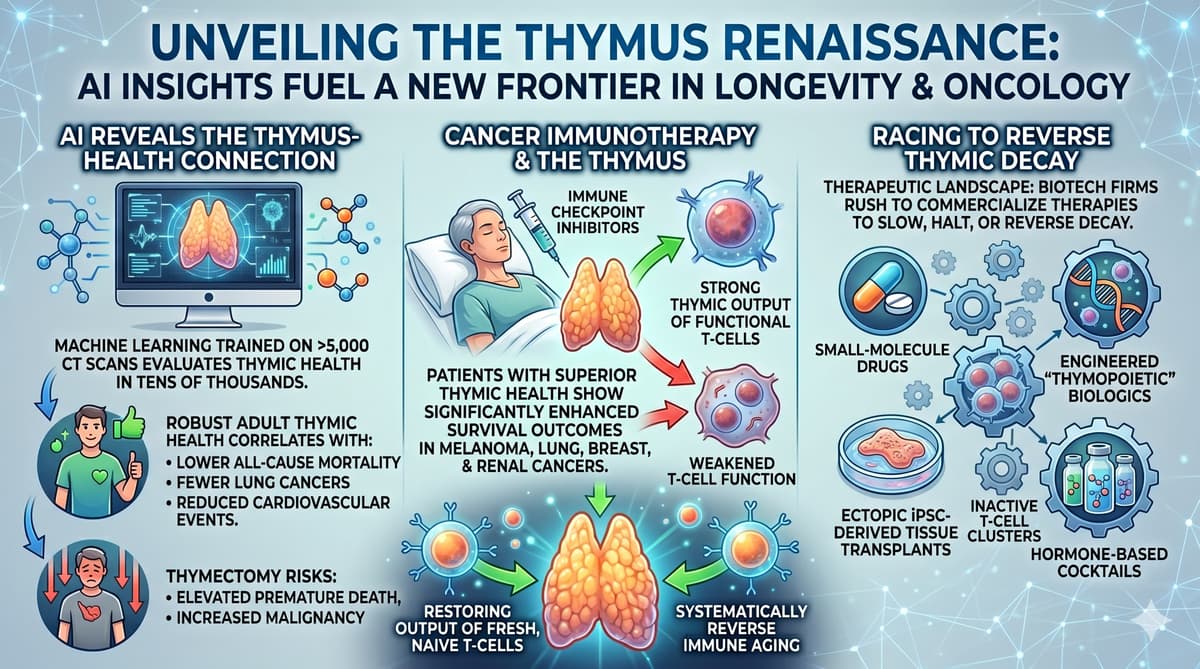
- •AI analysis of 5,000 CT scans links thymic health to lower mortality.
- •Strong thymus correlates with reduced lung cancer and cardiovascular events.
- •Thymectomy in adults raises risk of early death and malignancy.
- •Biotech firms pursue drugs, biologics, and iPSC transplants to rejuvenate thymus.
Pulse Analysis
The thymus, once dismissed as a relic after puberty, is reemerging as a pivotal organ in immune competence. Recent machine‑learning studies that examined over 5,000 routine CT scans of tens of thousands of adults uncovered a striking association: individuals with a robust thymic silhouette experienced markedly lower all‑cause mortality, fewer lung‑cancer diagnoses, and fewer cardiovascular incidents. This data overturns the long‑standing notion that the adult thymus is functionally irrelevant, positioning it as a measurable biomarker of systemic health.
Beyond epidemiology, the thymus is gaining traction in therapeutic strategies aimed at extending healthspan. Clinical observations indicate that caloric restriction over two years can preserve thymic mass and sustain naive T‑cell output, while experimental protocols combining growth hormone, metformin, and DHEA have demonstrated reversible epigenetic aging alongside thymic expansion. Moreover, cancer patients with healthier thymic tissue exhibit superior responses to checkpoint inhibitors, suggesting that thymic rejuvenation could amplify immunotherapy efficacy across melanoma, lung, breast, and renal cancers.
The biotech landscape is responding with a diverse pipeline: small‑molecule agents targeting transcriptional regulators, engineered thymopoietic biologics, iPSC‑derived ectopic thymus grafts, and hormone‑based cocktails designed to reactivate endogenous repair pathways such as FGF21. While scaling these interventions and navigating regulatory pathways remain significant hurdles, the convergence of AI‑driven insights, clinical data, and innovative therapeutics signals a potential paradigm shift. Restoring thymic output may soon become a mainstream approach to counteract immune aging, offering tangible benefits for longevity and oncology alike.
The Thymus Renaissance: Reawakening the Body's Forgotten Immune Engine for Longevity
Comments
Want to join the conversation?