
Hitachi Partners with Anthropic to Strengthen ‘Lumada 3.0’ Through Frontier AI
Hitachi announced a strategic partnership with Anthropic to embed the Claude AI model into its Lumada 3.0 platform and enterprise operations. The collaboration will create a Frontier AI Deployment Center, initially staffed by about 100 experts, to accelerate AI‑driven system engineering, cybersecurity and physical‑AI use cases across energy, transportation, manufacturing and finance. Hitachi plans to roll Claude out to its roughly 290,000 employees and launch a talent program to upskill 100,000 staff, positioning itself as a “Customer Zero” adopter. The move supports Hitachi’s HMAX solutions and aims to boost productivity while ensuring safe AI deployment in mission‑critical infrastructure.

Gartner Forecasts Worldwide AI Spending to Grow 47% in 2026
Gartner projects worldwide AI spending to reach $2.59 trillion in 2026, a 47 percent year‑over‑year increase. Over 45 percent of that spend will go to AI infrastructure, driven by vendors and hyperscalers. AI‑optimized servers are expected to triple, becoming the largest sub‑segment. Enterprises...

Domino Unveils New Capabilities to Take AI From Model to Mission-Critical Application
Domino Data Lab announced at its Rev conference that its Enterprise AI Platform now covers the entire application lifecycle, adding tools for development, deployment, governance, and integration. New features include an App Hub with version control and approval gating, native...

SAP CEO Says “Almost Right” Is Not Good Enough as Company Launches Autonomous Suite
SAP CEO Christian Klein warned that "almost right" is unacceptable as the company rolls out its Autonomous Suite at Sapphire 2026. The new suite embeds AI‑driven Joule agents across finance, procurement, HR and supply‑chain functions, turning SAP from a back‑office...

Berkeley Lab: New MatterChat Model Helps AI to ‘See’ the Language of Science
Berkeley Lab unveiled MatterChat, an AI framework that fuses large language models with physics‑based interatomic potential engines. By training a lightweight bridge on 143,000 crystal structures, the system translates 3‑D atomic data into language that LLMs can reason about, beating...

SandboxAQ Integrates Its Quantitative AI Models with Anthropic’s Claude via MCP
SandboxAQ announced that its Large Quantitative Models (LQMs) are now integrated with Anthropic’s Claude, letting users query physics‑grounded AI models via plain‑English prompts. The integration initially exposes AQCat Adsorption Spin, a catalyst‑screening tool that delivers gold‑standard accuracy at a fraction...
Agentic AI Foundation Adds 43 New Members as Adoption of Open Agent Standards Accelerates
The Agentic AI Foundation (AAIF) announced on May 18 that it has welcomed 43 new members in the last quarter, bringing its roster to 180 organizations. The influx includes four Gold members—F5, GoDaddy, Stripe and blockchain leader TRON—alongside 27 Silver...

Argonne Researchers Advance New Tech Through Re-Envisioned SciDAC Institutes
Argonne National Laboratory scientists are steering a refreshed DOE SciDAC effort that funds the RAPIDS and FASTMath institutes to embed artificial‑intelligence techniques and energy‑aware algorithms into exascale platforms such as Aurora. RAPIDS will develop AI‑driven data‑workflow tools, surrogate models, and...

LLNL’s ‘STEM with Phones’ Program Brings AI-Powered Physics Research to Students
Lawrence Livermore National Laboratory’s STEM with Phones workshop equips students with smartphones and AI to perform advanced physics experiments. Participants learned to capture star‑trail images and develop custom AI‑driven analysis tools, enabling a high‑school duo to calculate Earth’s rotation rate....

Graphon AI Emerges From Stealth with $8.3M to Build ‘Pre-Model’ Intelligence Layer for Enterprise AI
Graphon AI emerged from stealth with an $8.3 million seed round to build a pre‑model intelligence layer that maps relationships across multimodal enterprise data. The platform creates a continuous graph representation, enabling foundation models to reason over unlimited context instead of...

Virtana Extends AI Factory Observability to the Dell AI Factory
Virtua announced AI Factory Observability for Dell AI Factory, extending its full‑stack monitoring platform to Dell’s PowerEdge compute, PowerScale/ObjectScale storage, high‑performance networking and Smart Fabric Manager. The solution correlates GPU performance, storage latency, network throughput and AI model output in...

Sandia Deploys AI-Assisted Inspection Workflow for Nuclear Deterrence Ceramics
Sandia National Laboratories is installing optical and acoustic imaging systems paired with an AI‑augmented review tool to inspect ceramic billets used in nuclear deterrence weapons. The workflow shifts defect detection from manual microscope checks of final parts to high‑throughput digital...

Everpure’s Portworx Makes Data Management Native to Red Hat OpenShift
Everpure unveiled Portworx Plugin 2.2 for Red Hat OpenShift, embedding storage, data protection and disaster‑recovery directly into the OpenShift console. The release bundles Portworx Enterprise 3.6, Plugin 2.2 and Backup 2.11, and adds edge‑focused capabilities that encrypt and protect data on 2‑5 node clusters. Integrated...

NVIDIA and SAP Bring Trust to Specialized Agents
NVIDIA and SAP announced an expanded partnership that embeds NVIDIA's open‑source OpenShell runtime into SAP Business AI Platform, providing a secure execution layer for specialized autonomous agents. The integration adds isolated environments, filesystem and network policy enforcement, and audit capabilities...

AIwire Unveils 2026 People to Watch
AIwire, the leading AI‑focused news outlet, announced its 2026 People to Watch, spotlighting six influential figures shaping the next wave of artificial‑intelligence innovation. The list includes Daniela Amodei (Anthropic), Andrew Feldman (Cerebras Systems), Ranjay Krishna (University of Washington), Adam Lewis...

PSC Bridges-2 Helps Train AI to Predict and Explain Airport Collision Risks
At the NASA Formal Methods Symposium, CMU’s AirLab announced World2Rules, a neuro‑symbolic AI trained on PSC’s Bridges‑2 supercomputer to predict and explain airport surface collision risks. The system ingests the 10‑TB Amelia‑42 dataset—two years of FAA movement records from 42...

Red Hat and Core42 Set the Standard for Sovereign AI Infrastructure
Red Hat announced a partnership with Core42, a G42 subsidiary, to deliver sovereign cloud and AI services for the UAE public sector, defense and regulated industries. The collaboration leverages Red Hat OpenShift and Red Hat AI to create both private...

Dell, AMD Expand On-Prem AI Platform with Instinct MI350P GPU Support
Dell and AMD announced that Dell PowerEdge XE7745, R7725 and XE9785 servers will support AMD Instinct MI350P (and MI355X) GPUs, delivering up to 4,600 teraflops of peak performance and 144 GB of HBM3e memory per card. The solution offers a drop‑in,...

AI Summit London Unveils 10th Anniversary Speaker Line-Up Featuring Global Leaders in Enterprise AI
The AI Summit London announced its 10th‑anniversary speaker lineup for the June 10‑11, 2026 event, featuring senior leaders from NVIDIA, AWS, JPMorgan Chase, AstraZeneca, Virgin Atlantic and more. The two‑day program will cover AI deployment, governance, infrastructure and industry‑specific use...

IBM and Aramco Announce Planned Collaboration on Industrial AI Applications
IBM and Saudi Aramco announced a planned collaboration to develop industrial‑AI, agentic AI, automation and material‑science solutions for the energy sector. The partnership will combine IBM’s hybrid‑cloud and AI platforms with Aramco’s extensive operational data and 90‑year industry expertise. Announced...

Renesas Completes Acquisition of Irida Labs to Expand Vision AI Software Capabilities
Renesas Electronics announced the completion of its acquisition of Irida Labs, a Greek developer of embedded vision‑AI software. The deal integrates Irida’s PerCV.ai tools with Renesas’ RA microcontrollers and RZ processors, and embeds the software into the Renesas 365 development platform....

Zero Latency Launches Zerogrid Closed Beta, a Distributed AI Inference Grid
Zero Latency has opened a closed beta for Zerogrid, a distributed AI inference grid that routes inference requests to edge compute nodes meeting latency, data‑gravity and burst constraints. The program targets Fortune 1000 enterprises, tier‑1 telecoms and leading DevOps platforms, offering...

Can OpenAI’s GPT Rosalind Tackle Data Challenges in Life Sciences Research?
OpenAI has unveiled GPT‑Rosalind, a large language model tailored for life‑science research that can reason across literature, biological databases, and experimental data. In internal tests the model led benchmark BixBench, showing superior multi‑step bioinformatics performance compared with earlier OpenAI models....

Anaconda Moves to Control AI Workflows with Outerbounds Buy
Anaconda announced the acquisition of Outerbounds to plug the gap between AI experimentation and production deployment. The deal adds a Metaflow‑based orchestration layer that defines, runs, and tracks workflows across existing infrastructure. By integrating Outerbounds, Anaconda aims to extend its...

IBM Makes Digital Sovereignty Operational with General Availability of IBM Sovereign Core
IBM announced the general availability of IBM Sovereign Core, a software platform that lets enterprises and governments build AI‑ready sovereign environments and verify control. The solution embeds a customer‑operated control plane, in‑boundary identity and encryption, continuous compliance monitoring, and governed...

Altara Raises $7M to Accelerate Scientific and Industrial Breakthroughs with Agentic AI
Altara announced a $7 million seed round led by Greylock, with participation from Neo, BoxGroup, Liquid 2 Ventures and angels such as Jeff Dean. The San Francisco startup builds AI agents that ingest fragmented scientific data—from wafer maps to sensor logs—and deliver actionable insights in...

IBM Delivers the Blueprint for the AI Operating Model as the AI Divide Widens
At its Think conference, IBM unveiled a comprehensive AI operating model built on four pillars—agents, data, automation, and hybrid sovereignty. New offerings include the next‑generation watsonx Orchestrate control plane, the IBM Bob developer partner, real‑time data integration via Confluent, the...

DAC 2026 Heads to Long Beach This July as AI Drives Growth Across Chip Design
The 63rd Design Automation Conference (DAC) will convene in Long Beach, California, July 26‑29, 2026, marking its first appearance at the venue in its 63‑year history. Organizers report record participation, with over 550 technical sessions and more than 120 exhibitors,...
Anthropic Partners with Blackstone, Hellman & Friedman, and Goldman Sachs to Launch Enterprise AI Services Firm
Anthropic announced a joint venture with Blackstone, Hellman & Friedman, and Goldman Sachs to create a standalone AI‑native services firm that will embed Claude engineers directly into client projects. The new entity is backed by a consortium of alternative‑asset managers,...

Cerebras Systems Announces Launch of Initial Public Offering
Cerebras Systems filed an S‑1 to launch an IPO of 28 million Class A shares, priced between $115 and $125 per share. The company granted underwriters a 30‑day option to buy up to an additional 4.2 million shares. Lead book‑runners include Morgan Stanley,...

ACM TechBrief: AI ‘Vibe Coding’ Could Reshape Software Development but Lacks Key Safeguards
The ACM Technology Policy Council’s new TechBrief warns that “vibe coding”—AI‑assisted software development driven by natural‑language prompts—can dramatically accelerate code creation but often bypasses essential engineering safeguards. While developers report higher productivity, the brief highlights rising security flaws, inconsistent testing,...

Los Alamos Scientists Team Up to Advance Lab’s AI Mission
Los Alamos National Laboratory’s ArtIMis project hosted a winter hackathon that brought together about 30 team members to integrate the URSA agentic AI system with newly‑trained scientific foundation models. The effort linked URSA’s ability to summarize literature, write code, and...

PNNL: Decoding the Language of Plants and Microbes Using AI
The Department of Energy’s OPAL project, co‑led by Pacific Northwest National Laboratory, has launched the Anaerobic Microbial Phenotyping Platform (AMP2) to automate and accelerate microbial experiments. Integrated AI agents, developed under the OPAL FAMOUS effort, translate raw laboratory data into...

University of Alabama to Launch State’s First School of Data Science
The University of Alabama announced plans to launch Alabama’s first School of Data Science, slated to open in 2027 pending Board of Trustees approval. The school will deliver undergraduate, master’s and doctoral programs that blend technical training with ethics, social...

Open Compute Project: Delivering an Open Data Center Ecosystem for AI
The Open Compute Project Foundation announced a suite of new open specifications and workstreams aimed at building an end‑to‑end data‑center ecosystem for AI. The releases include a facilities roadmap, low‑voltage DC power distribution, telemetry APIs, Ethernet scale‑up networking, the Open...

ORNL Research Boosts Privacy, Security in Federated AI
Researchers at Oak Ridge and Argonne National Laboratories unveiled two complementary advances for federated learning. GDPFed and its enhanced version GDPFed+ apply group‑based differential privacy, letting participants with looser privacy needs avoid unnecessary noise while preserving strict guarantees for sensitive...

Multiverse Computing Launches LittleLamb Model Family, Expanding Compact AI for Edge, On-Device, and Agentic Use Cases
Multiverse Computing unveiled the LittleLamb 0.3B model family, three ultra‑compact, open‑source LLMs released on Hugging Face. Built from Qwen3‑0.6B and compressed with the company’s CompactifAI technology, each model trims the original architecture by roughly 50% while retaining bilingual English‑Spanish support....
Monte Carlo Report Finds 64% of Enterprises Deployed AI Agents Before They Were Ready
Monte Carlo’s 2026 report of 260 enterprise leaders reveals that 64% of large firms have pushed AI agents into production before they felt ready, and the figure jumps to 75% among engineers directly responsible for the systems. Nearly half of...
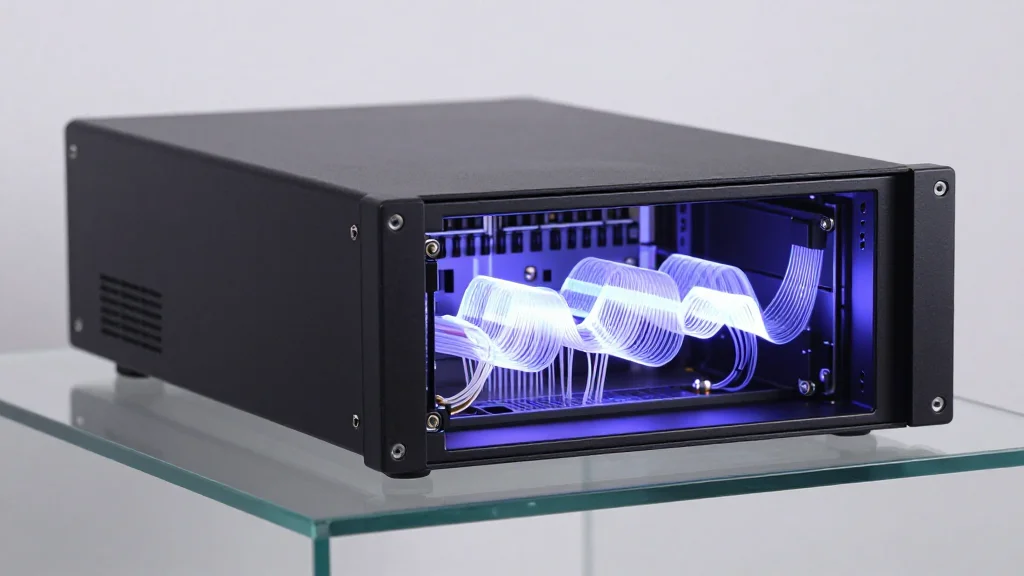
Lumai Debuts Iris Optical Compute System for Real-Time LLM Inference
Lumai announced the Iris optical compute server family, with the Iris Nova becoming the first commercial system to run billion‑parameter LLMs such as Llama 8B and 70B in real time. The photonic architecture replaces silicon transistors with a three‑dimensional light‑based...

Companies Are Racing to Buy GPUs. Many Sit Idle
Enterprises are hoarding GPU capacity at a staggering scale, with average utilization hovering around just 5%, according to Cast AI’s 2026 State of Kubernetes Optimization Report. The data, drawn from tens of thousands of clusters, suggests firms provision roughly 20...

Microsoft Expands Partnership with NABTU to Deliver AI Training for Skilled Trades Workforce
Microsoft and North America’s Building Trades Unions (NABTU) have broadened their collaboration to deliver free AI literacy courses and an industry‑recognized credential to skilled‑trade workers across the United States and Canada. Building on a prior effort that trained 1,500 instructors,...

UF’s HiPerGator Drives FNN’s AI Wildfire Detection in Verizon Prize Recognition
A Gainesville startup founded by University of Florida alumni, FNN, secured a share of Verizon’s $1 million Disaster Resilience Prize. Leveraging UF’s HiPerGator supercomputer, FNN’s AI platform shrinks wildfire detection time from 24 hours to 40 seconds and adds real‑time smoke monitoring. The...

ORNL’s Frontier Supercomputer Trains AI to Model Cosmic Storms
Researchers leveraged ORNL’s Frontier supercomputer—capable of 2 exaflops—to train a two‑stage AI system that captures magnetohydrodynamic turbulence in plasma with unprecedented fidelity. The hybrid model pairs a physics‑informed neural operator with a score‑based diffusion generator, halving prediction errors and delivering results...
BSC Meeting with Latin American Presidents Focuses on AI, Digital Sovereignty
The Barcelona Supercomputing Center (BSC) hosted the presidents of Brazil, Uruguay and Mexico to deepen AI and digital‑sovereignty collaboration across Latin America. Leaders toured the MareNostrum 5 supercomputer and its quantum partition, discussing joint projects such as the EU‑LAC supercomputing network...

AMD and French Government Announce Plans to Advance AI Innovation, Research and Open Ecosystem Development
AMD and the French government signed a multi‑year Letter of Intent in Paris to deepen collaboration under France’s National AI Strategy. AMD will provide CPUs, GPUs, software and training through its university and developer programs, while partnering with GENCI, the...

Could Space Become the Next Frontier for AI Data Centers?
Tech giants are moving the AI compute conversation off‑planet, with NVIDIA unveiling a Space‑1 Rubin module that promises up to 25× more AI performance in orbit and Google’s “Suncatcher” project probing solar‑powered chips for space. Startups such as Starcloud have...

New Pearson and AWS Global Research: 53% of Employers Struggle to Find AI-Ready Graduates
Pearson and Amazon Web Services released a global study of 2,700 respondents across six countries revealing a widening gap between AI skill demand and graduate readiness. The research shows 53% of employers cite difficulty finding AI‑ready talent, while only 14%...

The Apache Software Foundation Launches Responsible AI Initiative
The Apache Software Foundation announced a Responsible AI Initiative, a targeted sponsorship program to strengthen the open‑source infrastructure that powers modern artificial intelligence. The effort is seeded with a $1.5 million contribution from Anthropic and $250,000 from Alpha‑Omega, with a $10 million...

A New Memory Chip Survives 700°C and Could Enable AI in Space
Researchers at the University of Southern California have demonstrated a memristor memory chip that functions at 700 °C (1,300 °F) without degradation. The device uses a tungsten electrode, hafnium‑oxide insulator and a graphene interlayer that blocks tungsten filament formation. It retains data...

CAS Launches ‘Newton’ Agentic AI Built on Curated Scientific Data
The American Chemical Society’s CAS division unveiled CAS Newton, an agentic AI built on its 150‑year‑old, curated scientific literature. The platform delivers conversational, context‑aware answers that draw from the extensive CAS Content Collection, spanning chemistry, biology, materials science and patents....