
Marijuana Reclassification: What Are the Most Immediate Employer Impacts?
The Justice Department’s April order reclassified state‑licensed medical marijuana and FDA‑approved cannabis products from Schedule I to Schedule III, lowering the federal risk rating. The change expands the pool of workers legally eligible for medical marijuana—estimated at 6 million Americans—and is expected to unlock tax incentives for manufacturers while encouraging research. For employers, the shift raises the likelihood of ADA accommodation claims and puts zero‑tolerance policies under scrutiny, especially for off‑duty use that does not impair performance. However, the reclassification does not alter Department of Transportation rules that still ban any marijuana use for safety‑critical positions.

Why the ‘AI Productivity Paradox’ Calls for HR’s Intervention
Seramount’s new report argues that the perceived drop in productivity from remote and hybrid work is actually a measurement issue, not a performance one. Leaders still rely on outdated, visibility‑based metrics while AI tools accelerate output without guaranteeing quality, creating...

Specialty Drugs Now Consume over Half of Total Drug Spend
Specialty drugs now represent more than half of total prescription spending, despite treating a relatively small patient pool. A 2024 Pharmaceutical Strategies Group survey shows 43% of employers and health‑plan leaders cite managing specialty drug costs as their top priority,...

JPMorganChase, Alphabet, Microsoft: Why LinkedIn Tells Candidates to Bet on These Orgs
LinkedIn’s 10th annual Top Companies list spotlights JPMorgan Chase, Alphabet, Microsoft, Amazon and Wells Fargo as employers offering the strongest career‑growth prospects. The rankings, derived from millions of LinkedIn data points, emphasize firms that are heavily investing in AI upskilling—JPMorgan Chase pledges $2 billion...

The Hidden Costs of Ignoring Mental Health at Work
A construction foreman's suicide exposed a critical gap: many firms lack post‑vention plans, leaving managers to navigate grief without guidance. The article quantifies the broader economic toll, citing Ohio’s estimate of nearly $300 billion in annual productivity loss from untreated mental...

Is Ghostworking About to Reemerge Amid Layoffs?
A former London employee went viral after detailing a year of "ghostworking," where she performed only the bare minimum during scheduled check‑ins and spent the rest of her time on personal pursuits. The story resonates amid soaring layoff anxiety—over 60%...
Nominations Open for HR’s Rising Stars
HR Executive has opened nominations for its 2026 HR’s Rising Stars competition, inviting submissions until July 6. The contest now separates candidates by organization size—above or below 1,000 employees—and requires nominees to demonstrate impact with data. A streamlined online portal replaces...

AI Is Reshaping Entry-Level Hiring. Where Will New Grads Go?
Entry‑level hiring is being reshaped by AI, prompting many firms to cut junior roles. LinkedIn’s 2026 Grad Guide identifies AI engineer, marketing coordinator, recruitment assistant, legal specialist and HR operations specialist as the fastest‑growing positions for new graduates. The report...

Who Controls Your Employer Brand in the Age of AI Search?
Employers are losing control of their employer brand as AI assistants replace Google as the first point of candidate research. An AirOps study shows only 15% of AI‑driven brand mentions come from owned content, while 85% originate from external sites....

EU Pay Transparency Directive: The Countdown Is On
The EU Pay Transparency Directive, aimed at closing the gender pay gap, takes effect on June 7, obligating companies operating in the EU to disclose salary ranges, pay‑progression criteria, and to respond to employee requests for gender‑based pay comparisons. Multinationals must...

PTO Pullback: Did Deloitte, Zoom Just Set a New Precedent?
Consulting giant Deloitte and video‑conferencing firm Zoom announced that, starting in 2025, they will scale back family‑building benefits and paid time off for select employee groups. Deloitte will halve paid family leave for its “Center” staff from 16 to eight...

Your HRIS Has a Ghost Org Chart. And It’s Already Running the Show
AI agents are now performing core HR tasks—screening candidates, approving time‑off, routing cases—yet most HRIS platforms record only the outcomes, not the non‑human actors. This creates a "ghost" org chart where the workforce includes invisible agents, exposing companies to audit...
How Pandora Turned a Hiring Bottleneck Into $200 Million in Measurable Value
Pandora, the global jewelry maker, tackled a retail hiring bottleneck by deploying an AI‑driven recruitment assistant, Olivia, built with Paradox and Harver. The solution automated 75% of applicant screening, slashing recruitment administration by 64% and cutting time‑to‑hire from 38 days...

Employee Benefits Transformation: From Generic to Personalized
HR leaders face rising healthcare costs, waning engagement and heightened employee expectations, prompting a move from one‑size‑fits‑all benefits to data‑driven, personalized programs. In 2026 firms are leveraging AI analytics, benefits captives and direct primary‑care models to control expenses while tailoring...
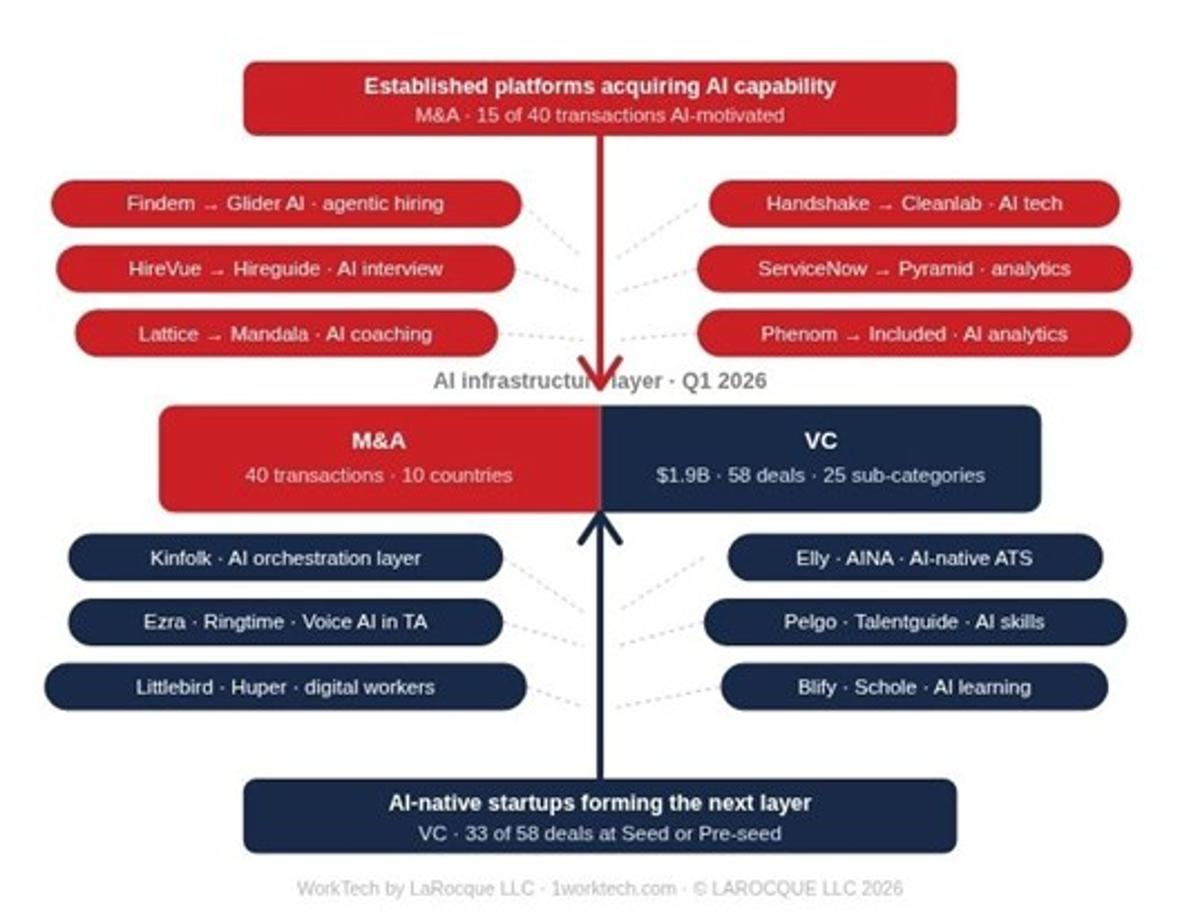
Your HR Tech Stack Is Being Rebuilt Around You. Do You Have a Voice in It?
Q1 2026 saw $1.9 billion in venture funding and 40 M&A deals reshaping the HR tech landscape. HCM platforms are the primary acquirers, pulling recruiting, talent management, rewards and AI sourcing tools into a single stack. About 15 of the deals highlighted...

5 Ways to Level up Your HR Communication
HR leaders are confronting shrinking employee attention spans, now averaging about 40 seconds, which renders traditional, lengthy benefits guides ineffective. The article outlines five attention‑adapted tactics—halving draft length, using literal language, front‑loading TLDR bullet points, prioritizing visuals, and embedding immediate...

PTO Becomes ‘Self-Preservation’ in an Era of Job Insecurity
A Clarify Capital survey of 1,000 U.S. workers reveals they leave an average of six paid‑time‑off days unused each year, with 44% hoarding vacation as a safety net. The rise of AI‑driven layoffs and economic uncertainty has turned PTO into...
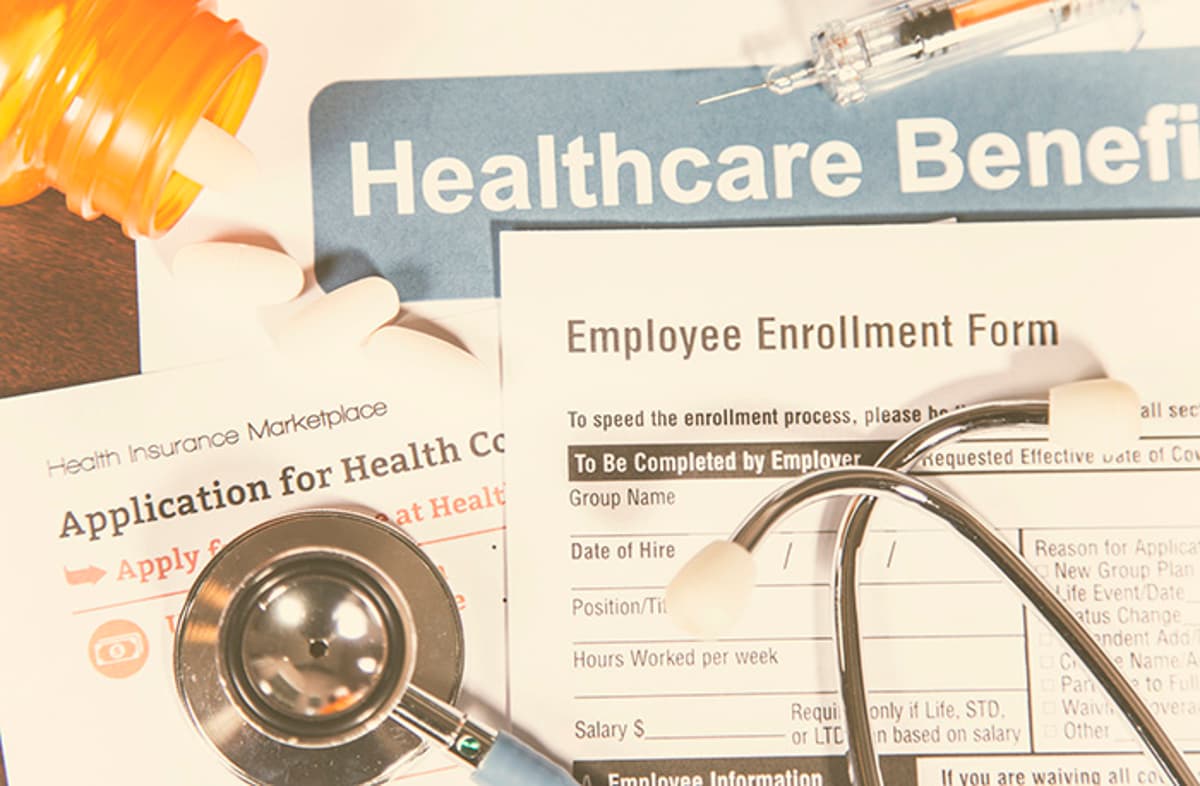
RFK Jr. Vows to End ‘Illusion’ of Lower Premiums Under ACA
U.S. Health and Human Services Secretary Robert F. Kennedy Jr. testified before the House Ways & Means and Education & Workforce committees, arguing that the Affordable Care Act’s subsidy structure creates an illusion of lower premiums while actually benefiting insurers....

An Emerging Talent Crisis: Half of Gen X Is Delaying Retirement
PwC’s Employee Financial Wellness Survey reveals that nearly 60% of workers cite finances as their top life stressor, with half unable to cover household expenses and a quarter living paycheck to paycheck. Among Gen Xers—those in their mid‑40s to early 60s—only...

Employees Aren’t Confused About Their Benefits—They’re Anxious
Open enrollment anxiety is rising as employee benefits become costlier and more complex. The Kaiser Family Foundation reports average family premiums reached $27,000 in 2025, a 6% increase that outstrips 4% wage growth, while deductibles have jumped 43% over a...

Acting Labor Secretary Keith Sonderling Has Been a Big Backer for Benefits
Keith Sonderling, the deputy labor secretary, has been named acting secretary after Lori Chavez‑DeRemer resigned amid expense‑report allegations. Sonderling, a former Wage and Hour Division chief and EEOC commissioner, is known for a pragmatic, employer‑friendly approach. He has signaled a...

Global Expansion Is Moving Faster than Leadership Readiness—And That’s the Real Risk
Global expansion is outpacing the readiness of many organizations, creating a hidden risk that outweighs the allure of rapid market entry. While AI tools now streamline compliance, talent mapping, and market analysis, they give a false sense that execution can...

How HR Can Break the Tech Regret Cycle
HR leaders can curb costly software‑buying regret by aligning tech purchases with genuine organizational needs. A new Accenture‑Wharton report finds three‑quarters of U.S. SMBs are re‑evaluating recent tech investments, and 82 % of those who regret switching cite growth‑draining costs. The...

BNY Puts $6,500 Behind Employees’ Path to Owning a Home
BNY announced a new homeowner program that provides up to $6,500 in down‑payment assistance for U.S. employees earning less than $100,000 annually. Eligible staff also receive homeownership education and access to mortgage‑related benefits. The initiative comes as the National Association...

Insured Americans Face Significant Hurdles to Mental Health Services
The Mental Health Parity Index reveals that the nation’s four largest commercial insurers provide significantly fewer in‑network mental‑health and substance‑use disorder providers than physical‑health clinicians, with gaps ranging from 24% to 83%. Clinician reimbursement for behavioral health services is 16%‑59%...

‘Silent Burnout’ & Mental Health Leave: A Growing HR Problem
Spring Health’s new research of 2,000 HR leaders and employees finds that about 30% of workers are experiencing "silent burnout," appearing fine while suffering exhaustion. The study also reports a sharp rise in mental‑health leaves, with over 60% of HR...

Change Management Is Getting More Sophisticated. So, Why Does It Feel Less Human?
Change management frameworks have become technically sophisticated, yet employees experience them as cold and transactional. Recent Gallup data shows global employee engagement slipping to 21% and manager engagement to 27%, underscoring the human cost of rapid restructuring. Leaders often rely...

MetLife CHRO: 3 Ways HR Can Lead Through Uncertainty
MetLife’s new workforce report shows American employees’ financial confidence has slipped to a 14‑year low, echoing pandemic‑era anxieties. The study warns that workers are prioritizing security over growth, which could curb long‑term innovation. To counter this, MetLife CHRO Shurawl Sibblies...

On Capitol Hill, a Debate over Who AI at Work Is Really Working For
The House Education and Workforce Subcommittee held its sixth hearing on AI in the workplace, pitting employer advocates who want a federal override of state AI‑employment laws against worker groups demanding state‑level protections. Witnesses from the CHRO Association, Ogletree Deakins,...

Apple CEO Shake-Up: 3 Succession Lessons
Tim Cook announced he will step down as Apple’s chief executive on September 1, handing the reins to John Ternus, the senior vice president of hardware engineering who has spent 25 years at the company. Cook will transition to an executive‑chairman role, pledging...
What Cisco Is Doing to Avoid ‘Compliance Theater’
Cisco’s Chief People Officer Kelly Jones says the company’s AI rollout is driven by continuous employee sentiment measurement and leadership modeling. Over 18 months of surveys and focus groups revealed that AI‑using staff are more engaged, confident, and likely to...
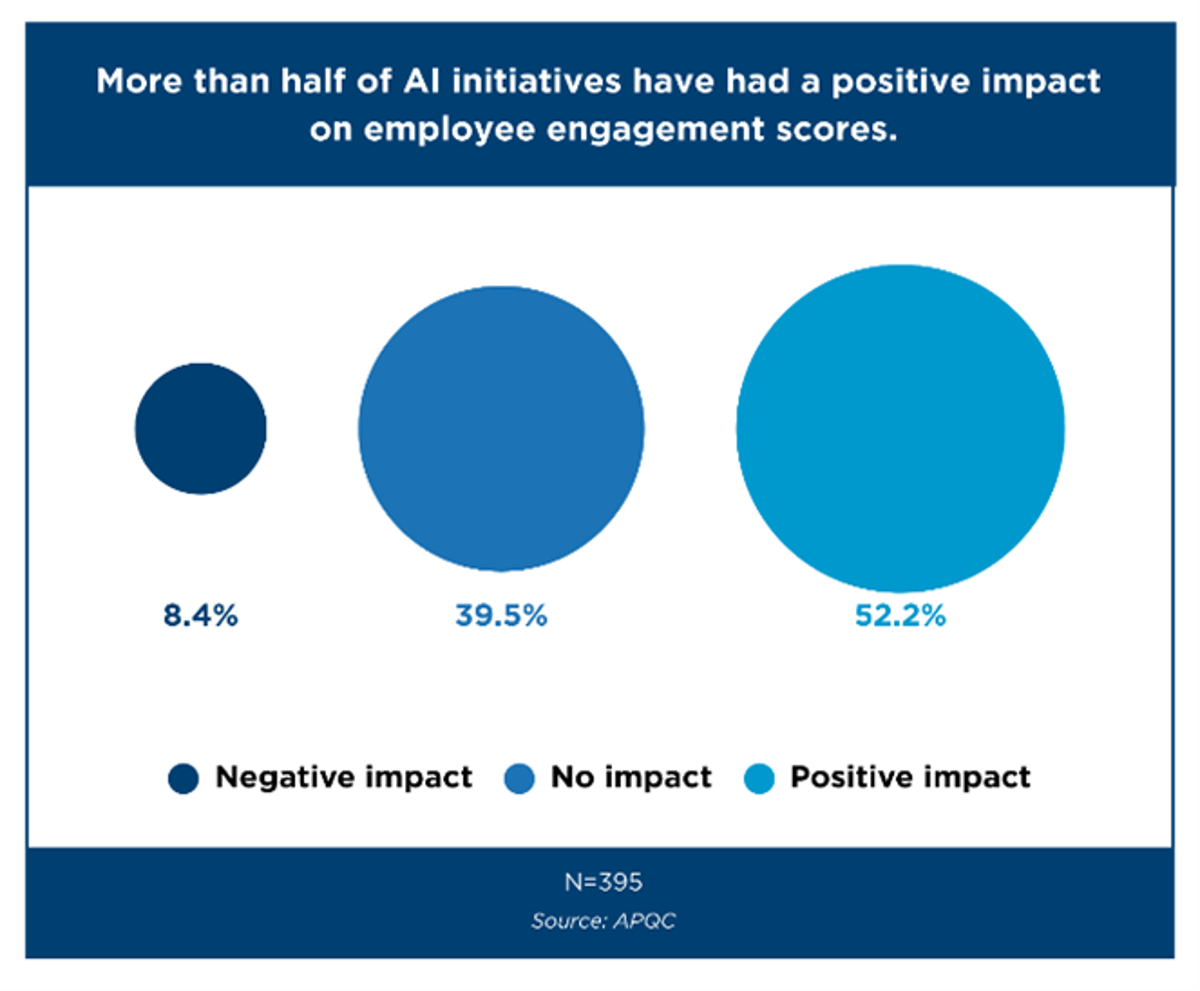
Why AI Improves Employee Engagement for some Organizations and How to Make It Work for Yours
Organizations are pouring money into AI with the promise of higher performance and a better employee experience. APQC’s latest survey shows that roughly half of senior leaders say AI has lifted employee engagement, while fewer than one‑in‑ten report a decline....

The 3 Trials of Leadership in the Age of AI
AI is rapidly reshaping work, with Salesforce reporting that 30%‑50% of engineering, coding and support tasks are now performed by AI. Yet a Boston Consulting Group study finds 74% of companies still struggle to extract meaningful value after two years....

As AI Layoff Regret Surges, Will Boomerang Employees Make a Comeback?
AI‑driven layoffs have surged, prompting HR leaders to reconsider how they treat departing staff. A Careerminds survey of 600 HR professionals found two‑thirds have rehired some laid‑off workers, with 36% bringing back more than half of them. Parallel research shows...

Why Neurodiversity Is Driving a Compliance Crisis
Neurodiversity has moved from academia to mainstream workplaces, prompting a surge in accommodation requests. Studies show adult autism diagnoses jumped 450% between 2011 and 2022, while ADHD diagnoses rose over 60% from 2021 to 2024. HR teams, accustomed to physical‑disability...

‘The AI Did It’: Why Employers Cannot Accept AI as a Scapegoat
Generative AI is now embedded in daily work, prompting employees to blame the technology when outputs are flawed. HR leaders must reject the “AI did it” defense and establish robust AI governance that couples policies with oversight, clear tool approvals,...

How Celebs Like Tom Brady and Lady Gaga Are Reshaping Employee Benefits
Celebrities such as Lady Gaga, Selena Gomez and Tom Brady are leveraging their platforms to spotlight mental‑health and weight‑loss solutions, prompting employers to reevaluate benefit offerings. Mental‑health advocacy from pop stars and athletes is driving demand for expanded therapy options, app subscriptions, and...

Atlassian, Amazon and Tesla Disputes: ‘Open Culture’ Under Pressure
Atlassian fired engineer Denise Unterwurzacher after she posted a satirical Slack jab at CEO Mike Cannon‑Brookes during a contentious re‑leveling and layoff round. The dismissal is now before the National Labor Relations Board, which must decide whether the comment qualifies...

AI Hiring Is Creating a Sea of Sameness
AI is now the most widely adopted technology in HR, especially for recruiting, according to SHRM's 2025 research. While AI speeds resume screening and candidate matching, it also pushes applicants to craft algorithm‑friendly narratives. This optimization creates a homogeneous pool...
IBM, DEI and a $17 Million Warning Shot
IBM agreed to pay $17 million to resolve DOJ allegations that its diversity, equity and inclusion (DEI) practices violated federal contracting rules. The settlement stems from the Justice Department’s newly created Civil Rights Fraud Initiative, which targets companies that use race...

Incentives for AI Use: A ‘Spectacularly Bad Idea’
HR Executive warns that imposing quotas or incentives for AI adoption is counterproductive. Self‑reported usage metrics often inflate activity without delivering real productivity gains, and only about 5% of AI projects achieve tangible results. The article argues that AI effectiveness...

Why Flexibility Wins in a Tight Labor Market—And Where It Can Backfire
Small and midsize businesses are increasingly using flexible work arrangements—remote, project‑based, and hybrid—to compete for talent in a tight labor market. Flexibility expands the talent pool, lowers fixed payroll costs, and lets companies scale labor with revenue. However, misclassifying contractors...

Data Shows AI Is Not Replacing European Workers yet, but the Clock Is Ticking
A new European Central Bank study of over 5,000 euro‑area firms finds AI is currently a net job creator, with AI‑intensive companies 4% more likely to hire and nearly 2% more likely to expand headcount. The hiring boost is concentrated...

Stop-Loss Insurers Are Using New Tools to ‘Laser’ Out More Patients
Predictive claim‑modeling tools are enabling stop‑loss insurers to more precisely identify participants likely to incur $1 million‑plus medical expenses, a practice insiders call “lasering.” Executives say the rise in high‑cost claims and improved data access are prompting carriers to exclude or...

What Meta’s Visa Filings Tell HR Leaders About the Real Cost of AI Talent
Meta’s 2025 H‑1B filings reveal base salaries ranging from $124,000 to $450,000 for software engineers and a $650,000 floor for a Vice President of Engineering, AI. The data, drawn from more than 5,000 visa applications, also shows research engineers earning...

Regulatory Chaos Is Coming. AI Agents Are Already Ahead of It
The article highlights a rapidly fragmenting AI regulatory landscape, with 45 U.S. states introducing over 1,500 AI‑related bills and cities adding their own hiring rules. It explains how compliance‑focused AI agents can flag potential violations while leaving final decisions to...

Europe Ranks Last in Employee Engagement. How Can HR Help?
Gallup’s State of the Global Workplace survey of 141,000 employees shows Europe lagging far behind on engagement, with only 13% of workers feeling engaged. Meanwhile, 73% are not engaged and 15% are actively disengaged, despite low job‑seeking intent (30%). The...

When Employee Engagement Gets Cut, Who’s to Blame?
When budgets tighten, employee‑engagement technology is often the first to be cut because HR struggles to prove its impact on the bottom line. Rebecca Wettemann of Valoir argues that without a clear link between engagement scores, retention and EBITDA, CFOs...

State Lawmakers Seek to Regulate Employer Use of AI for Wage Decisions
State legislators across California, Colorado, Illinois and Texas are moving to curb algorithmic wage setting by imposing AI transparency and anti‑discrimination rules. The Colorado Artificial Intelligence Act, Illinois amendments to the Human Rights Act, Texas Responsible AI Governance Act and...

Increasingly, the Next Labor Negotiation Isn’t About Wages. It’s About Who Controls the Bots
Unions are increasingly bargaining over the deployment of scheduling algorithms, monitoring tools, and AI systems, securing rights such as advance notice and limits on data use. Research from UC Berkeley shows contracts across logistics, healthcare, retail, and finance already restrict...