

South Africa Has AI Leverage. Its Draft Policy Leaves It Unused
South Africa, home to roughly 88% of the world’s platinum‑group metal reserves and the continent’s largest data‑center market, possesses rare leverage over AI compute supply chains. A draft AI policy that could have turned this leverage into enforceable procurement terms was withdrawn after it contained fabricated references, leaving the country without a governing framework. Meanwhile, U.S. hyperscalers have pledged about $300 million in cloud investment, while Huawei offers a 90% cheaper AI‑cloud bundle, creating competing dependency models. An expert panel has been convened to rewrite the policy, but no timeline has been set.

Radar Can Tell the Difference Between Insect Species
Researchers at the Technological University of Denmark have demonstrated a millimeter‑wave radar system that can identify individual pollinator species by analyzing their wingbeat‑generated micro‑Doppler signatures. By training a machine‑learning model on radar data from five insect species, the system achieved...

Māori Text-to-Speech Model Spurns Big Tech’s Values
University of Waikato researchers have built a high‑fidelity text‑to‑speech system for the Waikato‑Maniapoto dialect of te reo Māori using less than eight hours of recorded speech. By leveraging phoneme‑based training and the open‑source Piper architecture, the model achieved a 6.78%...

Open-Source Software Is Starting to Help Robots Think
Open‑source initiatives are moving beyond hardware to give robots the ability to reason, decide, and act. Companies such as Nvidia, Hugging Face and Alibaba have released open‑source models, simulation tools, and datasets that enable end‑to‑end robot AI development. The effort...

The Future of Physical AI Isn’t Smarter Robots, It’s Smarter Interfaces
Physical AI has focused on smarter robots, but Wetour Robotics argues the next breakthrough lies in smarter human‑machine interfaces. The company’s Orchestra platform uses Spatial Intent Fusion to combine vision, spatial positioning, and sEMG biosignals, delivering intent commands in under...

Agentic AI for Robot Teams
Johns Hopkins Applied Physics Laboratory hosted a free virtual webinar on June 17, 2026 to showcase its latest work on agentic AI for collaborative robot teams. The session introduced a scalable architecture that leverages large‑language‑model (LLM) agents to enable autonomy, coordination, and adaptability...

Voice AI Systems Are Vulnerable to Hidden Audio Attacks
Researchers unveiled AudioHijack, an adversarial technique that embeds inaudible commands in audio clips to hijack large audio‑language models (LALMs). Tested on 13 open and commercial models—including Microsoft’s service—the method achieved 79‑96% success, forcing models to conduct web searches, download files,...
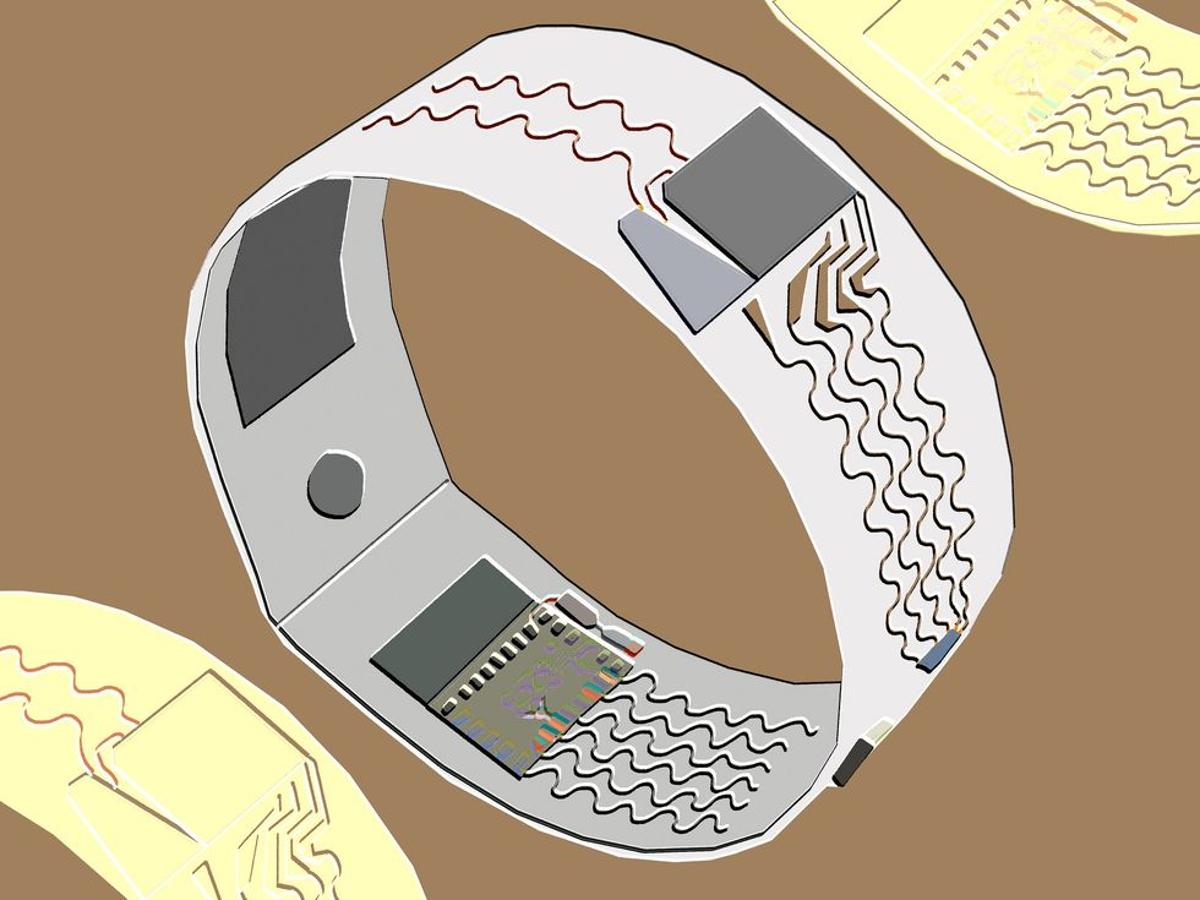
AI Rings on Fingers Can Interpret Sign Language
Researchers at Yonsei University have created a set of seven Bluetooth‑Low‑Energy rings that wirelessly capture finger motion and feed it to a deep‑learning model for sign‑language translation. The rings use accelerometers and serpentine interconnects to stay reliable during repeated flexing,...

Graphene “Tattoos” For Plants Could Form Neural Networks
Researchers at the University of Texas at Austin have created a graphene‑based “tattoo” that can be pasted onto a plant leaf to deliver real‑time moisture readings. The patch functions as a three‑terminal transistor, using the leaf as a dielectric, and...

Can AI Chatbots Reason Like Doctors?
A study published in Science on April 30 found that OpenAI’s o1‑preview large language model outperformed two internal‑medicine physicians on clinical reasoning tasks using real emergency‑room records, achieving an exact or near‑exact diagnosis 82% of the time versus 79% and...

Archivists Turn to LLMs to Decipher Handwriting at Scale
General‑purpose large language models such as GPT‑4 now outpace specialized handwriting software, delivering sub‑2% character error rates on diverse historical documents while cutting transcription time by about 50 times and cost by a similar margin. A two‑year study by Wilfrid Laurier...

Startup Wants to Run AI Inference From Space
Orbital Inc., a Los Angeles startup backed by Andreessen Horowitz, announced plans to build a constellation of low‑Earth‑orbit satellites that run AI inference workloads. The company envisions up to 10,000 fridge‑sized satellites, each delivering roughly 100 kW of solar‑powered compute via GPU...

AI Is Starting to Build Better AI
Artificial intelligence is increasingly being used to design and improve its own systems, a process known as recursive self‑improvement (RSI). Recent milestones include OpenAI’s GPT‑5.3‑Codex assisting in its own development, DeepMind’s AlphaEvolve optimizing algorithms and chip designs, and startups like...

Chatbots Need Guardrails to Prevent Delusions and Psychosis
Chatbots such as ChatGPT, Claude, and specialized AI companions are increasingly used for friendship, therapy, and romance, but research links them to amplified delusions and even suicides among vulnerable users. Clinicians and computer scientists propose four guardrails—clear identity reminders, distress...

Do We Really Need Smarter AI to Cure Cancer?
The debate over AI’s role in curing cancer intensifies as Emilia Javorsky argues that over‑investment in AGI/ASI distracts from practical AI tools and data infrastructure needed for personalized oncology. She stresses cancer’s heterogeneity, urging focus on early detection, trial acceleration,...